
Categories
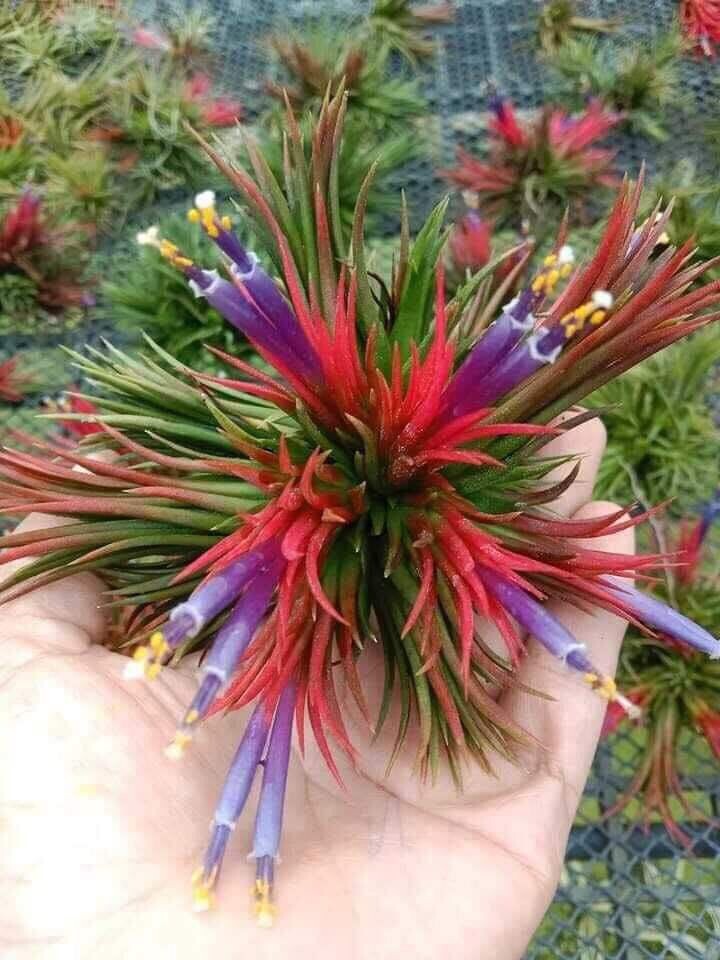
Air Plant Tillandsia ionantha Red 'Fuego
SKU TT017
₹235.00
Sold out
Sold out
Save this product for later
Customer reviews
Reviews only from verified customers
No reviews yet. You can buy this product and be the first to leave a review.
Air Plant Tillandsia ionantha Red 'Fuego
Product Details
Chromatographic Intensity: Tillandsia ionantha 'Fuego'
An exceptional cultivar prized for its permanent crimson blush, this epiphytic marvel redefines the aesthetic of soil-free gardening.
- Origin & History of Name: The genus Tillandsia was named by Carl Linnaeus in 1753 to honor the Swedish botanist Elias Tillandz.
The specific epithet ionantha is derived from the Greek ion (violet) and anthos (flower), referring to its tubular purple blooms. The cultivar name 'Fuego' (Spanish for "fire") was selected to highlight this variety’s unique ability to maintain deep red pigmentation far longer than the standard species. - Morphology: This plant is an epiphyte characterized by a compact, rosetted growth habit.
Its epidermis is densely covered in specialized multi-cellular hairs called trichomes, which function as biological pumps to absorb moisture and nutrients directly from the atmosphere. Unlike the silver-green wild type, 'Fuego' exhibits high concentrations of anthocyanins, resulting in a brilliant red foliar saturation that intensifies as it approaches its blooming cycle. - Habitat & Origin: While the base species is native to Central and South America (primarily Mexico to Nicaragua), 'Fuego' is a cultivar selected for its enhanced color. It is produced through sustainable nursery cultivation and vegetative offsets (pups). This ensures the protection of wild populations and the preservation of the specific 'Fuego' genetic line, which does not occur naturally in such concentrated vibrance.
- Cultivation Profile:
- Substrate: Strictly non-terrestrial. It should be mounted on driftwood, cork, or placed in aerated glass vessels; never utilize soil or organic potting media.
- Light: Requires filtered bright light. In the Indian subcontinent, avoid direct midday summer sun which can scorch the leaf tips; an east or north-facing window is ideal.
- Water/Dormancy: Mist 3–4 times weekly or perform a 20-minute submersion once a week. In high-humidity regions like Kerala or West Bengal, ensure rapid drying within 4 hours to prevent "crown rot."
It has no true dormancy but grows slower during the cooler months of December and January.
- Scientific/Historical Anecdote: Tillandsia are among the few plants that utilize Crassulacean Acid Metabolism (CAM). To conserve water in their native arid or canopy-top environments, they keep their stomata closed during the blistering day and "breathe" only at night, collecting carbon dioxide under the cover of darkness to fuel their growth the following day.
You May Also Like
New
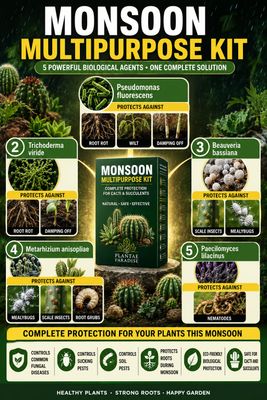
Monsoon Guardian Kit (5 in 1)
Monsoon Guardian Kit (5 in 1)
Complete 5-in-1 biological protection kit for cacti & succulents
SKU MNS024
₹850.00


Cactus & Succulent Planting Mix FINE (aka Cactus Soil Mix or Succulent Soil Mix)
Cactus & Succulent Planting Mix FINE (aka Cactus Soil Mix or Succulent Soil Mix)
Fine-Grain Potting Mix for Cactus & Succulent Roots
SKU MNS001
5.0
(3)
₹39.85

FORTIFIED Cactus & Succulent SOIL (COARSE)
FORTIFIED Cactus & Succulent SOIL (COARSE)
SKU MNS004
5.0
(12)
₹54.85

Cactus & Succulent Planting Mix COARSE (aka Cactus Soil Mix or Succulent Soil Mix)
Cactus & Succulent Planting Mix COARSE (aka Cactus Soil Mix or Succulent Soil Mix)
Washed, Free-Draining Mineral Mix for Cactus & Succulents
SKU MNS003
5.0
(1)
₹44.85
Display prices in:INR
