
Categories
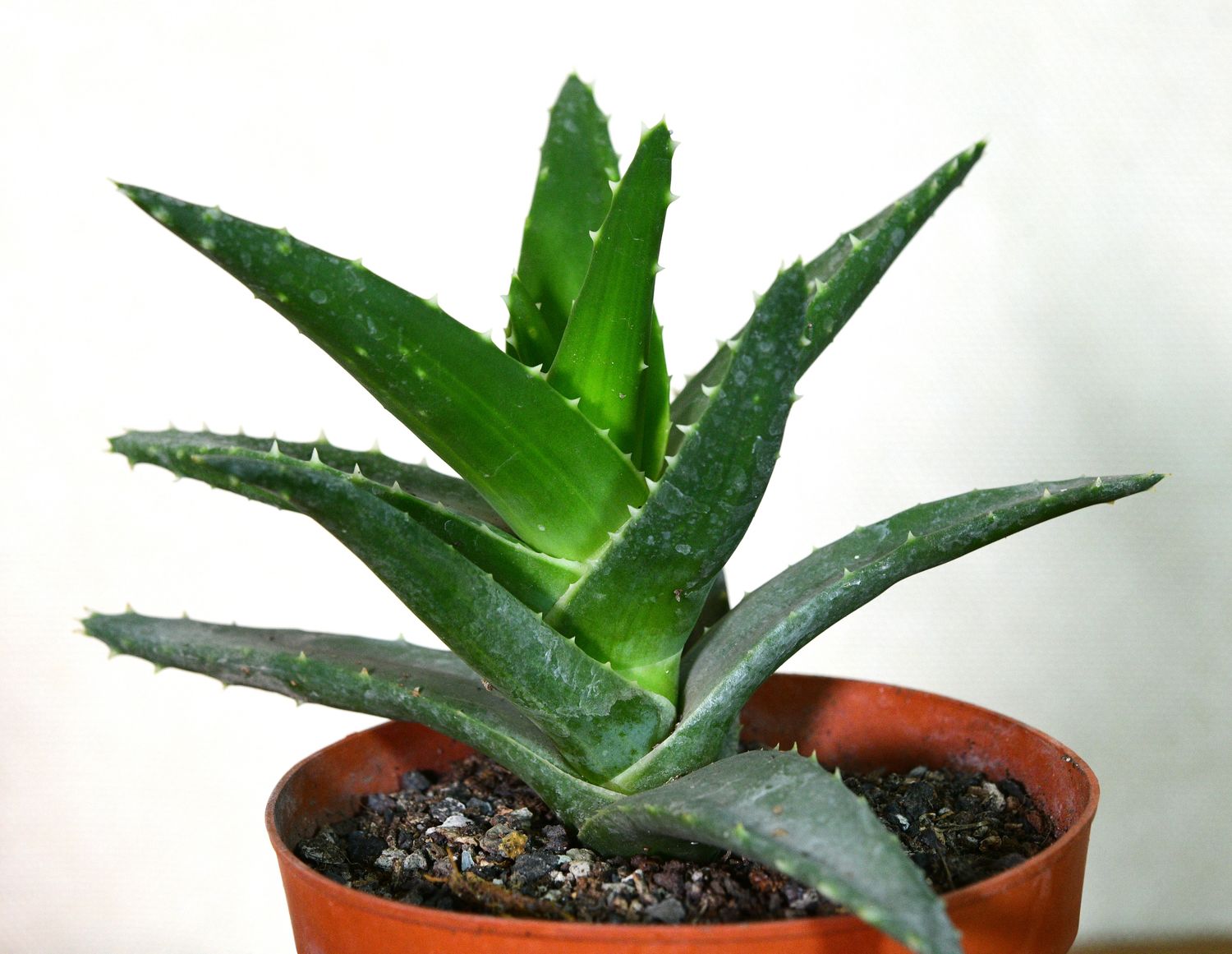
Aloe mitriformis
SKU AL023
₹350.00
In stock: 3 available
1
Save this product for later
Customer reviews
Reviews only from verified customers
No reviews yet. You can buy this product and be the first to leave a review.
Aloe mitriformis
Product Details
Aloe mitriformis
The Mitre Aloe — a sprawling, cliff-dwelling South African succulent whose tightly folded winter rosettes echo the shape of a bishop's ceremonial hat.
Aloe mitriformis is a rugged, ground-hugging aloe that spends decades creeping and clambering across the sandstone ledges of South Africa's Cape mountains, its long stems eventually hoisting handsome blue-green rosettes skyward. It's a plant with real presence in a rockery or large container — architectural, tough as nails, and topped in summer with glowing spikes of scarlet flowers that hummingbird-loving sunbirds can't resist back home.
Origin of Name
The species name mitriformis is built from the Latin mitra ("mitre," a bishop's tall, pointed ceremonial headdress) and forma ("shape" or "form") — literally, "mitre-shaped." The name describes the way the rosette's fleshy leaves curl inward and clasp tightly together during dry spells, folding into a pointed, helmet-like dome that early botanists thought resembled the peaked cap worn by bishops and abbots. The genus name Aloe itself traces back even further, through Greek aloē and Hebrew ahal, to the Arabic alloeh, all converging on the same root meaning: "bitter," a direct reference to the intensely bitter sap found in the leaves of most aloe species.
The plant was first illustrated scientifically by the German-English botanist Johann Jacob Dillenius in his 1732 work Hortus Elthamensis, but it was the celebrated English botanist and horticulturist Philip Miller — longtime chief gardener of the Chelsea Physic Garden in London and author of the hugely influential Gardeners Dictionary — who formally described and named it Aloe mitriformis in 1768. Miller's Chelsea Physic Garden was, in the 18th century, one of Europe's great clearing-houses for exotic plants pouring in from the Cape of Good Hope, and this aloe was among the striking succulents that made the long sea voyage north to be studied, sketched, and named by London's botanical elite.
Like many long-cultivated Cape aloes, this species has weathered more than two centuries of taxonomic reshuffling, and has at various points been lumped together with, or split apart from, several close relatives — appearing in older literature and nursery lists under names such as Aloe perfoliata, Aloe distans, Aloe comptonii, and Aloe microstigma. Some modern classifications fold it into a broader concept of Aloe perfoliata (the very species that serves as the botanical type for the entire genus Aloe), while other taxonomists continue to treat Aloe mitriformis as its own distinct, if highly variable, species — a debate that remains unsettled among specialists to this day.
Origin of Plant
Aloe mitriformis is endemic to South Africa's Western and Northern Cape provinces, found in a band of rugged terrain running roughly from Genadendal in the west to the Bokkeveld Mountains near Nieuwoudtville in the north. It is a true mountain plant, typically found between 1,200 and 1,500 metres in elevation, rooted into cracks and ledges on sandstone slabs, granite outcrops, and near-vertical cliff faces within fynbos, and spilling over into neighbouring Karoo and Albany Thicket vegetation at the margins of its range. This is winter-rainfall country, with most of the year's moisture falling between April and July, occasional winter snow dusting the higher ground, and long, dry, often hot summers — conditions that have shaped the plant into the tough, water-wise survivor it is today.
Description
This is a hardy, clustering, creeping aloe, sending out long, branching, semi-prostrate stems that can eventually reach up to 2 metres in length as they sprawl and clamber over rock. Because the stems are relatively slender, they rarely hold the rosettes fully upright — instead, mature rosettes tend to arch and lean, with only the growing tips turning skyward, giving established colonies a wonderfully sculptural, tumbling silhouette across a rock face.
The rosettes themselves are compact, typically 15–18 cm across and up to about 30 cm tall, made up of short, broad, fleshy leaves that range from bluish-grey-green in full sun to a darker, softer green in shade. Leaf margins are lined with small, firm marginal teeth that start out white and age to yellow or warm brown. True to its name, the whole rosette tightens and curls inward during drought stress, folding into that distinctive pointed, mitre-like dome — one of the plant's most charming seasonal quirks. Unusually for an aloe, flowering happens in summer (roughly December to February) rather than winter: dense, cone- to head-shaped racemes of tubular, drooping, dull scarlet to bright red flowers rise on branched stalks above the foliage, followed by three-parted seed capsules carrying small, lightly winged seeds built for wind dispersal.
Conservation Status
Aloe mitriformis is not currently considered threatened. It remains widespread and reasonably abundant across its mountainous range in the Western and Northern Cape, and no significant conservation concerns have been identified for the species as a whole. That said, it belongs to a broader group of South African creeping aloes — informally known as the "mitriformis group" — several of whose other members are considerably rarer and under real pressure from habitat loss and illegal collecting, which makes responsibly nursery-propagated plants like the ones we offer a welcome way to enjoy this group without touching wild populations.
Care
Light: Give it full sun for the richest blue-grey leaf colour and the tightest, most classic rosette form; it will tolerate light shade, but colour and form both soften.
Water: Water generously during the active growing season, then allow the soil to dry out between waterings — this is a drought-tolerant plant once established, and good drainage matters more than frequent watering. Ease off in winter.
Soil: Plant in a fast-draining, gritty succulent mix, ideally on the slightly acidic side (around pH 5–6) with low organic content — mimicking the sandy, rocky, humus-poor soils of its native mountain slopes.
Temperature: Tolerates mild-to-hot summer heat comfortably and can shrug off an occasional light snow or cold snap, but frost damage sets in below about –2°C (28°F), so bring container plants under cover or indoors well before hard frost in colder climates.
Growing tips: A raised rockery, embankment, or wide shallow container that lets the stems trail and cascade suits its naturally creeping habit best. Propagate easily from stem cuttings — let a cutting callus (dry) for several days before inserting it into coarse river sand — or by dividing offshoots in spring. Fresh seed germinates readily at around 18°C (64°F) when sown in early winter (June–July in its native hemisphere) in coarse, well-draining sand with a light fungicide treatment to guard against damping-off. A cool winter rest, around 5–10°C (41–50°F), helps trigger the following summer's flower spikes, and trimming off spent flower stalks and periodically dividing crowded clumps keeps colonies looking their best.
An Interesting Note
Few succulents wear their name quite as literally as this one: watch an Aloe mitriformis through a dry Cape summer and you can genuinely see a bishop's mitre take shape, leaf by leaf, as the rosette folds itself into that tight, pointed dome to conserve moisture — then watch it relax back open again once the winter rains return. It's a small piece of living theatre that 18th-century botanists clearly found irresistible, naming the plant for exactly that transformation. And the plant's journey to that name was itself a long one — first sketched by Dillenius in 1732, it took another 36 years, and the attention of Philip Miller, one of the most influential horticulturists in European history, before it received the formal Latin name gardeners still use today, a reminder of just how prized these odd, shape-shifting Cape aloes were among the plant collectors of Georgian London.
You May Also Like

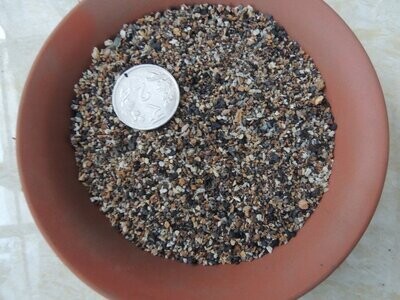
Cactus & Succulent Planting Mix COARSE (aka Cactus Soil Mix or Succulent Soil Mix)
Cactus & Succulent Planting Mix COARSE (aka Cactus Soil Mix or Succulent Soil Mix)
Washed, Free-Draining Mineral Mix for Cactus & Succulents
SKU MNS003
5.0
(1)
₹44.85
Cactus Seed Planting Mix
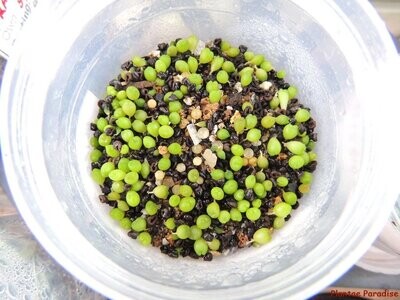
Cactus Seed Planting Mix
Sterile, Fine-Grain Media for Cactus & Succulent Seeds
SKU MNS005
₹74.85

FORTIFIED Cactus & Succulent SOIL (COARSE)
FORTIFIED Cactus & Succulent SOIL (COARSE)
SKU MNS004
5.0
(12)
₹54.85
New


Monsoon Guardian Kit (5 in 1)
Monsoon Guardian Kit (5 in 1)
Complete 5-in-1 biological protection kit for cacti & succulents
SKU MNS024
₹850.00
Display prices in:INR
