
Categories
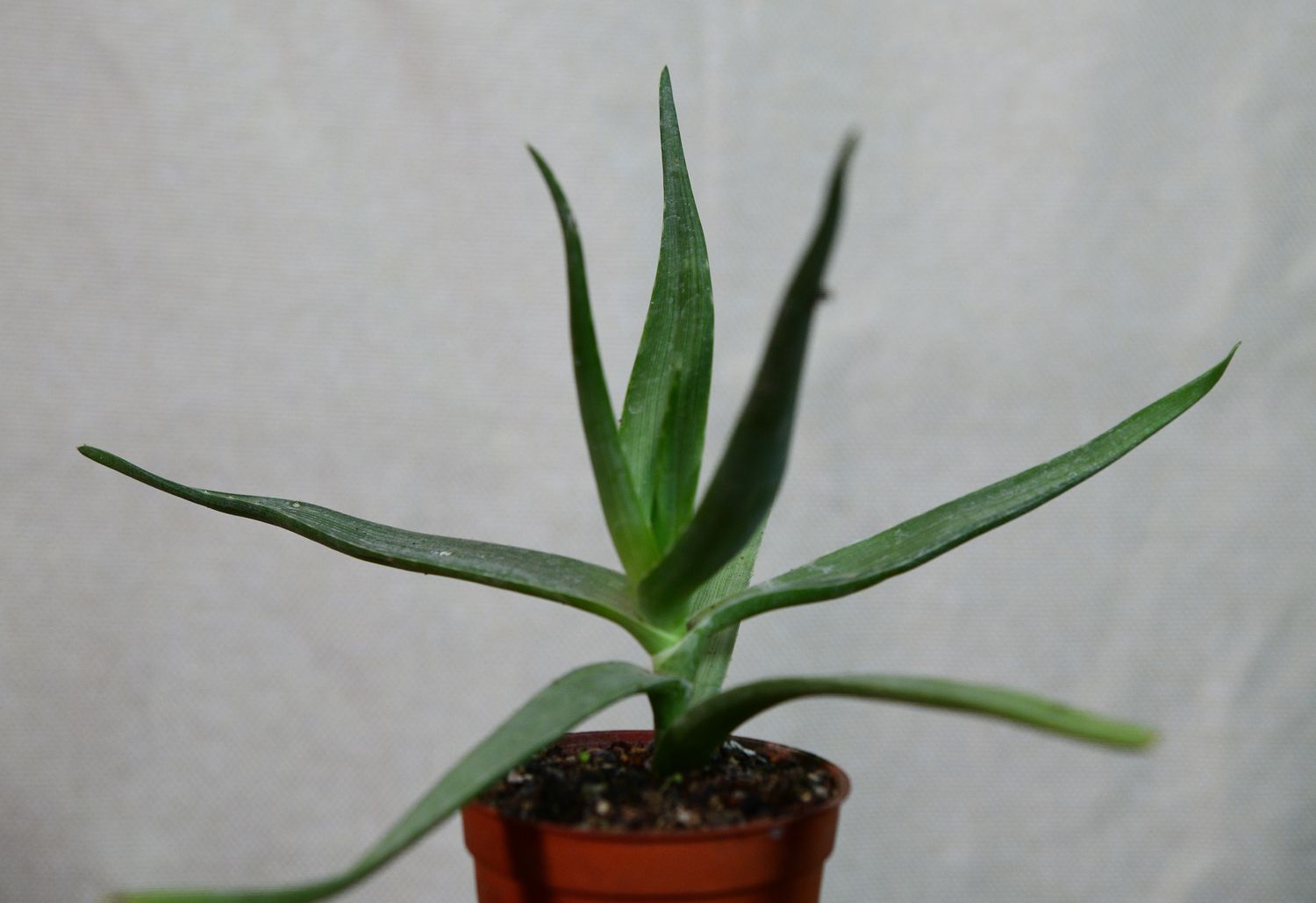
Aloe striata
SKU AL003
₹300.00
In stock: 5 available
1
Save this product for later
Customer reviews
Reviews only from verified customers
No reviews yet. You can buy this product and be the first to leave a review.
Aloe striata
Product Details
Aloe striata (Coral Aloe)
A stemless rosette of smooth, spineless, blue-green leaves striped with faint pale lines and rimmed in a soft coral-pink margin — one of the few aloes friendly enough to touch without flinching, and one that erupts each winter into branched, coral-red flower heads that hungry sunbirds can't resist.
Origin of Name
The species epithet striata is Latin for "striped" or "furrowed," a straightforward reference to the faint, fine, longitudinal lines that run the length of each leaf — visible as subtle pale striping against the blue-green background, sometimes stronger, sometimes barely there depending on light and growing conditions. It was formally described in 1804 by Adrian Hardy Haworth (1768–1833), an English botanist and entomologist who, despite having no university training, became one of the most prolific natural historians of his era: he assembled a herbarium of some 20,000 specimens, grew over 500 plant species in his own Chelsea garden, helped found the Hull Botanic Garden, and published roughly sixty works across both botany and entomology, including the standard reference on British butterflies and moths of his day. His 1812 Synopsis Plantarum Succulentarum became one of the foundational texts of succulent taxonomy, and Haworth personally described an extraordinary number of the aloes, haworthias, and other succulents still recognized today — this species among them.
The common name "Coral Aloe" is a straightforward nod to its winter flowers, which open in dense, branched, coral-red flower heads held well above the foliage — a splash of colour in the depths of the Cape's cool season, when little else in the garden is blooming.
Origin of Plant
Aloe striata is native to South Africa's Eastern and Western Cape provinces, part of the celebrated Cape Floristic Region, where it grows scattered across stony, rocky hillsides and slopes in both semi-arid coastal areas and the drier inland reaches of the Karoo. This is winter-rainfall country with hot, dry summers, and the species has adapted accordingly, storing water in its broad, fleshy leaves and timing its flowering for the cooler, wetter months when nectar-seeking sunbirds are most active and most in need of a reliable food source. Two subspecies are recognized: the widely grown nominate Aloe striata subsp. striata, and the more localized Aloe striata subsp. karasbergensis, the "Karasburg Coral Aloe," found further north and considerably less common in cultivation.
Description
This is a stemless or very short-stemmed succulent, forming a solitary or loosely clustering rosette up to about a metre across at maturity. Its broad, lance-shaped leaves are smooth-surfaced and spineless — unusual for the genus — coloured a soft blue-green and faintly striped with lengthwise pale lines, the whole leaf edged in a distinctive smooth pink to coral-red margin with no teeth at all, giving the plant a notably gentle, touchable quality compared to most of its spinier relatives (a trait that helps distinguish it from the very similar Aloe reynoldsii, which has waxy, toothed margins and yellow rather than red flowers). In winter, one to several tall, branched flower stalks rise well above the foliage, each ending in dense, rounded to flattened heads of tubular coral-red flowers that open over several weeks, drawing sunbirds and other nectar-feeding birds at a time of year when few other nectar sources are available.
Conservation Status
Aloe striata is assessed as a species of Least Concern by the South African National Biodiversity Institute's Red List programme — it remains widespread and reasonably common across its native Cape range, with no significant threats currently identified. As with virtually all Aloe species, international trade is regulated under CITES Appendix II, meaning wild-collected material moving across borders requires proper permitting. This species, however, is propagated so easily and widely in cultivation that nursery-grown plants like this one are the overwhelming norm in the trade, taking essentially all pressure off wild populations.
Care
Light: Full sun to bright light brings out the best leaf colour and the tightest rosette form; it also tolerates partial shade, though leaves may green up and the rosette loosen somewhat with less light.
Watering: Water generously through the growing season, letting the soil dry out between waterings, and cut back sharply in winter — though winter is also when this species flowers, so don't let it go bone dry for extended stretches. Take care never to let water sit and pool in the crown of the rosette, since that's the fastest route to rot.
Soil: A fast-draining succulent or cactus mix, ideally cut with a generous portion of coarse sand or fine gravel to mimic the stony soils of its native hillsides.
Temperature: Reasonably cold-tolerant for an aloe, comfortable down to around -6°C (20°F) for brief periods, though it's best protected from hard, prolonged frost.
General tips: A slow, forgiving grower that rarely needs repotting and is well suited to containers as well as open ground in mild climates. Established clumps can be divided at the base in spring, and spent flower stalks can be trimmed away once blooming finishes to keep the plant tidy.
An Interesting Note
Aloe striata's smooth, spineless leaf margins make it something of an oddity within a genus best known for fierce, toothed edges — a gentleness that has made it one of the most popular "child- and pet-friendly" aloes in cultivation, grown as much for the fact that you can run a hand along its leaf edge without a second thought as for its striking winter flowers. That same softness hasn't stopped it from becoming a favourite parent in aloe hybridizing: crossed with the more common, spinier Aloe maculata, it produces the widely cultivated hybrid sometimes still sold under the old name Aloe saponaria — proof that even the most easygoing aloe in the garden has plenty to contribute to the next generation.
You May Also Like
New
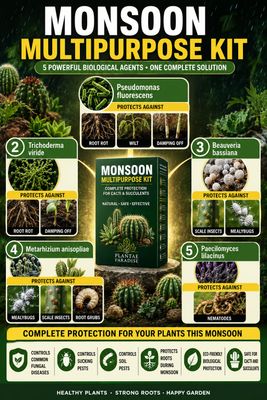
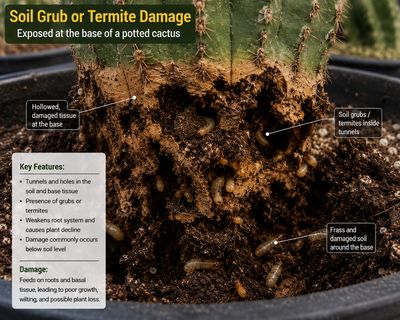
Monsoon Guardian Kit (5 in 1)
Monsoon Guardian Kit (5 in 1)
Complete 5-in-1 biological protection kit for cacti & succulents
SKU MNS024
₹850.00

FORTIFIED Cactus & Succulent SOIL (COARSE)
FORTIFIED Cactus & Succulent SOIL (COARSE)
SKU MNS004
5.0
(12)
₹54.85

FORTIFIED Cactus & Succulent SOIL (FINE)
FORTIFIED Cactus & Succulent SOIL (FINE)
SKU MNS002
5.0
(4)
₹49.85
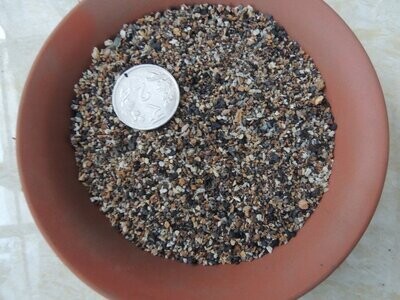
Cactus Seed Planting Mix
Cactus Seed Planting Mix
Sterile, Fine-Grain Media for Cactus & Succulent Seeds
SKU MNS005
₹74.85
Display prices in:INR
