
Categories
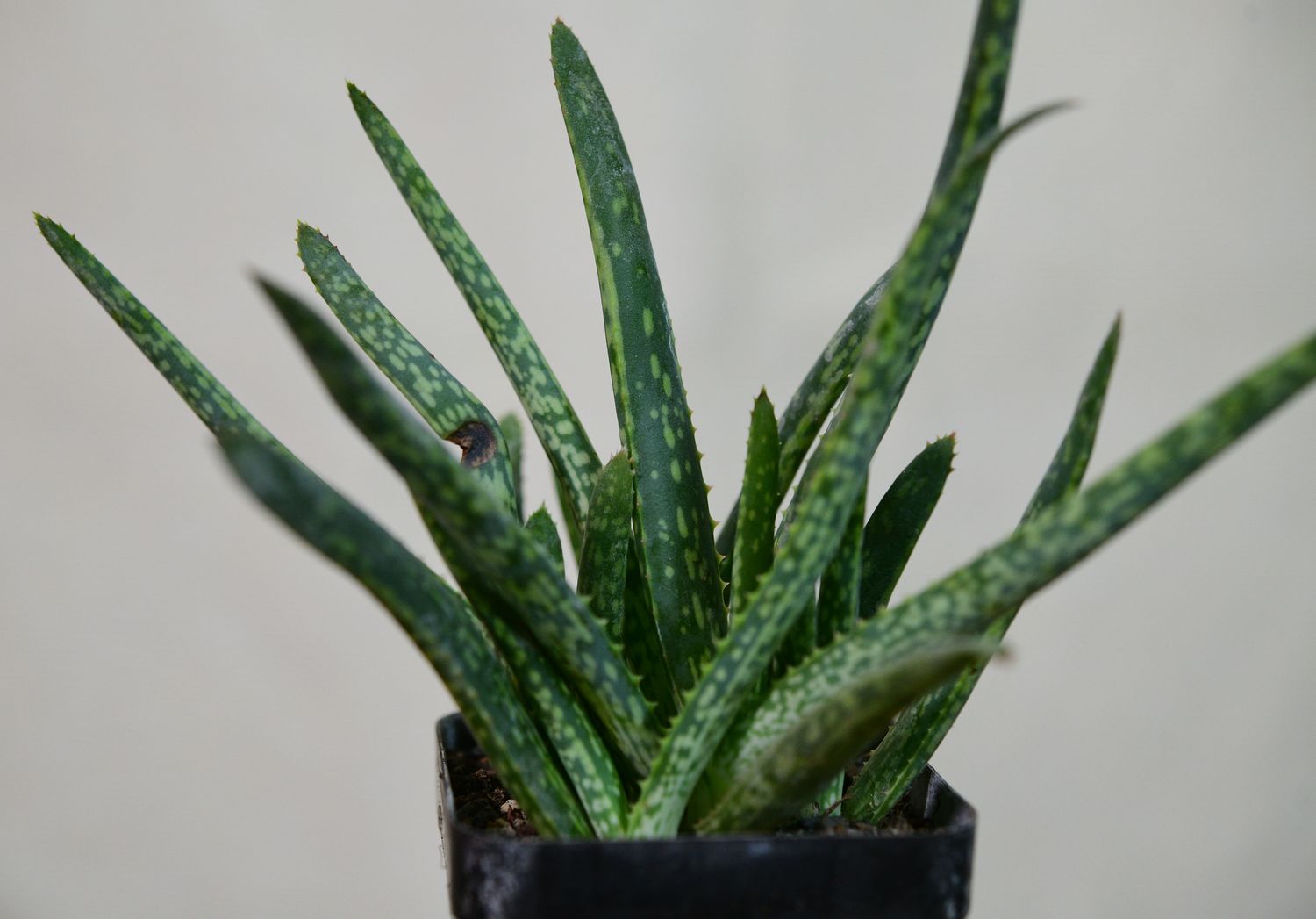
Aloe vera 'Monstrose' (Miniature Clone)
SKU AL048
₹350.00
In stock: 5 available
1
Save this product for later
Customer reviews
Reviews only from verified customers
No reviews yet. You can buy this product and be the first to leave a review.
Aloe vera 'Monstrose' (Miniature Clone)
Product Details
Aloe vera 'Monstrose' (Miniature Clone)
The world's most famous succulent, reimagined as a small, jumbled starburst — thick, pale-flecked leaves shoot outward in every direction rather than settling into the tidy spiral of an ordinary Aloe vera, the result of a spontaneous growth mutation carefully multiplied and kept miniature for the collector's shelf.
Origin of Name
The word "aloe" traces back through Latin aloe and Greek aloē to an uncertain, likely Semitic or Oriental source — its exact roots are still debated by linguists, though the word had already settled into European languages by the time it reached English in the 14th century as a name for spiky, thick-leaved desert plants. In the 1680s, European traders and gardeners began mistakenly applying the same name to the completely unrelated American agave, whose rosette of fleshy, spined leaves looks superficially similar — so growers started calling the original, true medicinal plant Aloe vera, adding the Latin vera, "true," specifically to separate it from the impostor. That name stuck for good reason: this is the species virtually all of aloe's ancient medicinal and cosmetic reputation actually belongs to.
Its formal scientific history is almost as tangled as its common name. Carl Linnaeus first classified it in 1753 as a variety, Aloe perfoliata var. vera; in 1768, the Dutch botanist Nicolaas Laurens Burman elevated it to full species status as Aloe vera, while, in the same year, the English horticulturist Philip Miller independently published it under a different name, Aloe barbadensis — a name still occasionally seen on nursery labels and supplement bottles today, even though Aloe vera is now the accepted botanical name.
The "Monstrose" tag describes something else entirely: not a species or variety, but a growth abnormality. In ordinary Aloe vera, a single dominant growing point at the centre of the rosette directs leaves to emerge in a neat, regular spiral. In a monstrose mutation, that dominance breaks down — instead of one growth tip calling the shots, multiple competing points push out leaves in a chaotic, multi-directional tangle, giving the plant its lumpy, jumbled, "monstrous" form (from Latin monstrum, an omen or marvel — the same root that gives us "monster," historically used for anything strikingly abnormal, wondrous, or unnatural in appearance). Because this mutation isn't reliably passed on through seed, monstrose Aloe vera exists only through vegetative propagation: growers isolate a mutated offset or growing point and multiply it by division or, increasingly, tissue culture, which is how nurseries can now offer identical, lab-propagated "miniature clones" like this one — young plants selected and grown on at a compact size before the mutation's full, sprawling character has a chance to develop.
Origin of Plant
Ordinary Aloe vera's true wild origin is genuinely uncertain — no confirmed truly wild population has ever been documented, and most botanists now believe it may be extinct in the wild, or that it originated as an ancient hybrid, most likely somewhere on the Arabian Peninsula (the Hajar Mountains of Oman and the UAE are a leading candidate) or in the Horn of Africa, given its closest genetic relatives are found in Yemen, Somalia, and Sudan. What is certain is that humans have cultivated and carried it across the world for thousands of years — Aloe vera has been grown and traded for its gel and latex since at least the fourth millennium BCE, spreading from the Arabian Peninsula and North Africa across the Mediterranean, and eventually to every warm region on Earth as a garden and medicinal plant.
The monstrose form has no wild habitat of its own at all — it exists purely as a cultivated mutation, first noticed on an ordinary Aloe vera plant somewhere in commercial production and then deliberately preserved and multiplied ever since through cuttings and tissue culture, rather than gathered from nature.
Description
A typical Aloe vera grows as a stemless or short-stemmed rosette of thick, lance-shaped, grey-green leaves, often flecked with white spots when young, their margins lined with small, soft, pale teeth — orderly, symmetrical, and instantly recognisable. This monstrose clone abandons that symmetry almost entirely: instead of a single spiralling rosette, thick, pointed leaves push outward from multiple competing growth points, radiating in every direction — some upright, some splayed sideways, some doubling back on themselves — crowding together at the base into a dense, irregular tangle rather than a tidy fan. The leaves themselves retain the species' familiar pale flecking and small marginal teeth, and the same firm, water-storing succulence, but their arrangement is unmistakably abnormal, giving the whole plant a spiky, sculptural, almost sea-anemone-like presence very different from a standard Aloe vera. Because so much of the plant's energy goes into this disorganised vegetative growth, monstrose Aloe vera flowers only rarely, if at all, in cultivation — it's grown and collected for its strange form rather than for bloom.
Conservation Status
Ordinary Aloe vera has no meaningful conservation concern in the way a wild species normally would — since a genuinely wild population has likely never survived into modern times, the plant exists today almost entirely through millennia of human cultivation, and it has since naturalized in warm climates worldwide, from the Mediterranean to the Caribbean to South and Southeast Asia. This monstrose clone takes that a step further: it is a mutation maintained exclusively in cultivation through vegetative propagation and tissue culture, with no wild population to speak of at all, making it about as far from a conservation concern as a succulent can be.
Care
Light: Bright light or a few hours of gentle direct sun keeps growth compact; too little light will cause even a normal Aloe vera to stretch and lose colour, and a monstrose clone is no exception.
Watering: Water thoroughly, then let the soil dry out completely before watering again — Aloe vera is highly drought-tolerant and much more likely to suffer from overwatering than under. Take extra care with a monstrose plant's crowded, overlapping leaf bases, since trapped moisture between them is a common spot for rot to start.
Soil: A fast-draining succulent or cactus mix is essential, ideally in a pot with a generous drainage hole.
Temperature: A warm grower with no frost tolerance; keep it above about 10°C (50°F) and bring container plants indoors well before any cold snap.
General tips: Because the mutation isn't seed-stable, always propagate from offsets or divisions taken from the monstrose plant itself rather than from seed, which will simply grow into an ordinary rosette. Growth is typically slower than standard Aloe vera, and the plant is happy to stay in a relatively small pot for a long time, making it well suited to a windowsill collection of oddities.
An Interesting Note
Few plants carry a reputation quite like ordinary Aloe vera's: ancient Egyptians called it the "plant of immortality" and reportedly placed it among funerary offerings, while a well-worn legend holds that Aristotle urged his former student Alexander the Great to seize the island of Socotra specifically to secure its famous aloe supply, after aloe gel was credited with healing an infected wound Alexander suffered during the siege of Gaza in 330 BCE — a story repeated for centuries as proof of the plant's near-miraculous healing power. It's a fittingly larger-than-life history for a species whose name literally means "the true one" — and there's something quietly amusing about the fact that this particular clone, descended from the single most famous medicinal plant in human history, has been prized instead for the exact opposite of its usual orderly reputation: a small, cheerfully chaotic mutation grown purely because it refuses to grow the way it's supposed to.
You May Also Like
Cactus Seed Planting Mix
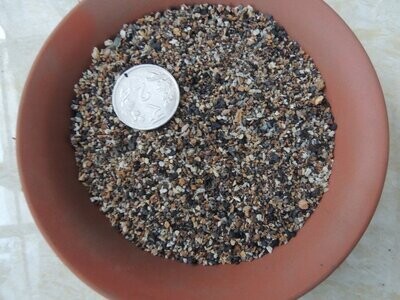
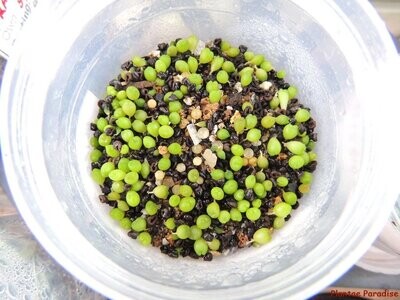
Cactus Seed Planting Mix
Sterile, Fine-Grain Media for Cactus & Succulent Seeds
SKU MNS005
₹74.85
FORTIFIED Cactus & Succulent SOIL (COARSE)
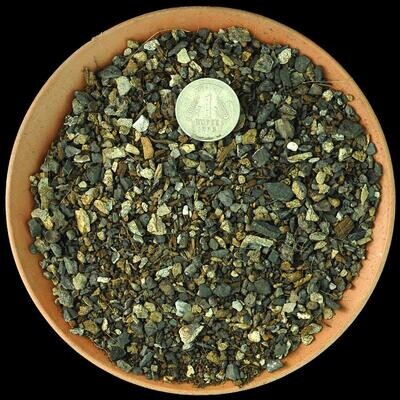
FORTIFIED Cactus & Succulent SOIL (COARSE)
SKU MNS004
5.0
(11)
₹54.85
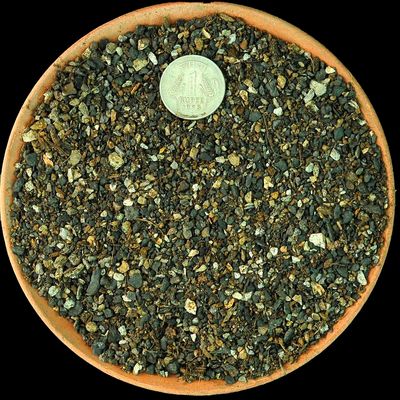
FORTIFIED Cactus & Succulent SOIL (FINE)
FORTIFIED Cactus & Succulent SOIL (FINE)
SKU MNS002
5.0
(4)
₹49.85
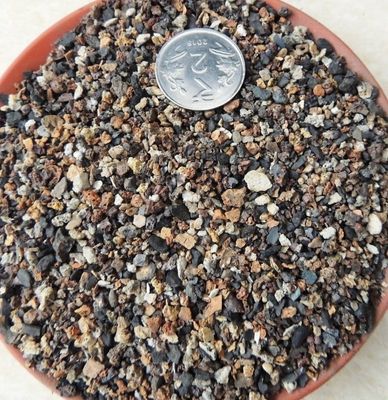
Cactus & Succulent Planting Mix FINE (aka Cactus Soil Mix or Succulent Soil Mix)
Cactus & Succulent Planting Mix FINE (aka Cactus Soil Mix or Succulent Soil Mix)
Fine-Grain Potting Mix for Cactus & Succulent Roots
SKU MNS001
5.0
(3)
₹39.85
Display prices in:INR
