
Categories
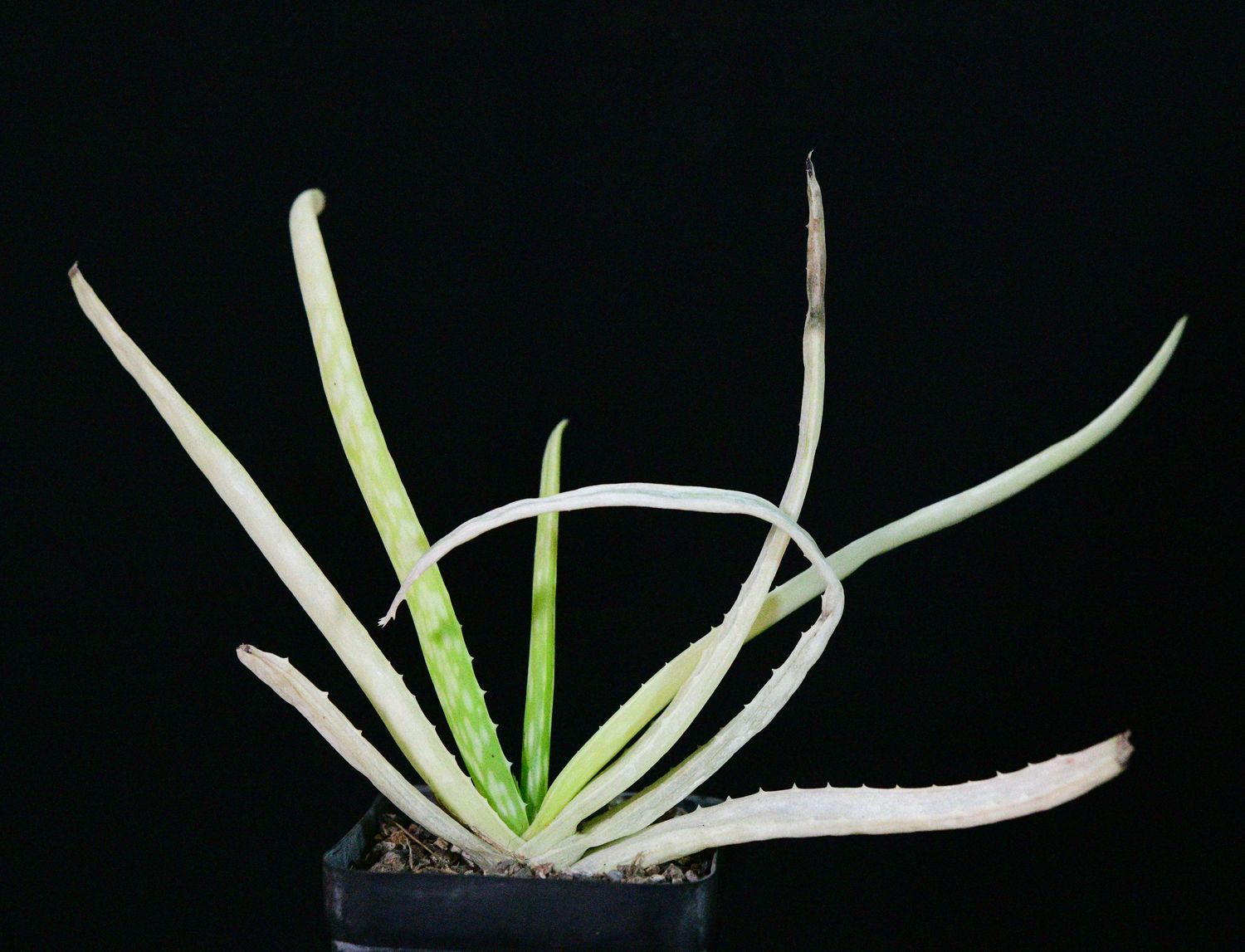
Aloe vera (variegated)
SKU AL019
₹200.00
In stock: 1 available
1
Save this product for later
Customer reviews
Reviews only from verified customers
No reviews yet. You can buy this product and be the first to leave a review.
Aloe vera (variegated)
Product Details
Aloe vera 'Variegata' (Variegated True Aloe)
The world's most famous medicinal succulent, dressed for display — broad, lax leaves streaked lengthwise in cream, ivory, and soft sage-green, the pattern shifting from almost pure white to solid green from one leaf to the next on the very same plant.
Origin of Name
The word "aloe" traces back through Latin aloe and Greek aloē to an uncertain, likely Oriental source, arriving in English by the 14th century as a name for spiky, thick-leaved desert plants. When 17th-century traders began mistakenly calling the unrelated American agave an "aloe" too, growers added the Latin vera — "true" — to the original medicinal plant's name specifically to separate the genuine article from its look-alike impostor. Its formal botanical history added a further layer of confusion: Linnaeus classified it in 1753 as a mere variety, Aloe perfoliata var. vera; in 1768 the Dutch botanist Nicolaas Laurens Burman raised it to full species status as Aloe vera, while English horticulturist Philip Miller independently published the very same plant that same year as Aloe barbadensis — a name still occasionally seen on labels today even though Aloe vera remains the accepted one.
"Variegated" isn't a botanical variety or a registered cultivar name here, but a plain descriptive term for a plant whose leaves show two or more distinct colours rather than uniform green. In this case the effect comes from a genetic chimera: as the plant grows, its stem and leaf tissue develop from more than one genetically distinct cell line growing side by side, one producing ordinary chlorophyll-rich green cells and another producing pale cells with little or no functional chlorophyll. Because both cell lines sit in physical layers within the growing tip, which layer contributes most to any given new leaf can shift as the plant grows, which is exactly why the pattern here varies so much from leaf to leaf — some almost entirely cream and white, others returning to solid green, with several showing the classic longitudinal striping in between.
Origin of Plant
Ordinary Aloe vera has no confirmed truly wild population anywhere in the world — most botanists now suspect the species may be extinct in the wild or arose as an ancient hybrid, most likely somewhere on the Arabian Peninsula (the Hajar Mountains of Oman and the UAE are the leading candidate) or in the Horn of Africa, given its closest living relatives grow in Yemen, Somalia, and Sudan. What's certain is that people have cultivated it for an extraordinarily long time: written references to aloe's medicinal use go back to Mesopotamian clay tablets from around 2100 BCE, and the plant spread with human trade and cultivation from the Arabian Peninsula and North Africa across the Mediterranean world and, eventually, to every warm region on Earth.
The variegated form has no wild habitat of its own at all. Like most chimeral variegation, it almost certainly began as a single spontaneous sport — an unexpected patch of pale, chlorophyll-deficient tissue appearing on an otherwise ordinary green plant somewhere in cultivation — that a grower noticed, isolated, and propagated onward by division rather than seed, since a chimera's pattern isn't reliably passed down through seedlings.
Description
An ordinary Aloe vera grows as a tidy, upright rosette of thick, lance-shaped, uniformly grey-green leaves. This variegated form keeps the same fleshy, water-storing leaf structure and the same small, soft marginal teeth, but trades the uniform colour for bold longitudinal streaks running the full length of each leaf — bands of creamy white, pale ivory, and soft sage to mid-green, arranged differently on almost every leaf, from centre growth that's still mostly solid green to older, more strongly patterned leaves that curve and arch outward under their own weight. That laxer, more sprawling habit is typical of variegated succulents generally: with less working chlorophyll spread across the leaf surface, the plant produces less structural rigidity than a fully green specimen of the same size, giving this form its distinctive loose, gesturing silhouette rather than the stiffer, more upright stance of a standard Aloe vera.
Conservation Status
As with the species generally, there's no meaningful wild conservation concern to speak of — since a genuinely wild Aloe vera population likely hasn't existed in modern times, the species survives almost entirely through millennia of human cultivation and has since naturalized across warm regions worldwide. The variegated form takes this a step further still: it exists purely as a cultivated genetic sport, maintained and multiplied only through vegetative propagation in nurseries, with no wild population and no collection pressure involved whatsoever.
Care
Light: Bright light is especially important here — the plant's pale, low-chlorophyll tissue contributes little to its energy budget, so the green portions need strong light to keep the whole plant fed. That said, ease it into full, harsh midday sun gradually, since the palest, whitest sections can scorch more readily than ordinary green leaf tissue.
Watering: Water thoroughly, then let the soil dry out completely before watering again. Variegated Aloe vera grows more slowly than the plain green form, so it's even more vulnerable to rot from being kept too wet for too long — when in doubt, wait.
Soil: A fast-draining succulent or cactus mix in a pot with a generous drainage hole is essential.
Temperature: A warm grower with no frost tolerance; keep it above about 10°C (50°F) and bring container plants in well ahead of any cold snap.
General tips: Propagate only from offsets taken from the variegated parent plant, never from seed, which won't reliably carry the pattern forward. Watch for any pup or new growth that emerges fully green with no variegation at all — since green tissue photosynthesizes more efficiently, an all-green shoot will often outgrow and eventually crowd out the more decorative variegated growth if it isn't removed early.
An Interesting Note
It's a small irony that a plant this closely tied to ancient medicine is prized here for the exact opposite of its usual reputation. The Ebers Papyrus, an Egyptian medical text from around 1550 BCE, records twelve separate formulas combining aloe with other ingredients for everything from wound care to digestive complaints, and legend holds that both Nefertiti and Cleopatra relied on its gel as part of their beauty routines in the harsh desert climate of the Nile valley — reputation enough to earn the plant the nickname "the plant of immortality." Yet the palest, most striking sections of a variegated leaf like this one are exactly the parts with the least of that famous green gel-producing tissue behind them: this plant has been selected and kept not for what's inside the leaf, but for what the outside looks like, a purely ornamental detour from four thousand years of practical use.
You May Also Like


Cactus Seed Planting Mix
Cactus Seed Planting Mix
Sterile, Fine-Grain Media for Cactus & Succulent Seeds
SKU MNS005
₹74.85

Cactus & Succulent Planting Mix COARSE (aka Cactus Soil Mix or Succulent Soil Mix)
Cactus & Succulent Planting Mix COARSE (aka Cactus Soil Mix or Succulent Soil Mix)
Washed, Free-Draining Mineral Mix for Cactus & Succulents
SKU MNS003
5.0
(1)
₹44.85
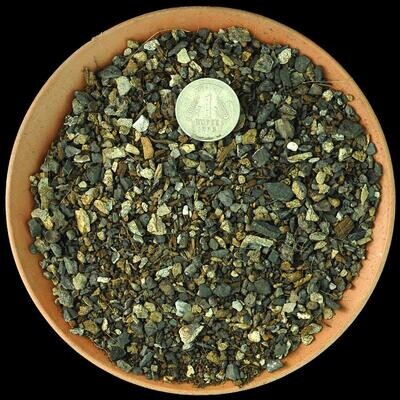
FORTIFIED Cactus & Succulent SOIL (COARSE)
FORTIFIED Cactus & Succulent SOIL (COARSE)
SKU MNS004
5.0
(12)
₹54.85

FORTIFIED Cactus & Succulent SOIL (FINE)
FORTIFIED Cactus & Succulent SOIL (FINE)
SKU MNS002
5.0
(4)
₹49.85
Display prices in:INR
