
Categories
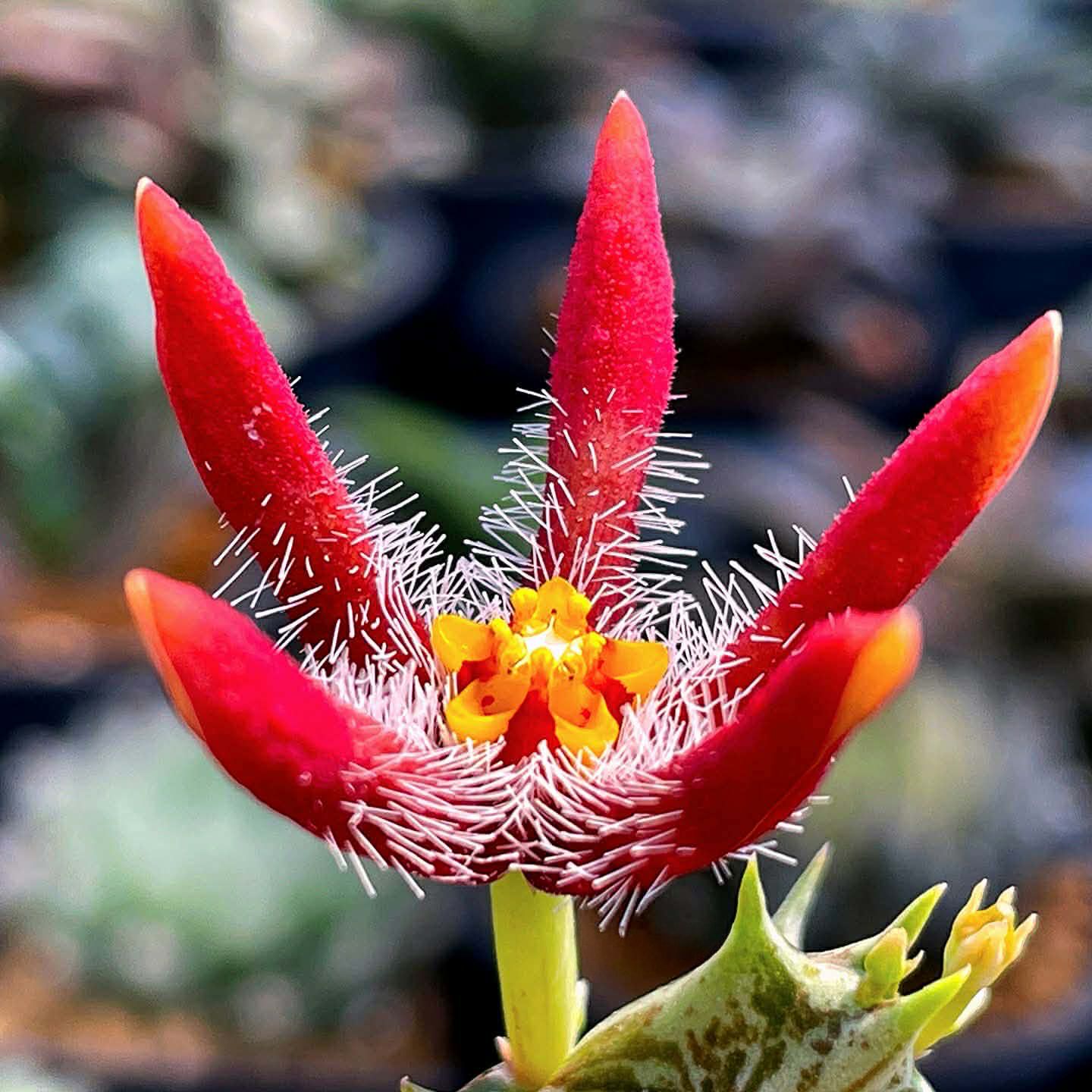
Angolluma chrysostephana, aka Orbea chrysostephana, Yemen
SKU ASC099
₹200.00
Sold out
Sold out
Save this product for later
Customer reviews
Reviews only from verified customers
No reviews yet. You can buy this product and be the first to leave a review.
Angolluma chrysostephana, aka Orbea chrysostephana, Yemen
Product Details
Golden Crown of the Desert: Angolluma chrysostephana
A rare Yemeni treasure, this stapeliad is prized for its intricate, crown-like golden-yellow blooms and distinctive mottled stems.
- Origin & History of Name: The genus name Angolluma is an anagram of Galluma, a traditional Arabic name for similar succulent Asclepiads. The specific epithet chrysostephana is derived from the Greek chrysos (gold) and stephanos (crown), referring to the vivid yellow corona of the flower. Historically classified under Orbea and Caralluma, it was re-established in Angolluma to reflect specific floral morphologies identified by botanists such as Michael Gilbert.
- Morphology: This succulent features decumbent, four-angled stems with a matte green epidermis often marked by purple-brown variegation. The costae (ribs) are prominently toothed with soft, tapering tubercles. Its most striking feature is the inflorescence: a campanulate (bell-shaped) flower with a deeply rugose surface, finished in a brilliant yellow that mimics the appearance of molten wax.
- Habitat & Origin: This is a wild species endemic to the rocky, arid highlands of Yemen. It thrives in limestone crevices and under the shade of xerophytic scrub. Our specimens are produced via greenhouse propagation from established mother plants, ensuring the protection of vulnerable wild populations in the Arabian Peninsula.
- Cultivation Profile:
- Substrate: Requires a hyper-porous mineral mix. Combine 80% volcanic grit or washed coarse sand with 20% leaf mold. Avoid coco-peat in high-humidity zones like Mumbai or Kerala to prevent fungal pathogens.
- Light: Opt for bright, filtered light. In the Indian subcontinent, direct midday summer sun will scorch the epidermis; 50% shade cloth is recommended to maintain the decorative stem mottling.
- Water/Dormancy: Strictly "dry-to-the-touch." Water sparingly during the summer growing season. During the Indian monsoon and winter, the plant enters a semi-dormant state; withhold water almost entirely to prevent "black rot," a common risk for Arabian stapeliads in humid air.
- Scientific/Historical Anecdote: Angolluma chrysostephana belongs to the "carrion flower" group, but unlike its cousins that smell of decaying protein to attract flies, its scent is often described as much milder or even nonexistent. This evolutionary trait suggests it may target a more specific niche of pollinators within the isolated mountain plateaus of Yemen compared to more widespread Orbea species.
You May Also Like
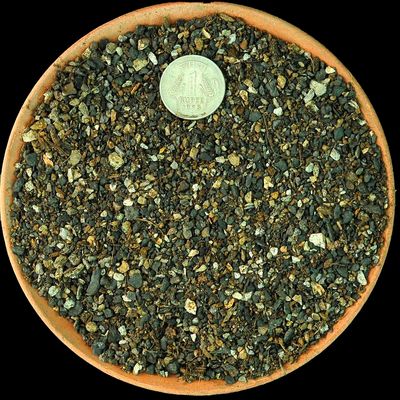
FORTIFIED Cactus & Succulent SOIL (FINE)
FORTIFIED Cactus & Succulent SOIL (FINE)
SKU MNS002
5.0
(4)
₹49.85
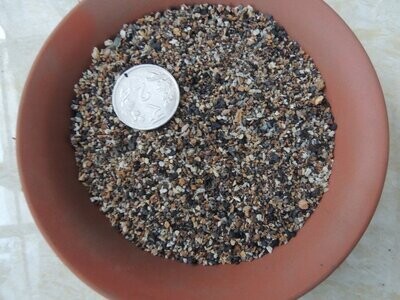
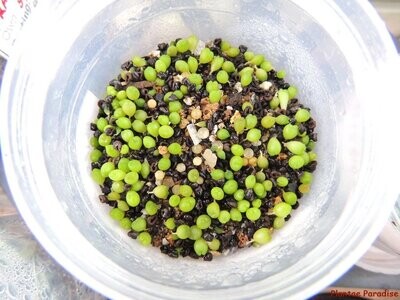
Cactus Seed Planting Mix
Cactus Seed Planting Mix
Sterile, Fine-Grain Media for Cactus & Succulent Seeds
SKU MNS005
₹74.85

FORTIFIED Cactus & Succulent SOIL (COARSE)
FORTIFIED Cactus & Succulent SOIL (COARSE)
SKU MNS004
5.0
(11)
₹54.85


Cactus & Succulent Planting Mix FINE (aka Cactus Soil Mix or Succulent Soil Mix)
Cactus & Succulent Planting Mix FINE (aka Cactus Soil Mix or Succulent Soil Mix)
Fine-Grain Potting Mix for Cactus & Succulent Roots
SKU MNS001
5.0
(3)
₹39.85
Display prices in:INR
