
Categories
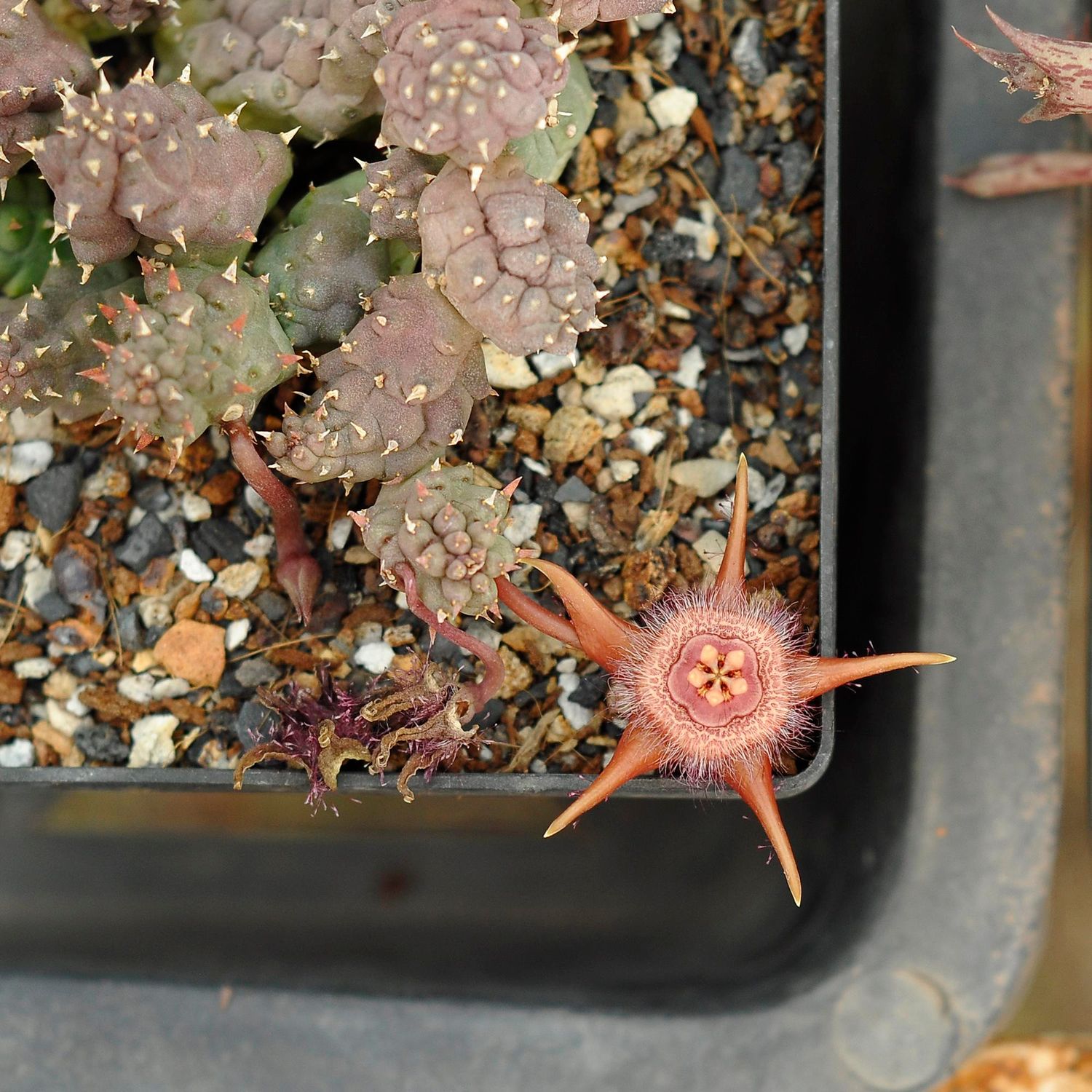
Duvalia corderoyi
SKU ASC057
₹450.00
Sold out
Sold out
Save this product for later
Customer reviews
Reviews only from verified customers
No reviews yet. You can buy this product and be the first to leave a review.
Duvalia corderoyi
Product Details
Origin of Name
The genus "Stapelia" is named after Johannes van Stapel, a Dutch botanist who first described a species of this genus in the early 17th century. The species name "schinzii" honors Swiss botanist Hans Schinz, recognizing his contributions to the study of African flora. The varietal name "angolensis" indicates its geographical association with Angola, pointing to this variety's specific region of origin within the broader distribution of the species.
Technical Description of Plant
Stapelia schinzii var. angolensis is characterized by its succulent, angular stems that grow low to the ground, forming a dense mat. The stems are green to gray-green and can exhibit slight purple tinges under intense sunlight or stress conditions. Unlike typical cacti, it lacks spines, making it tactilely friendly. The most striking feature of this variety is its flowers; large, star-shaped, and velvety, with a color palette that ranges from deep maroon to almost black, often adorned with intricate patterns. These blooms are famous for their carrion scent, evolved to attract pollinating insects like flies.
Origin of Plant
This variety is native to Angola and possibly extends into neighboring regions. It thrives in arid to semi-arid environments, where it has adapted to survive with minimal water. Its natural habitat consists of rocky outcrops and sandy soils, which provide the excellent drainage it requires.
Conservation Status
There is limited specific conservation information on Stapelia schinzii var. angolensis. However, like many specialized succulents, it faces threats from habitat loss and overcollection. Conservation efforts for plants in the Stapelia genus typically focus on habitat preservation and promoting cultivation to alleviate pressure on wild populations.
Care Instructions
Stapelia schinzii var. angolensis prefers a well-draining soil mix, such as a cactus or succulent potting mix, to prevent root rot. It should be placed in a location that receives bright, indirect light or partial shade to mimic its natural environment and avoid scorching the stems. Water moderately during the growing season when the soil completely dries out, reducing watering in the winter to a minimum. This variety is not frost-tolerant and should be protected from cold temperatures. Fertilize lightly with a succulent-specific fertilizer during the active growing season to encourage growth and blooming.ASC056 Stapelia schinzii var angolensis
Full pot as shown will be sent.
You May Also Like
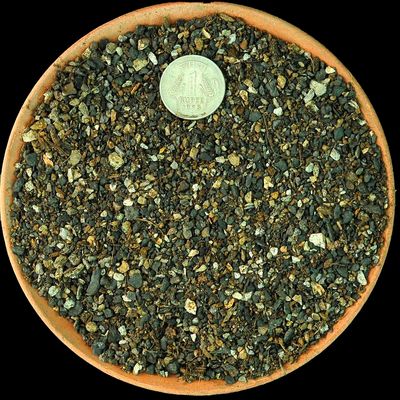
FORTIFIED Cactus & Succulent SOIL (FINE)
FORTIFIED Cactus & Succulent SOIL (FINE)
SKU MNS002
5.0
(4)
₹49.85
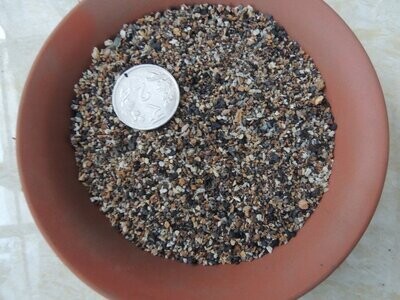
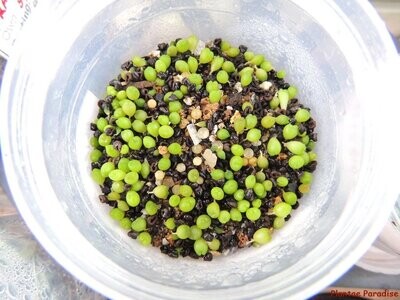
Cactus Seed Planting Mix
Cactus Seed Planting Mix
Sterile, Fine-Grain Media for Cactus & Succulent Seeds
SKU MNS005
₹74.85

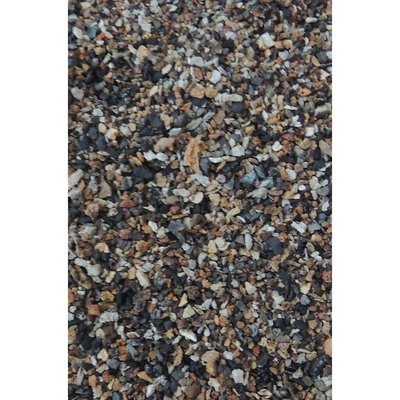
Cactus & Succulent Planting Mix FINE (aka Cactus Soil Mix or Succulent Soil Mix)
Cactus & Succulent Planting Mix FINE (aka Cactus Soil Mix or Succulent Soil Mix)
Fine-Grain Potting Mix for Cactus & Succulent Roots
SKU MNS001
5.0
(3)
₹39.85
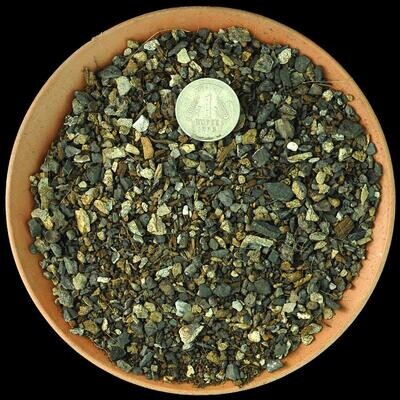
FORTIFIED Cactus & Succulent SOIL (COARSE)
FORTIFIED Cactus & Succulent SOIL (COARSE)
SKU MNS004
5.0
(11)
₹54.85
Display prices in:INR
