
Categories
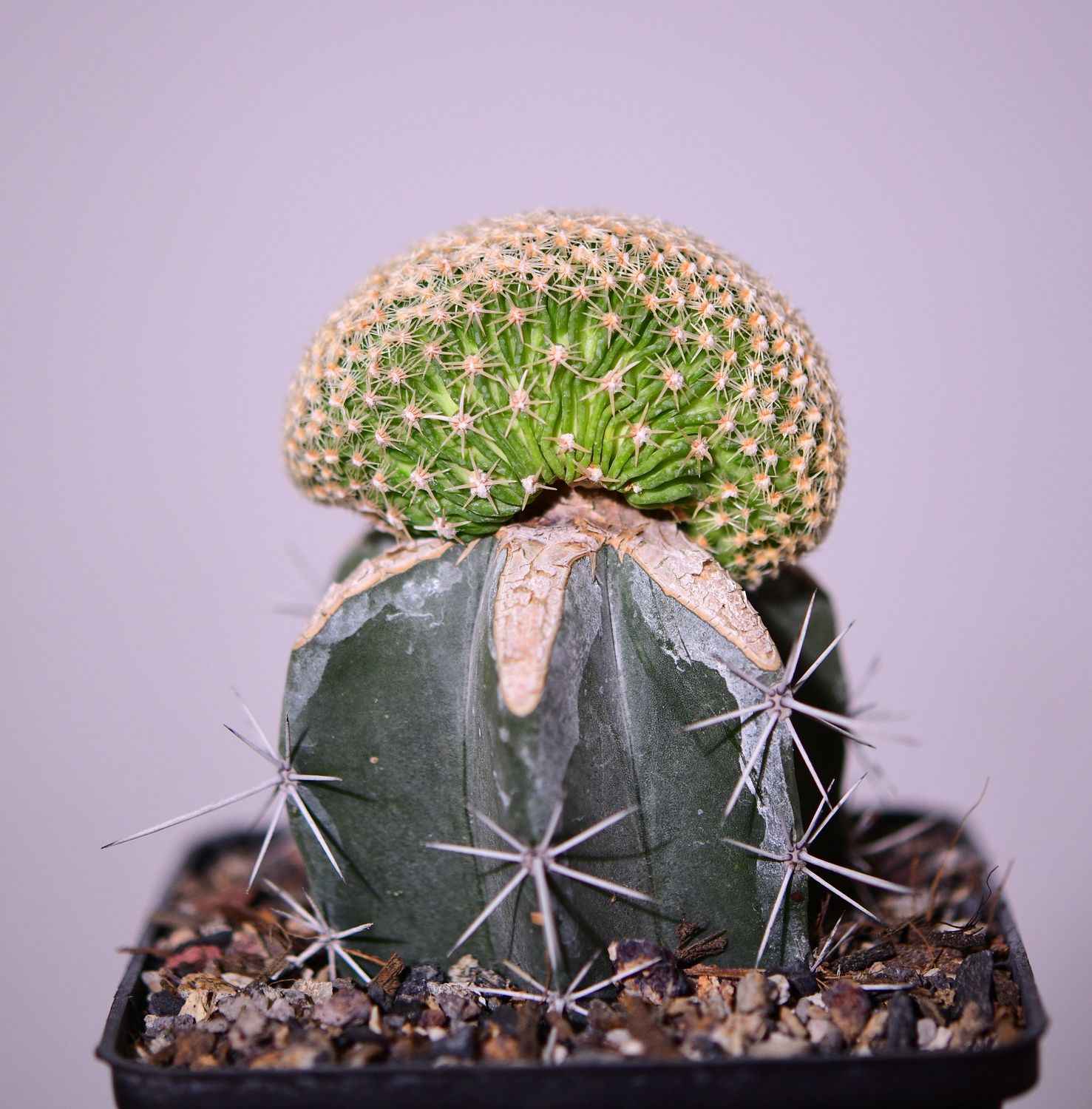
Echinofossulocactus sp Crest
SKU EF009
₹1 850.00
Sold out
Sold out
Save this product for later
Customer reviews
Reviews only from verified customers
No reviews yet. You can buy this product and be the first to leave a review.
Echinofossulocactus sp Crest
Product Details
A cactus caught mid-metamorphosis — this crested Echinofossulocactus (now more properly Stenocactus) trades the tidy globe of its species for something stranger and more sculptural: a dense, undulating fan of green tissue, bristling with hundreds of fine golden spines. It's less a plant than a small, spiky topographic map.
Origin of Name
The older, still widely traded genus name Echinofossulocactus is a Latin compound of ĕchīnus, meaning "sea-urchin" or "hedgehog," and fossŭla, meaning "furrow," joined to cactus — a nod both to the spiny, urchin-like areoles and to the deep grooves running between the ribs of many species in the group. It's a name modern taxonomists have rather affectionately called a mouthful; one botanical dictionary reports it was once dismissed outright as a "word monstrosity." That reputation, along with a genuinely tangled nomenclatural history, is why most of these plants are now classified under the tidier name Stenocactus, from the Greek stenos, meaning "narrow," a reference to the very thin, numerous ribs that give the genus its common nicknames — "wave cactus" and, more memorably, "brain cactus." Despite the official reclassification, growers and collectors still routinely sell and label these plants under the old Echinofossulocactus name, which is why you'll frequently see both names used interchangeably in the trade. cactusnames + 2
This particular specimen is offered unidentified to exact species — labelled simply Echinofossulocactus sp. — and, more importantly, as a crest (or cristate form). Crested growth is not a species trait but a genetic mutation affecting the plant's growing point, causing the normal single point of growth to fan out into a long, undulating line of meristem tissue instead. The result is a form of natural sculpture unique to each individual plant, prized by collectors precisely because no two crests are ever quite alike.
Origin of Plant
The genus Stenocactus/Echinofossulocactus is native to the Chihuahuan desert region of north-central Mexico, spanning states such as Zacatecas, San Luis Potosí, Guanajuato, Hidalgo, and neighbouring areas, where its various species grow as small, globose desert dwellers among rocky, arid scrub. Crested specimens like this one are not collected from habitat — cristate mutations are rare, spontaneous events that arise occasionally in seedling populations, whether in the wild or, far more commonly and reliably, under controlled nursery propagation, where growers select and vegetatively propagate crested individuals once they appear. cactiguide
Description
In its normal, uncristate form, this genus produces a small, globular plant with an extraordinary number of thin, wavy, papery-edged ribs — the "brain-like" undulations that give the group its common name — armed with fine, often colourful spines. In this crested specimen, that architecture has been thrown into disarray in the most decorative way possible: rather than a single growing point radiating ribs in a sphere, the growth has fanned outward into a broad, folded, dome-like mound of tightly packed tissue, with ribs and areoles bending and rippling across the surface in dense, hypnotic waves. The spination is fine, golden-cream to whitish, and so numerous that it forms an almost velvety halo over the green flesh beneath — a textural contrast that is much of the appeal of crested cacti as display specimens. Crested Stenocactus rarely flower true to form, and most collectors grow them purely for this striking vegetative sculpture rather than for bloom.
Conservation Status
Species within Stenocactus/Echinofossulocactus are, like the great majority of cacti, listed under CITES Appendix II, regulating international trade in wild-collected material. As this is a nursery-propagated crested specimen — grown under cultivation rather than removed from habitat — it qualifies under the artificially propagated exemption, and can be sold and shipped without the restrictions placed on wild plants. Most Stenocactus species in the wild are not currently considered at high extinction risk, though localized habitat pressure affects some populations.
Care
- Light: Full sun to light shade; some protection from the most intense midday sun helps prevent scorching on the densely spined crest surface.
- Watering: Moderate watering through spring and summer, letting the soil dry out between waterings; reduce significantly in winter.
- Soil: Fast-draining, mineral-rich cactus mix is essential — crested growth can be more prone to rot than normal form plants if kept too wet.
- Pot: Terracotta over plastic, to help wick away excess moisture from the root zone.
- Temperature: Prefers a range from cool to warm; tolerates light frost once well established but is best protected from hard freezes.
- Feeding: A low-nitrogen, high-potassium cactus fertiliser during the growing season supports steady, healthy tissue growth without encouraging soft, rot-prone flesh.
- A cool, dry winter rest is beneficial for overall plant health, even though flowering is not the primary goal with crested forms.
A Story Worth Telling
Crested cacti occupy a strange and delightful corner of succulent collecting. The mutation that produces them — fasciation — is essentially a hiccup in the plant's growth hormones, causing the single point of active cell division at the growing tip to elongate into a line rather than staying a point. It's the same phenomenon, in different plants, behind crested cockscomb flowers and fasciated stems in all sorts of species, but in cacti it produces some of the most dramatically collectible forms in the entire hobby, since the rippling, brain-like growth of a genus already nicknamed "brain cactus" becomes, once crested, almost hypnotically strange. Because the mutation is unpredictable and largely unrepeatable from seed, every crested Stenocactus in cultivation traces back to a single lucky specimen someone spotted and propagated — which means the plant in front of you isn't just unusual, it's effectively a clone of a genuine one-off discovery.
You May Also Like
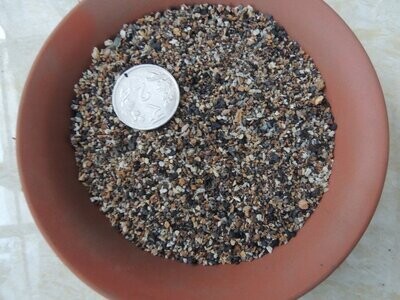
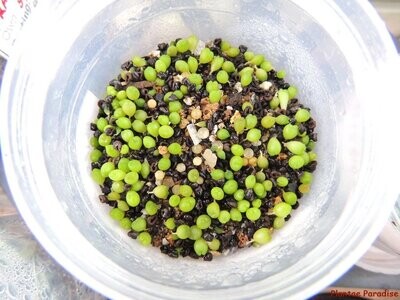
Cactus Seed Planting Mix
Cactus Seed Planting Mix
Sterile, Fine-Grain Media for Cactus & Succulent Seeds
SKU MNS005
₹74.85

FORTIFIED Cactus & Succulent SOIL (COARSE)
FORTIFIED Cactus & Succulent SOIL (COARSE)
SKU MNS004
5.0
(11)
₹54.85
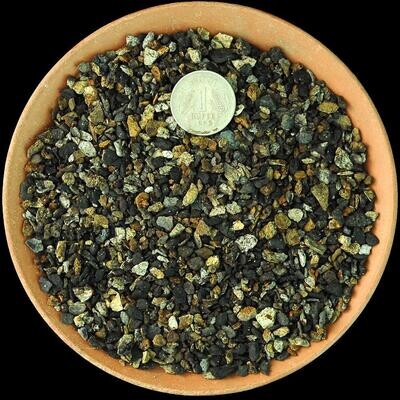
Cactus & Succulent Planting Mix COARSE (aka Cactus Soil Mix or Succulent Soil Mix)
Cactus & Succulent Planting Mix COARSE (aka Cactus Soil Mix or Succulent Soil Mix)
Washed, Free-Draining Mineral Mix for Cactus & Succulents
SKU MNS003
5.0
(1)
₹44.85
FORTIFIED Cactus & Succulent SOIL (FINE)
FORTIFIED Cactus & Succulent SOIL (FINE)
SKU MNS002
5.0
(4)
₹49.85
Display prices in:INR
