
Categories
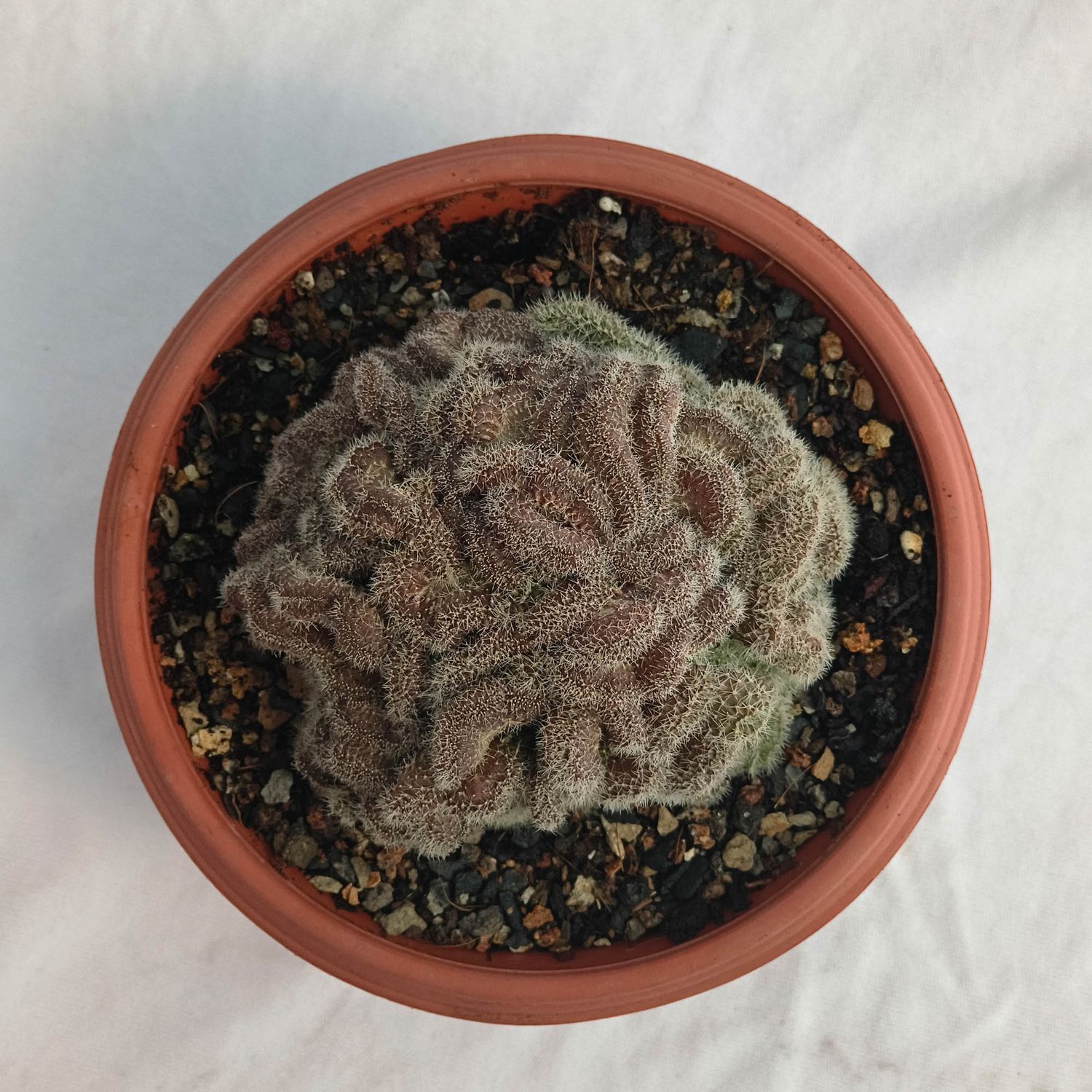
Echinopis CREST
SKU LET605
₹750.00
In stock: 1 available
1
Save this product for later
Customer reviews
Reviews only from verified customers
No reviews yet. You can buy this product and be the first to leave a review.
Echinopis CREST
Product Details
Sculptural Geometry: Echinopsis f. cristata
A rare architectural marvel featuring undulating fan-like growth and high-density spine clusters.
- Origin & History of Name: The genus name Echinopsis is derived from the Greek echinos (hedgehog or sea urchin) and opsis (appearance), referencing the spiny, globose form typical of the genus. The term "crest" or "cristata" originates from the Latin crista, meaning "tuft" or "crest," denoting the plant's deviation from a single growing point into a linear, fan-like ridge.
- Morphology: This specimen exhibits "fasciation," a genetic mutation where the apical meristem (growing tip) stretches into a flattened, ribbon-like structure rather than a cylinder. The epidermis is typically a deep matte green, while the costae (ribs) become convoluted and wavy. Spines are produced along the entire elongated leading edge, creating a dense, protective "mane" across the crest.
- Habitat & Origin: This is a cultivated morphological mutant (cultivar). While the parent Echinopsis species are native to South America—primarily Argentina, Bolivia, and Brazil—the crested form occurs spontaneously in cultivation or nature and is propagated via grafting or cuttings to preserve the mutation. Ethical nursery propagation ensures these specimens are produced without disturbing wild populations.
- Cultivation Profile:
- Substrate: Use a highly porous, mineral-based mix consisting of 70% inorganic material (pumice, perlite, or crushed brick) and 30% organic matter to prevent root rot.
- Light: Requires bright, filtered sunlight. In the Indian subcontinent, provide 40-50% shade cloth protection during peak summer (April–June) to prevent epidermal scorching.
- Water/Dormancy: Water deeply only when the substrate is completely dry. During the Indian monsoon, ensure zero structural water-logging. Reduce watering significantly in winter (November–January) to respect the plant's natural dormancy.
- Scientific/Historical Anecdote: Fasciation in Echinopsis is a biological phenomenon that remains partially mysterious; while it can be triggered by bacterial infections or chemical shifts, the most sought-after "stable" crests are the result of a rare, inherent genetic mutation that persists throughout the plant's lifespan, essentially turning a single plant into a living, growing sculpture.
You May Also Like

Cactus & Succulent Planting Mix COARSE (aka Cactus Soil Mix or Succulent Soil Mix)
Cactus & Succulent Planting Mix COARSE (aka Cactus Soil Mix or Succulent Soil Mix)
Washed, Free-Draining Mineral Mix for Cactus & Succulents
SKU MNS003
5.0
(1)
₹40.51

FORTIFIED Cactus & Succulent SOIL (COARSE)
FORTIFIED Cactus & Succulent SOIL (COARSE)
SKU MNS004
5.0
(8)
₹50.51
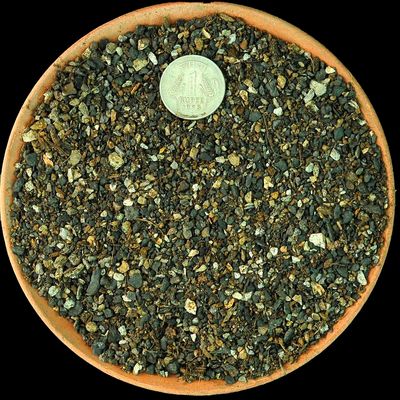
FORTIFIED Cactus & Succulent SOIL (FINE)
FORTIFIED Cactus & Succulent SOIL (FINE)
SKU MNS002
5.0
(3)
₹45.51

Cactus & Succulent Planting Mix FINE (aka Cactus Soil Mix or Succulent Soil Mix)
Cactus & Succulent Planting Mix FINE (aka Cactus Soil Mix or Succulent Soil Mix)
Fine-Grain Potting Mix for Cactus & Succulent Roots
SKU MNS001
5.0
(3)
₹35.51
Display prices in:INR
