
Categories
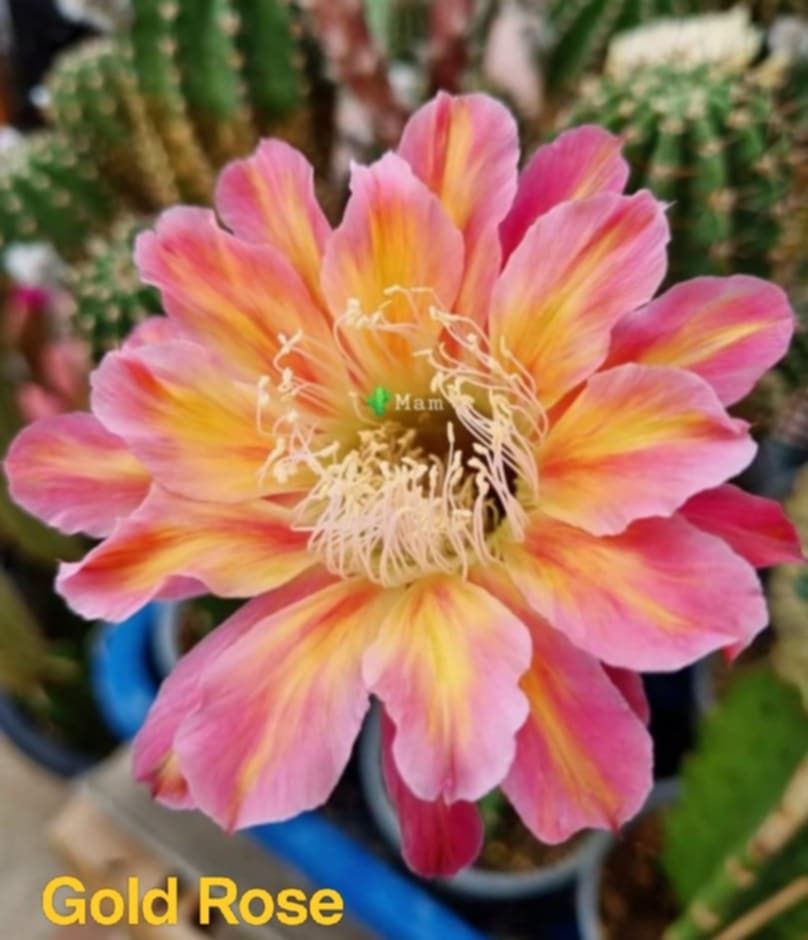
Echinopsis Hybrid Gold Rose
SKU LET481
₹750.00
In stock: 1 available
1
Save this product for later
Customer reviews
Reviews only from verified customers
No reviews yet. You can buy this product and be the first to leave a review.
Echinopsis Hybrid Gold Rose
Product Details
A many-petaled bloom that shifts, ring by ring, from deep rose-pink at the tip of each petal through a blaze of gold and apricot at its throat, gathered around a dark maroon eye and a wild tangle of cream-white stamens — an Echinopsis hybrid whose two-tone flower earns its name from either angle you look at it.
Origin of Name
'Gold Rose' is a descriptive cultivar name, chosen the way most Echinopsis hybrids are — for the character of the flower rather than any botanical distinction. Here the name captures the bloom's defining trait: petals that read as pure rose-pink at their outer edges, then flush unmistakably gold and apricot-orange as they run in toward the throat, so that the flower genuinely earns both halves of its name at once. As with many collector-traded Echinopsis hybrids, no formally published breeding record for this specific clone is part of the wider literature; it circulates, like so many named Echinopsis crosses, on the strength of the flower alone.
The genus name framing it, Echinopsis, was coined by German botanist Joseph Gerhard Zuccarini from the Greek echinos ("hedgehog" or "sea urchin") and -opsis ("resembling") — a nod to the spiny, globe-shaped bodies typical of the genus. Over the 20th and 21st centuries, Echinopsis absorbed related genera including Trichocereus and Lobivia, making it today one of the most hybridized genera in the entire cactus family.
Origin of Plant
Like all named Echinopsis hybrids, 'Gold Rose' has no wild habitat of its own — it's a garden-bred cross, not a species collected from nature. Its genetics trace back to wild Echinopsis ancestors native across Argentina, Bolivia, Peru, Brazil, Paraguay, and Uruguay, growing on desert grasslands and rocky Andean slopes. Generations of hybridizers, from Harry Johnson in the mid-20th century through later breeders like Robert Schick, have crossed these wild lines to produce ever larger, more intricately colored blooms on compact, easy-to-grow plants — the lineage 'Gold Rose' belongs to.
Description
The plant itself is a modest, ribbed, spine-studded stem, usually offsetting into a small clustering clump — entirely upstaged by the flower once it opens.
The bloom is wide, fully double, and densely layered with many overlapping petals: rose-pink at the tips, deepening and warming through gold and apricot-orange as each petal runs toward the base, before giving way to a small, dark maroon eye at the very center. From that dark throat rises a loose, wiry tangle of pale cream to white filamentous stamens tipped in soft yellow anthers, adding a fine, almost lace-like texture against the bold, saturated petal color. As with the rest of the Echinopsis group, each flower is short-lived — typically open for only a day — with fresh buds following through the growing season, so the plant flowers in bold, short-lived flushes rather than a slow trickle.
Conservation Status
As a cultivated hybrid, 'Gold Rose' has no IUCN Red List status of its own — it exists purely in cultivation, propagated by offsets rather than collected from the wild. Its wild Echinopsis ancestors are mostly not classified as threatened, though international trade in wild-collected cacti generally is regulated under CITES Appendix II. Choosing a nursery-grown hybrid like this one is always the sustainable choice.
Care
Light: Bright light is essential for strong flowering — several hours of direct or bright indirect sun, with relief from the harshest midday sun in hot climates.
Watering: Water deeply through spring–early autumn, letting the soil dry out completely between waterings. Cut back sharply in winter, keeping the plant nearly dry while dormant.
Soil: A fast-draining, mineral-rich cactus mix — standard potting soil amended with extra pumice, perlite, or coarse sand.
Temperature: Thrives in warm weather; keep above roughly 5°C (41°F) in winter and protect from frost.
General tips: Offsets can be removed once rooted and potted separately. Feed with a diluted, low-nitrogen cactus fertilizer through the growing season to support generous flowering, and give the plant a slight winter chill and dry rest to encourage strong bud formation the following spring.
An Interesting Note
The gold-to-rose gradient across each petal isn't a trick of dye or artificial selection for color alone — it's what happens when a flower layers two entirely different pigment systems in the same petal tissue: red-to-pink anthocyanins concentrated toward the petal tip, and yellow-to-orange carotenoids pooling toward the base near the throat. Where the two overlap or thin out, the eye reads gold, apricot, or blended coppery tones in between — which is exactly why so many of the most sought-after Echinopsis hybrids, 'Gold Rose' among them, chase multi-pigment blooms rather than a single flat color: it's the overlap itself, not either pigment alone, that produces the effect.
You May Also Like
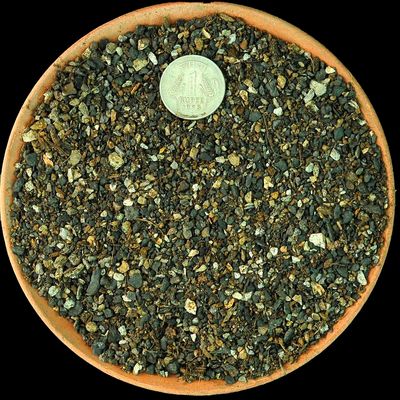
FORTIFIED Cactus & Succulent SOIL (FINE)
FORTIFIED Cactus & Succulent SOIL (FINE)
SKU MNS002
5.0
(4)
₹49.85


Cactus & Succulent Planting Mix FINE (aka Cactus Soil Mix or Succulent Soil Mix)
Cactus & Succulent Planting Mix FINE (aka Cactus Soil Mix or Succulent Soil Mix)
Fine-Grain Potting Mix for Cactus & Succulent Roots
SKU MNS001
5.0
(3)
₹39.85

Cactus & Succulent Planting Mix COARSE (aka Cactus Soil Mix or Succulent Soil Mix)
Cactus & Succulent Planting Mix COARSE (aka Cactus Soil Mix or Succulent Soil Mix)
Washed, Free-Draining Mineral Mix for Cactus & Succulents
SKU MNS003
5.0
(1)
₹44.85
New
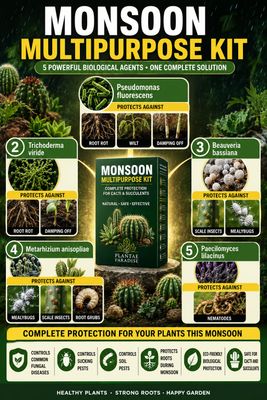
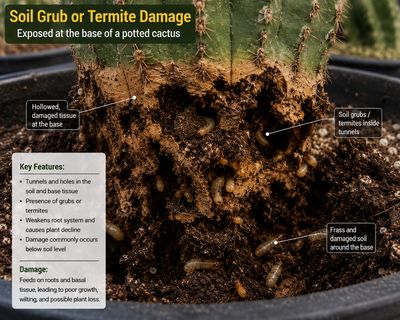
Monsoon Guardian Kit (5 in 1)
Monsoon Guardian Kit (5 in 1)
Complete 5-in-1 biological protection kit for cacti & succulents
SKU MNS024
₹850.00
Display prices in:INR
