
Categories
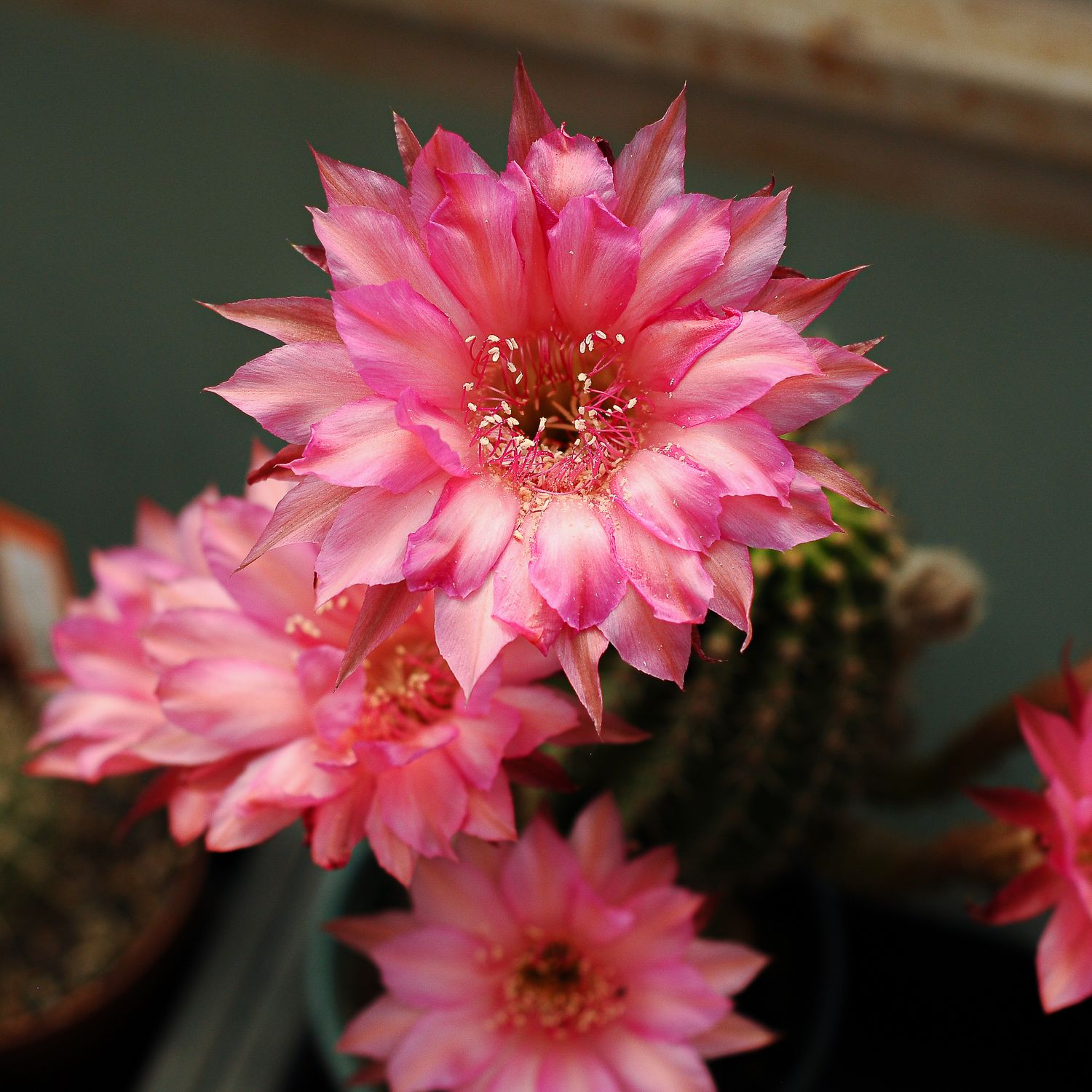
Echinopsis hybrid Elysia
SKU LET398
₹1 450.00
In stock: 1 available
1
Save this product for later
Customer reviews
Reviews only from verified customers
No reviews yet. You can buy this product and be the first to leave a review.
Echinopsis hybrid Elysia
Product Details
A dense, multi-layered bloom in rich rose-pink, its petals fading from deep magenta edges through soft blush toward a pale, almost luminous center — an Echinopsis hybrid named for paradise, opening in generous clusters along the stem.
Origin of Name
'Elysia' is a descriptive cultivar name, chosen the way most Echinopsis hybrids are — for the impression the flower makes rather than any botanical distinction. As with many collector-traded Echinopsis hybrids, no formally published breeding record for this specific clone is part of the wider literature; it circulates on the strength of the bloom alone. The name draws on Elysium, a word Latin borrowed from Greek Ēlysion — in classical mythology, the Elysian Fields were the paradise reserved for heroes and the virtuous dead, a place of eternal bliss rather than the shadowy underworld awaiting everyone else. Over time "Elysian" simply came to mean any place or state of perfect delight, the same sense preserved in Paris's Champs-Élysées. A flower this abundant and radiant, opening in whole clusters rather than one bloom at a time, earns the comparison honestly.
The genus name framing it, Echinopsis, was coined by German botanist Joseph Gerhard Zuccarini from the Greek echinos ("hedgehog" or "sea urchin") and -opsis ("resembling") — a nod to the spiny, globe-shaped bodies typical of the genus. Over the 20th and 21st centuries, Echinopsis absorbed related genera including Trichocereus and Lobivia, making it today one of the most hybridized genera in the entire cactus family.
Origin of Plant
Like all named Echinopsis hybrids, 'Elysia' has no wild habitat of its own — it's a garden-bred cross, not a species collected from nature. Its genetics trace back to wild Echinopsis ancestors native across Argentina, Bolivia, Peru, Brazil, Paraguay, and Uruguay, growing on desert grasslands and rocky Andean slopes. Generations of hybridizers, from Harry Johnson in the mid-20th century through later breeders like Robert Schick, have crossed these wild lines to produce ever larger, more richly colored, and more freely flowering plants — the lineage 'Elysia' belongs to.
Description
The plant itself is a modest, ribbed, spine-studded stem, usually offsetting into a small clustering clump — easy to overlook outside of bloom season, and prone to producing several flowers at once once established.
The flower opens fully double, with layer upon layer of petals in deep rose-magenta at the edges, softening through warm pink toward a pale, almost white-pink center. The outermost tepals carry a bronzed, russet-red cast, framing the brighter inner petals. At the center, fine red filaments rise around a cluster of pale cream anthers, surrounding a small greenish stigma. As with the rest of the Echinopsis group, each flower is short-lived — typically open for just a day — but 'Elysia' tends to flower generously, with several blooms opening together along the stem rather than singly.
Conservation Status
As a cultivated hybrid, 'Elysia' has no IUCN Red List status of its own — it exists purely in cultivation, propagated by offsets rather than collected from the wild. Its wild Echinopsis ancestors are mostly not classified as threatened, though international trade in wild-collected cacti generally is regulated under CITES Appendix II. Choosing a nursery-grown hybrid is always the sustainable choice.
Care
Light: Bright light is essential for strong flowering — several hours of direct or bright indirect sun, with relief from the harshest midday sun in hot climates.
Watering: Water deeply through spring–early autumn, letting the soil dry out completely between waterings. Cut back sharply in winter, keeping the plant nearly dry while dormant.
Soil: A fast-draining, mineral-rich cactus mix — standard potting soil amended with extra pumice, perlite, or coarse sand.
Temperature: Thrives in warm weather; keep above roughly 5°C (41°F) in winter and protect from frost.
General tips: Offsets can be removed once rooted and potted separately. Feed with a diluted, low-nitrogen cactus fertilizer through the growing season to encourage the plant's naturally generous flowering habit.
An Interesting Note
Echinopsis flowers like 'Elysia's are sometimes called "one-day wonders," and the name isn't an exaggeration — most open at night or in the early morning and wilt by the following evening. There's something fitting about naming a flower this fleeting after a mythological paradise: Elysium, too, was never meant to be a place the living could stay in, only visit in memory or imagination.
You May Also Like

Cactus & Succulent Planting Mix COARSE (aka Cactus Soil Mix or Succulent Soil Mix)
Cactus & Succulent Planting Mix COARSE (aka Cactus Soil Mix or Succulent Soil Mix)
Washed, Free-Draining Mineral Mix for Cactus & Succulents
SKU MNS003
5.0
(1)
₹44.85
New
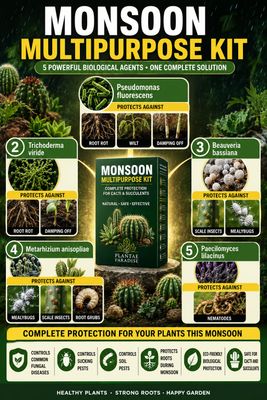
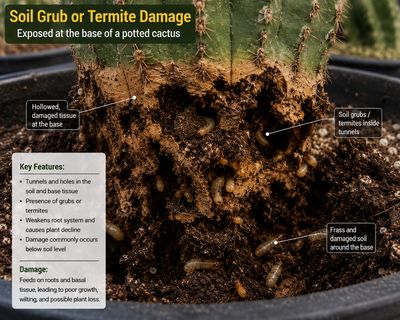
Monsoon Guardian Kit (5 in 1)
Monsoon Guardian Kit (5 in 1)
Complete 5-in-1 biological protection kit for cacti & succulents
SKU MNS024
₹850.00
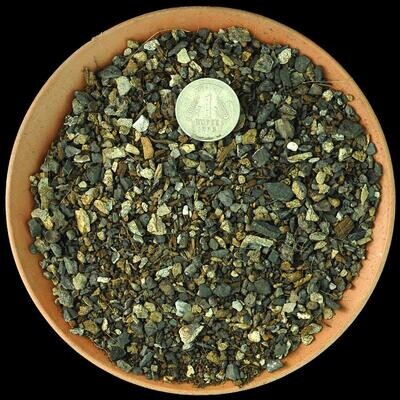
FORTIFIED Cactus & Succulent SOIL (COARSE)
FORTIFIED Cactus & Succulent SOIL (COARSE)
SKU MNS004
5.0
(11)
₹54.85


Cactus Seed Planting Mix
Cactus Seed Planting Mix
Sterile, Fine-Grain Media for Cactus & Succulent Seeds
SKU MNS005
₹74.85
Display prices in:INR
