
Categories
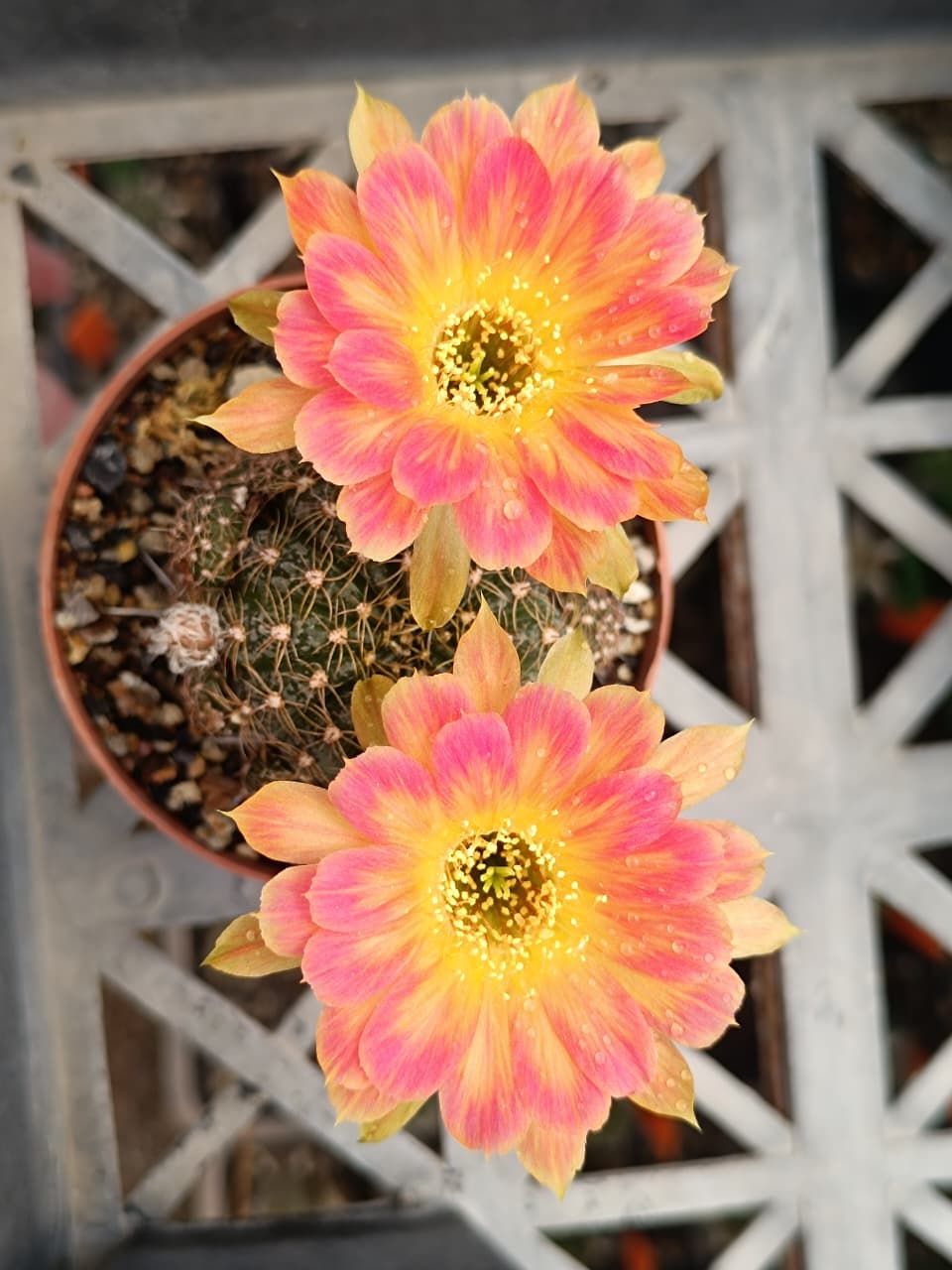
Echinopsis hybrid Fragrant L134
SKU LET362
₹750.00
In stock: 1 available
1
Save this product for later
Customer reviews
Reviews only from verified customers
No reviews yet. You can buy this product and be the first to leave a review.
Echinopsis hybrid Fragrant L134
Product Details
A living sunrise caught in bloom — this Lobivia hybrid unfurls silky, multi-toned petals that blaze from golden yellow through coral-pink, each flower a fleeting masterpiece perched atop a compact, spine-crowned body. Fragrant, prolific, and endlessly photogenic, 'Fragrant L134' is a must for any collector chasing colour that shouldn't exist in nature.
Lobivia hybrid "Fragrant L134"
1. Origin of Name
The genus name Lobivia is itself a small piece of botanical wordplay: it is an anagram of Bolivia, the South American nation where the majority of the genus's wild species were first collected and described. The name was coined in 1922 by British botanist and cactus specialist Britton and Rose, who needed a designation for a group of small, clustering, free-flowering cacti that didn't comfortably fit within the existing Echinopsis framework at the time. In the decades since, molecular and morphological studies have folded Lobivia back into a broader, modern concept of Echinopsis sensu lato — so plants of this type are now frequently labelled Echinopsis in scientific literature, even as "Lobivia" persists as the beloved, evocative name among growers, breeders, and collectors.
The cultivar designation "Fragrant L134" belongs to the modern era of hybrid cactus breeding, where enthusiast and specialist breeders cross-pollinate select Lobivia/Echinopsis lines to chase increasingly saturated, multi-toned flower colour and, in this case, scent — a trait less commonly emphasized in Lobivia breeding, since many species in the group are only lightly perfumed or scentless. T
2. Origin of Plant
The wild ancestors behind Lobivia hybrids trace back to the high-altitude reaches of the Andes, spanning Bolivia, southern Peru, northern Argentina, and Chile, typically at elevations between 2,000 and 4,000 metres. In these harsh, sun-drenched, and thermally volatile environments — scorching by day, near-freezing by night — Lobivia species evolved into low, clustering, cold-hardy cacti, an adaptation strategy entirely different from their taller, more solitary cactus cousins found at lower elevations.
European exploration of these Andean cactus populations intensified through the late 19th and early 20th centuries, with specimens and seed collected by botanist-explorers making their way into European and North American collections, where hybridizers began the long work of selecting for flower size, colour range, and floriferousness that defines modern named cultivars like this one.
3. Description
This is a flower that seems to defy a single colour name. The bloom opens in a wide, generous rosette of narrow, pointed petals that shift dramatically from base to tip — beginning in a warm golden-yellow at the throat, sweeping through soft apricot-orange at mid-petal, and deepening into vivid coral-pink at the outer edges, with a few outer petals retaining a cooler lemon-gold cast. At the very centre, a dense boss of golden-yellow stamens surrounds a pale green stigma, creating a glowing eye that draws the gaze straight into the bloom.
The flower is held just above a compact, densely spined, deep-green globular body, typical of the Lobivia growth habit — offsetting readily to form multi-headed clumps over time. Individual blooms are ephemeral, often lasting only a day or two, but a well-established plant will produce flushes of flowers across the warmer months, each bloom a fresh surprise in colour intensity depending on temperature and light. True to its cultivar name, this hybrid also carries a light, sweet fragrance — a genuinely uncommon bonus in the Lobivia world, where visual spectacle usually takes precedence over scent.
4. Conservation Status
As a cultivated hybrid, 'Fragrant L134' has no independent IUCN conservation assessment — it exists only in cultivation and poses no pressure on wild populations. However, its wild Lobivia/Echinopsis parent species originate from genera listed under CITES Appendix II, which regulates international trade in wild-collected specimens to protect natural populations from over-harvesting. As an artificially propagated cultivar, this plant qualifies for the standard CITES exemption applied to nursery-grown material, meaning it can be traded and shipped without the restrictions placed on wild-collected specimens — though documentation may still be required for international sales.
5. Care
- Light: Bright light is essential for both healthy growth and reliable flowering — a south- or west-facing windowsill, or several hours of direct morning sun outdoors, works well. Insufficient light leads to weak, etiolated growth and reluctance to bloom.
- Watering: Water deeply, then allow the soil to dry out completely before watering again. Reduce watering significantly in winter, when the plant should be kept nearly dry to mimic its high-altitude dormancy period.
- Soil: A fast-draining mineral mix is critical — a cactus/succulent blend amended with extra pumice, coarse sand, or grit will prevent the root rot this species is prone to in overly moisture-retentive soil.
- Pot: A terracotta pot is strongly recommended over plastic, as its porous walls wick away excess moisture and allow the root zone to dry more evenly — an important safeguard for a plant adapted to sharp Andean drainage.
- Temperature: This hybrid inherits excellent cold tolerance from its high-altitude Andean ancestry and can handle cool winter temperatures, even brief light frost once mature — though for best results as a container specimen, protect from prolonged freezing.
- Feeding: A dilute, low-nitrogen cactus fertilizer during the active spring-to-summer growing season will support both healthy offsetting and stronger flower production.
6. A Story Worth Telling
There's a particular thrill among Lobivia collectors in watching a bud swell for days, only to have the flower open and reveal a colour combination the grower has never quite seen before — a direct legacy of how these hybrids are bred. Because Lobivia flowers are notoriously short-lived, often opening for just a single day before closing forever, growers have developed something of a ritual around them: checking plants first thing each morning, camera in hand, racing the sun before the bloom fades. In a way, every flowering event on a plant like 'Fragrant L134' is a small, private unveiling — a one-day masterpiece that rewards patience, attentiveness, and the particular devotion collectors bring to a genus whose very name is a scrambled tribute to the wild, high-altitude homeland that shaped it.
You May Also Like

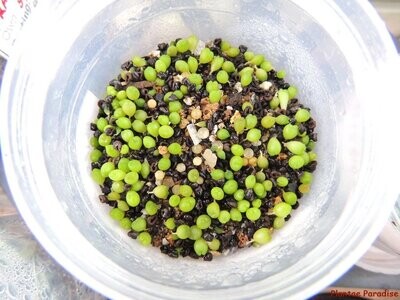
Cactus Seed Planting Mix
Cactus Seed Planting Mix
Sterile, Fine-Grain Media for Cactus & Succulent Seeds
SKU MNS005
₹74.85

FORTIFIED Cactus & Succulent SOIL (FINE)
FORTIFIED Cactus & Succulent SOIL (FINE)
SKU MNS002
5.0
(4)
₹49.85
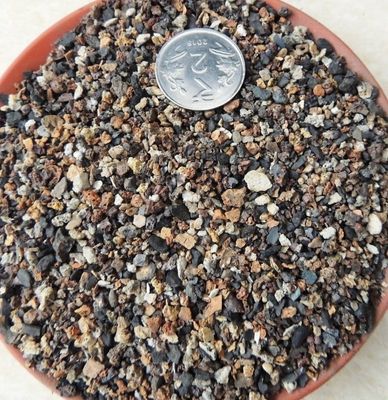
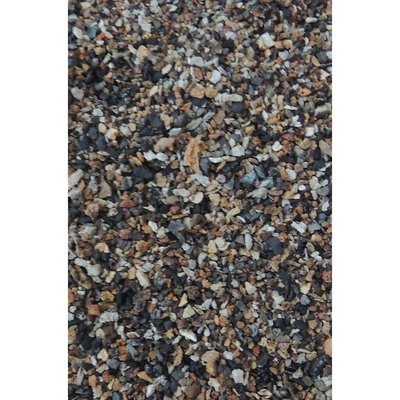
Cactus & Succulent Planting Mix FINE (aka Cactus Soil Mix or Succulent Soil Mix)
Cactus & Succulent Planting Mix FINE (aka Cactus Soil Mix or Succulent Soil Mix)
Fine-Grain Potting Mix for Cactus & Succulent Roots
SKU MNS001
5.0
(3)
₹39.85
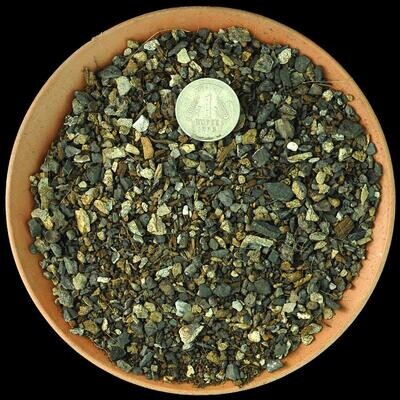
FORTIFIED Cactus & Succulent SOIL (COARSE)
FORTIFIED Cactus & Succulent SOIL (COARSE)
SKU MNS004
5.0
(11)
₹54.85
Display prices in:INR
