
Categories
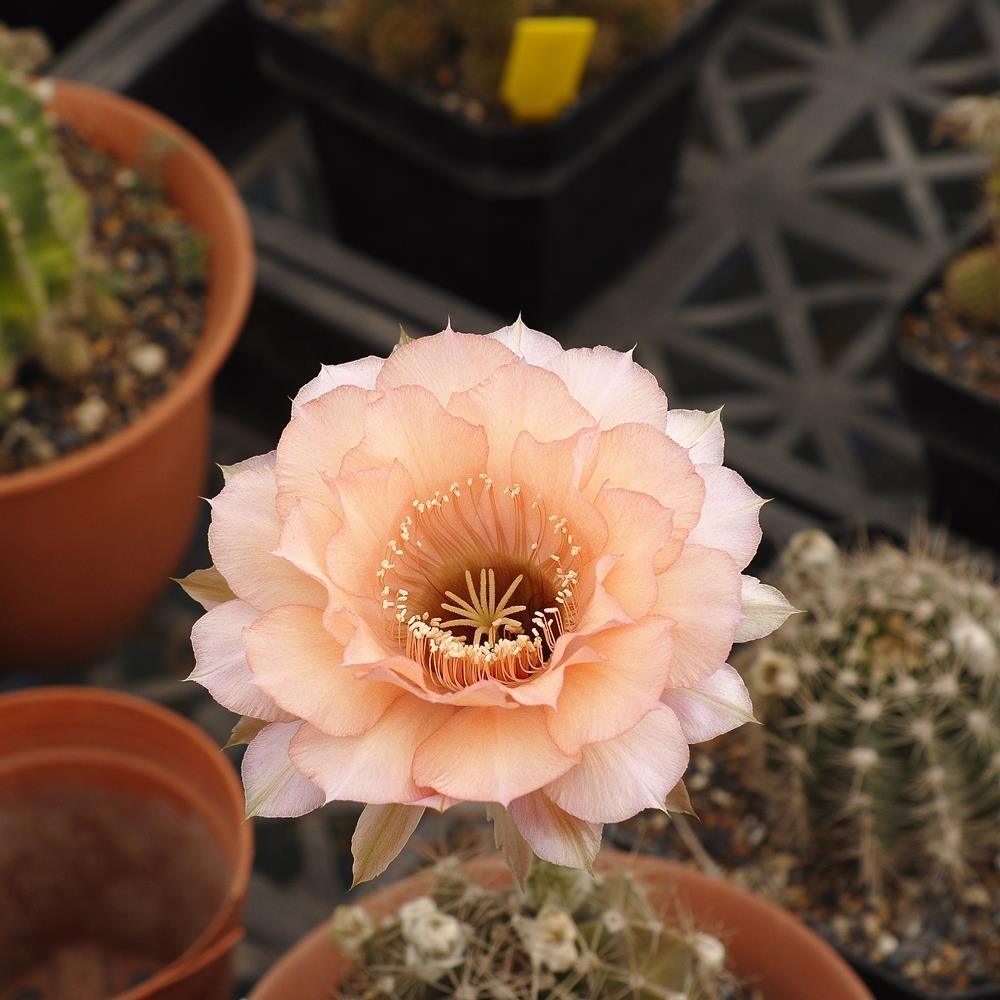
Echinopsis hybrid "Kincsem"
SKU LET052
₹375.00
A prolific flowering hybrid that rewards growers with abundant blooms and dependable garden performance.
In stock: 1 available
1
Save this product for later
Customer reviews
Reviews only from verified customers
No reviews yet. You can buy this product and be the first to leave a review.
Echinopsis hybrid "Kincsem"
Product Details
Echinopsis hybrid 'Kincsem'
A hybrid Echinopsis named for Hungary's most legendary racehorse, 'Kincsem' lives up to its billing with enormous, many-petaled blooms in soft apricot-peach shading into blush pink, wrapped around a deep wine-red throat and a starburst of golden stamens. Compact, easy-growing, and utterly show-stopping for a day or two each season, this is a cactus bred purely to be treasured.
Origin of Name
'Kincsem' is a cultivar name rather than a botanical one, and it borrows its identity from one of the most celebrated names in Hungarian history. In Hungarian, kincsem translates literally to "my treasure" or "my precious" — a term of deep affection. It was first made famous as the name of a 19th-century Thoroughbred racehorse bred by Ernő Blaskovich, who reportedly chose the name out of genuine fondness for the foal. That horse went on to become one of the greatest racehorses in history, winning all 54 races she ever ran between 1876 and 1879 — an undefeated record that stands unmatched to this day. Kincsem became a source of enormous national pride in Hungary, and her name has since been immortalized in a racecourse (Kincsem Park in Budapest), a museum, a horse park, and even a feature film.
When a hybridizer reaches for a name like this for a new cactus cultivar, it's almost always a deliberate echo of that legacy — a way of signaling that the plant in hand is something exceptional, a "treasure" among seedlings, much as the original Kincsem was judged the finest of her stable. Named cultivars like this one typically arise the same way most modern Echinopsis hybrids do: a hybridizer raises a batch of seedlings from a deliberate cross, and out of dozens or hundreds of resulting plants, one flower proves so outstanding — in form, color, or sheer presence — that it earns a name and a life of its own as a clonally propagated cultivar. As with many hobbyist- and specialist-raised Echinopsis hybrids traded among collectors worldwide, the exact breeder and cross record behind this particular clone isn't part of the widely published literature, but the name itself carries its meaning proudly: this is a plant considered precious enough to be singled out and celebrated.
The genus name Echinopsis, which frames every hybrid in this group, has its own history. It was coined by the German botanist Joseph Gerhard Zuccarini from the Greek echinos ("hedgehog" or "sea urchin") and -opsis ("resembling" or "appearance") — a direct nod to the dense, spiny, globe-shaped bodies typical of the genus. Zuccarini intended it to sit taxonomically between Echinocactus and Cereus. Over the 20th and 21st centuries, Echinopsis absorbed several previously separate genera, including the tall, columnar Trichocereus and the smaller Lobivia, making it today one of the most genetically diverse — and most hybridized — genera in the entire cactus family.
Origin of Plant
Like all named Echinopsis cultivars, 'Kincsem' has no wild habitat of its own — it is a garden-bred hybrid, the product of deliberate crossing among cultivated Echinopsis parent plants rather than a species collected from the wild. Its genetic heritage, however, traces directly back to South America. The Echinopsis group's wild ancestors are native across Argentina, Bolivia, Peru, Brazil, Paraguay, and Uruguay, growing on desert grasslands, scrubby foothills, and rocky or sandy slopes, often at considerable elevation in the Andes. Twentieth-century hybridizers — beginning with pioneers like Harry Johnson in the 1930s–1970s and continuing through modern breeders such as Robert Schick, whose 128 hybrids were introduced through the Huntington Botanical Gardens between 1986 and 2004 — drew on this wild gene pool, crossing large-flowered columnar "torch cactus" relatives with smaller globular species to produce ever bigger blooms, richer colors, and more compact, garden-friendly plants. 'Kincsem' belongs to this same lineage of intentionally bred, large-flowered Echinopsis hybrids that has flourished among collectors and nurseries worldwide over the past several decades.
Description
'Kincsem' grows as a solid, globular to short-columnar stem, ribbed and studded with areoles bearing short spines, typically offsetting from the base over time to form a modest clustering clump — a tidy, unassuming plant for most of the year that gives no hint of the spectacle to come.
That spectacle is the flower. Each bloom opens wide and full, built from dozens of long, slightly reflexed petals arranged in a dense, rose-like double layer. The outer petals shade from a pale blush-pink at the tips into a warm, luminous apricot-peach toward the center, while the innermost petals deepen into a rich mahogany-red throat. From that dark center bursts a cluster of golden-cream anthers and a pale central stigma, creating a striking contrast against the wine-colored core. Flowers of this type commonly reach 4 to 6 inches (10–15 cm) across — a genuinely oversized bloom relative to the plant's body — and, true to Echinopsis form, each flower is fleeting, typically opening for only a single day (occasionally two) before fading, only for the plant to send up fresh buds through the following weeks.
Conservation Status
As a cultivated hybrid, 'Kincsem' has no IUCN Red List status of its own — it exists purely in cultivation, propagated by cuttings and offsets rather than collected from any wild population, and its future depends only on its continued popularity among growers. Its wild Echinopsis ancestors are, for the most part, not currently classified as threatened, though as with cacti generally, international trade in wild-collected specimens is regulated under CITES Appendix II to protect natural populations from over-collection. Choosing nursery-grown hybrids like this one is always the more sustainable way to add a dramatic flowering cactus to a collection.
Care
Light: Bright light is essential for strong flowering — a sunny south- or west-facing window indoors, or several hours of direct sun outdoors. Give some shelter from the harshest midday summer sun to prevent scorching, especially in very hot climates.
Watering: Water deeply during the active growing season (spring through early autumn), letting the soil dry out completely between waterings. Cut back sharply in winter, keeping the plant nearly dry while dormant — cold, wet roots are the most common way to lose an Echinopsis to rot.
Soil: Use a fast-draining, mineral-rich cactus mix — a standard cactus potting soil amended with extra pumice, perlite, or coarse sand will keep the roots healthy and help ward off rot.
Temperature: Thrives in warm weather and handles typical summer heat easily. Keep above roughly 5°C (41°F) in winter where possible; a dry, dormant plant can tolerate brief cooler dips, but protect it from frost.
General tips: Offsets can be removed once rooted, left to callus for a few days, and potted separately to start new plants. Repot every couple of years as the clump fills its container, and feed with a diluted, low-nitrogen cactus fertilizer through the growing season to support strong, generous flowering.
An Interesting Note
There's a fitting symmetry in this cactus carrying the name of the greatest racehorse Hungary ever produced. The original Kincsem never lost a single race in her entire career — 54 starts, 54 wins, across three countries — a feat so extraordinary that "unbeatable" became practically her nickname. She was, by every account, adored by those who bred and raced her, chosen from among her stablemates as something singular and irreplaceable — literally, "my treasure." A cactus hybrid that earns the same name is making a quiet promise: that among all the seedlings a breeder could have grown on, this particular flower was judged worth keeping, worth naming, and worth passing on. Whether or not the two Kincsems ever crossed paths in a breeder's mind, the name carries the same idea forward — this is a plant meant to be prized.
You May Also Like
New

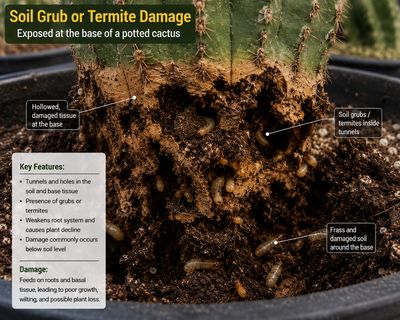
Monsoon Guardian Kit (5 in 1)
Monsoon Guardian Kit (5 in 1)
Complete 5-in-1 biological protection kit for cacti & succulents
SKU MNS024
₹850.00
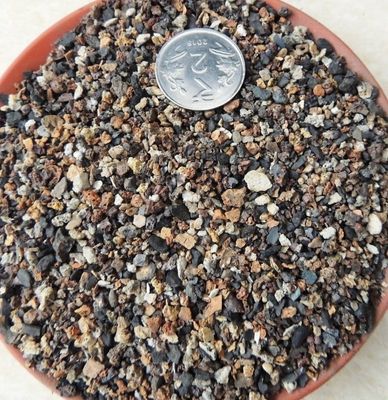

Cactus & Succulent Planting Mix FINE (aka Cactus Soil Mix or Succulent Soil Mix)
Cactus & Succulent Planting Mix FINE (aka Cactus Soil Mix or Succulent Soil Mix)
Fine-Grain Potting Mix for Cactus & Succulent Roots
SKU MNS001
5.0
(3)
₹39.85
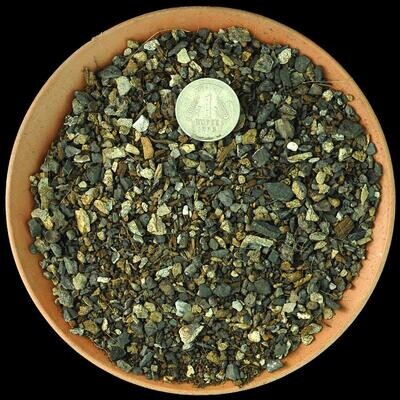
FORTIFIED Cactus & Succulent SOIL (COARSE)
FORTIFIED Cactus & Succulent SOIL (COARSE)
SKU MNS004
5.0
(11)
₹54.85
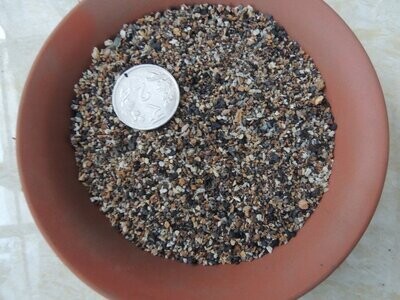
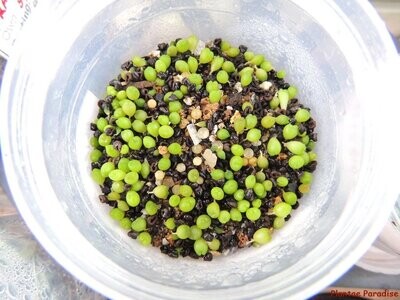
Cactus Seed Planting Mix
Cactus Seed Planting Mix
Sterile, Fine-Grain Media for Cactus & Succulent Seeds
SKU MNS005
₹74.85
Display prices in:INR
