
Categories
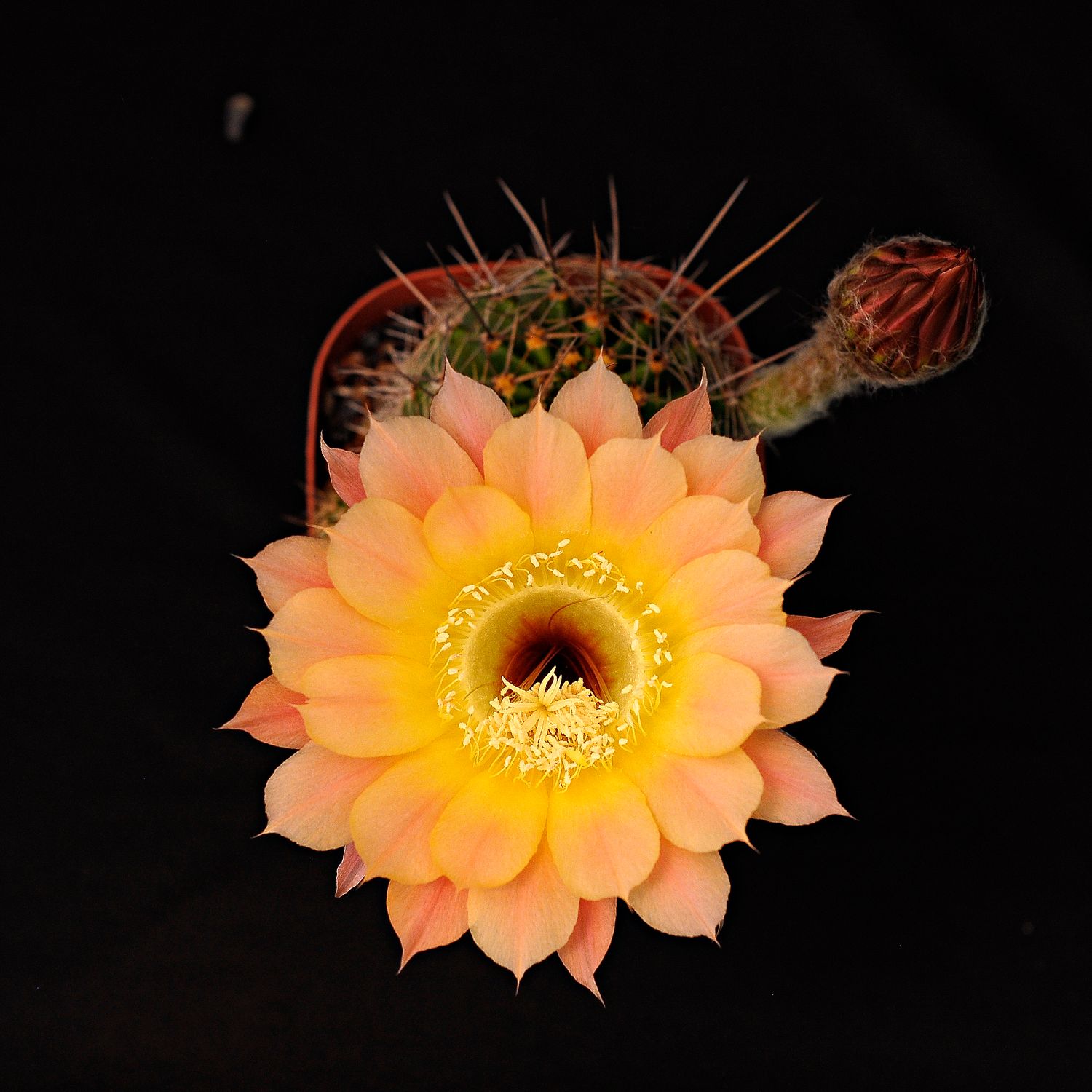
Echinopsis hybrid Napoleon
SKU LET225
₹450.00
In stock: 1 available
1
Save this product for later
Customer reviews
Reviews only from verified customers
No reviews yet. You can buy this product and be the first to leave a review.
Echinopsis hybrid Napoleon
Product Details
A compact, spine-studded little globe of a cactus that sends up a single, oversized bloom in warm sunset shades — deep coppery-orange at the petal tips melting into pure gold at the throat, with a blaze of golden stamens at its heart. Small plant, enormous flower: a classic Echinopsis hybrid built entirely around the moment it opens.
Origin of Name
"Napoleon" is a cultivar name rather than a botanical one — like almost all named Echinopsis hybrids, it was chosen by a hybridizer to evoke the character of the flower itself rather than to describe the plant scientifically. Warm, gold-and-copper-toned blooms like this one are often given names that lean toward grandeur, richness, or imperial association, and Napoleon Bonaparte — France's self-crowned emperor, forever associated with gold laurel wreaths, imperial purple and gold regalia, and sheer outsized ambition — fits that naming tradition neatly: a flower this large, this saturated in gold, and this commanding when it opens earns a name with a bit of imperial swagger. As with a great many hobbyist- and specialist-raised Echinopsis hybrids traded among collectors and small nurseries worldwide, a formally published cross record or named breeder for this particular clone isn't part of the widely available literature — it circulates, as so many excellent Echinopsis cultivars do, on the strength of the flower alone.
The genus name framing every Echinopsis hybrid has a much better-documented history. Echinopsis was coined by the German botanist Joseph Gerhard Zuccarini from the Greek echinos ("hedgehog" or "sea urchin") and -opsis ("resembling," "appearance") — a nod to the dense, spiny, globe-shaped bodies typical of the genus, which Zuccarini intended to sit taxonomically between Echinocactus and Cereus. Over the 20th and 21st centuries, Echinopsis absorbed several previously separate genera — including the tall, columnar Trichocereus and the smaller, high-Andean Lobivia — making it today one of the most genetically diverse, and most hybridized, genera in the entire cactus family.
Origin of Plant
Like all named Echinopsis cultivars, 'Napoleon' has no wild habitat of its own — it's a garden-bred hybrid, raised from cultivated parent plants rather than collected from nature. Its genetic heritage nonetheless traces back to South America, where the wild ancestors of the Echinopsis group grow across Argentina, Bolivia, Peru, Brazil, Paraguay, and Uruguay, on desert grasslands, scrubby foothills, and rocky or sandy slopes, often at considerable elevation in the Andes. Twentieth-century hybridizers — beginning with pioneers such as Harry Johnson from the 1930s through the 1970s, and continuing through later breeders like Robert Schick, whose 128 hybrids were introduced through the Huntington Botanical Gardens between 1986 and 2004 — drew on that wild gene pool, crossing large-flowered columnar "torch cactus" relatives with smaller globular species to push toward bigger blooms, richer colors, and more compact, garden-friendly plants. 'Napoleon' belongs to that same long lineage of deliberately bred, large-flowered Echinopsis hybrids.
Description
The plant itself stays modest: a small, globular, ribbed stem densely armed with slender, radiating spines in tan and reddish-brown, typically offsetting from the base to form a clustering little colony of heads rather than growing large on its own. It is, in every practical sense, simply the stage for the flower.
That flower is genuinely dramatic. It opens on a long, woolly, spine-flecked tube well clear of the plant's own spines, unfurling into a wide, many-petaled bloom several inches across. The outer petals run a rich, sunset copper-orange, glowing almost red toward their tips, before shading down through warm gold and settling into a pure, saturated yellow at the throat. From that golden center bursts a dense cluster of yellow-gold stamens surrounding a pale central stigma — a blaze of color that, true to Echinopsis form, is fleeting: each individual flower typically lasts only a single day, sometimes stretching to two, before the plant sends up its next bud.
Conservation Status
As a cultivated hybrid, 'Napoleon' has no IUCN Red List status of its own — it exists purely in cultivation, propagated by offsets and cuttings rather than collected from any wild population. Its wild Echinopsis ancestors are, for the most part, not currently classified as broadly threatened, though as with cacti generally, international trade in wild-collected specimens is regulated under CITES Appendix II to protect natural populations from over-collection. Choosing a nursery-grown hybrid like this one is always the sustainable way to bring a dramatic flowering cactus into a collection.
Care
Light: Bright light is essential for strong flowering — a sunny south- or west-facing window indoors, or several hours of direct sun outdoors, with a little shelter from the harshest midday summer sun in very hot climates to prevent scorching.
Watering: Water deeply during the active growing season (spring through early autumn), letting the soil dry out completely between waterings. Cut back sharply in winter, keeping the plant nearly dry while dormant — cold, wet roots are the most common way to lose an Echinopsis to rot.
Soil: A fast-draining, mineral-rich cactus mix — a standard cactus potting soil amended with extra pumice, perlite, or coarse sand will keep the roots healthy and help ward off rot.
Temperature: Thrives in warm weather and tolerates typical summer heat easily. Keep above roughly 5°C (41°F) in winter where possible; a dry, dormant plant can handle brief cooler dips, but protect it from frost.
General tips: Offsets can be removed once rooted, left to callus for a few days, and potted separately to start new plants. Repot every couple of years as the clump fills its container, and feed with a diluted, low-nitrogen cactus fertilizer through the growing season to support generous flowering.
An Interesting Note
Part of the fun of collecting named Echinopsis hybrids is that the names themselves form a kind of unofficial folk history of the hobby — racehorses, dessert flavors, place names, and, as here, historical figures, all borrowed to capture a single fleeting bloom that might last only a day. A flower named for an emperor is making a simple promise before it even opens: that this is not a modest little cactus flower, but one meant to command the room for the few hours it's on show — much like the man whose name it borrows was rarely accused of understatement.
You May Also Like


Cactus & Succulent Planting Mix FINE (aka Cactus Soil Mix or Succulent Soil Mix)
Cactus & Succulent Planting Mix FINE (aka Cactus Soil Mix or Succulent Soil Mix)
Fine-Grain Potting Mix for Cactus & Succulent Roots
SKU MNS001
5.0
(3)
₹39.85
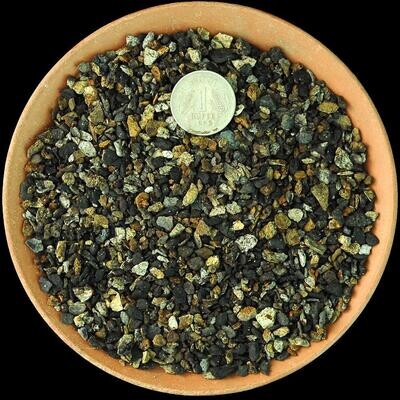
Cactus & Succulent Planting Mix COARSE (aka Cactus Soil Mix or Succulent Soil Mix)
Cactus & Succulent Planting Mix COARSE (aka Cactus Soil Mix or Succulent Soil Mix)
Washed, Free-Draining Mineral Mix for Cactus & Succulents
SKU MNS003
5.0
(1)
₹44.85

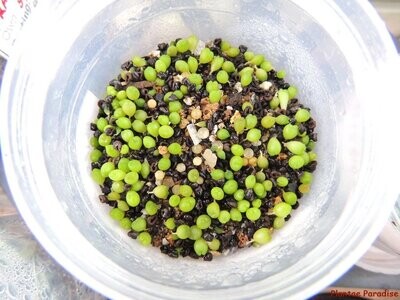
Cactus Seed Planting Mix
Cactus Seed Planting Mix
Sterile, Fine-Grain Media for Cactus & Succulent Seeds
SKU MNS005
₹74.85

FORTIFIED Cactus & Succulent SOIL (FINE)
FORTIFIED Cactus & Succulent SOIL (FINE)
SKU MNS002
5.0
(4)
₹49.85
Display prices in:INR
