
Categories
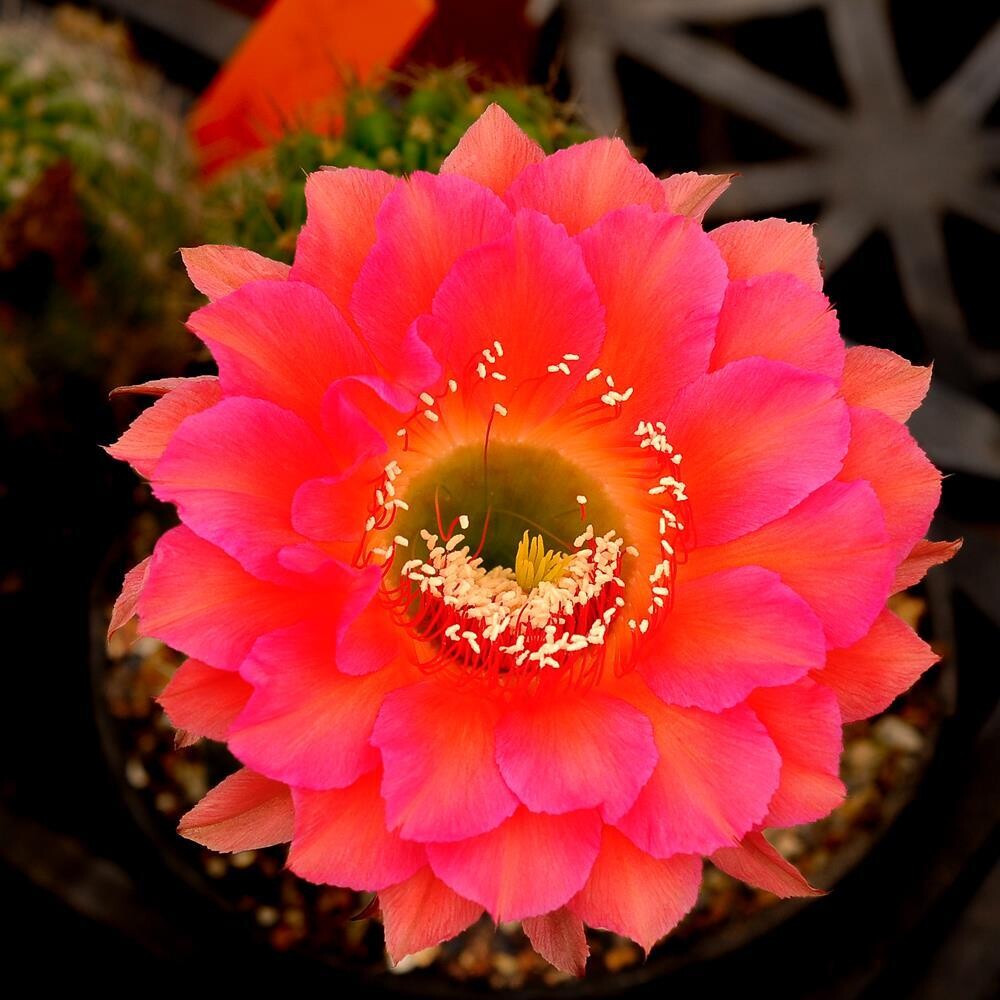
Echinopsis hybrid Sirius
SKU LET222
₹550.00
In stock: 1 available
1
Save this product for later
Customer reviews
Reviews only from verified customers
No reviews yet. You can buy this product and be the first to leave a review.
Echinopsis hybrid Sirius
Product Details
A single, blazing bloom in hot magenta-pink deepening to fiery orange-red at the base, its olive-green throat ringed with fine crimson filaments and pale anthers — an Echinopsis hybrid whose sheer brilliance earns it the name of the night sky's brightest star.
Origin of Name
'Sirius' is a descriptive cultivar name, chosen the way most Echinopsis hybrids are named — for the character of the flower rather than any botanical distinction. As with many collector-traded Echinopsis hybrids, no formally published breeding record for this specific clone is part of the wider literature; it circulates on the strength of the bloom alone. The name borrows from Sirius, the brightest star visible from Earth, itself named by the ancient Greeks from Seirios, meaning "glowing" or "scorching" — a fitting root for a flower this intensely saturated in color. Sirius anchors the constellation Canis Major and held real significance in the ancient world: Egyptian astronomers tracked its heliacal rising, its first reappearance in the dawn sky after months of invisibility, as the signal that the Nile's annual flood and a new year were about to begin. A cultivar name built on the sky's most luminous point suits a flower that reads, at a glance, as the most eye-catching thing in the room.
The genus name framing it, Echinopsis, was coined by German botanist Joseph Gerhard Zuccarini from the Greek echinos ("hedgehog" or "sea urchin") and -opsis ("resembling") — a nod to the spiny, globe-shaped bodies typical of the genus. Over the 20th and 21st centuries, Echinopsis absorbed related genera including Trichocereus and Lobivia, making it today one of the most hybridized genera in the entire cactus family.
Origin of Plant
Like all named Echinopsis hybrids, 'Sirius' has no wild habitat of its own — it's a garden-bred cross, not a species collected from nature. Its genetics trace back to wild Echinopsis ancestors native across Argentina, Bolivia, Peru, Brazil, Paraguay, and Uruguay, growing on desert grasslands and rocky Andean slopes. Generations of hybridizers, from Harry Johnson in the mid-20th century through later breeders like Robert Schick, have crossed these wild lines to produce ever larger, more intensely colored blooms on compact, easy-to-grow plants — the lineage 'Sirius' belongs to.
Description
The plant itself is a modest, ribbed, spine-studded stem, usually offsetting into a small clustering clump — easy to overlook until the flower opens.
The bloom is where 'Sirius' delivers: a wide, fully double flower with many overlapping petals, shading from deep magenta-pink at the tips through hot orange-red toward the base, wrapped around an olive-green throat. Fine, thread-like red stamens rise in a dense ring from that throat, tipped with pale cream anthers, with a small burst of golden filaments at the very center. As with the rest of the Echinopsis group, each flower is short-lived — typically open for only a day — with fresh buds following through the growing season, so the plant tends to flower in dramatic, short-lived flushes.
Conservation Status
As a cultivated hybrid, 'Sirius' has no IUCN Red List status of its own — it exists purely in cultivation, propagated by offsets rather than collected from the wild. Its wild Echinopsis ancestors are mostly not classified as threatened, though international trade in wild-collected cacti generally is regulated under CITES Appendix II. Choosing a nursery-grown hybrid like this one is always the sustainable choice.
Care
Light: Bright light is essential for strong flowering — several hours of direct or bright indirect sun, with relief from the harshest midday sun in hot climates.
Watering: Water deeply through spring–early autumn, letting the soil dry out completely between waterings. Cut back sharply in winter, keeping the plant nearly dry while dormant.
Soil: A fast-draining, mineral-rich cactus mix — standard potting soil amended with extra pumice, perlite, or coarse sand.
Temperature: Thrives in warm weather; keep above roughly 5°C (41°F) in winter and protect from frost.
General tips: Offsets can be removed once rooted and potted separately. Feed with a diluted, low-nitrogen cactus fertilizer through the growing season to support generous flowering, and give the plant a slight winter chill and dry rest to encourage strong bud formation the following spring.
An Interesting Note
Sirius appears so brilliant in the night sky partly because it's genuinely one of our nearest stellar neighbors, roughly 8.6 light-years away, and partly because it's actually a binary system — a bright main-sequence star paired with a faint white dwarf companion invisible to the naked eye. There's a neat parallel in the flower: what looks like a single blazing bloom is really built from dozens of individually unremarkable petals layered together, their combined effect far more brilliant than any one part could manage alone.
You May Also Like


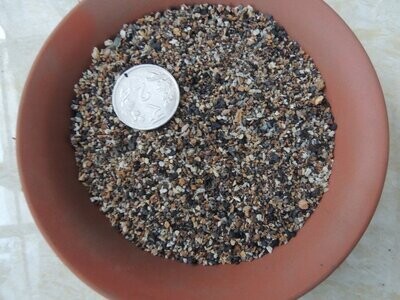
Cactus & Succulent Planting Mix FINE (aka Cactus Soil Mix or Succulent Soil Mix)
Cactus & Succulent Planting Mix FINE (aka Cactus Soil Mix or Succulent Soil Mix)
Fine-Grain Potting Mix for Cactus & Succulent Roots
SKU MNS001
5.0
(3)
₹39.85
Cactus Seed Planting Mix
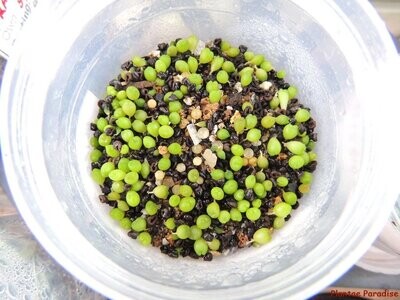
Cactus Seed Planting Mix
Sterile, Fine-Grain Media for Cactus & Succulent Seeds
SKU MNS005
₹74.85

FORTIFIED Cactus & Succulent SOIL (COARSE)
FORTIFIED Cactus & Succulent SOIL (COARSE)
SKU MNS004
5.0
(11)
₹54.85
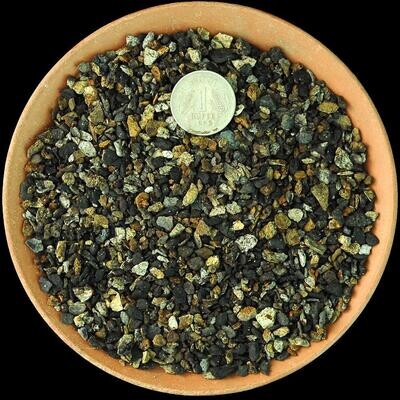
Cactus & Succulent Planting Mix COARSE (aka Cactus Soil Mix or Succulent Soil Mix)
Cactus & Succulent Planting Mix COARSE (aka Cactus Soil Mix or Succulent Soil Mix)
Washed, Free-Draining Mineral Mix for Cactus & Succulents
SKU MNS003
5.0
(1)
₹44.85
Display prices in:INR
