
Categories
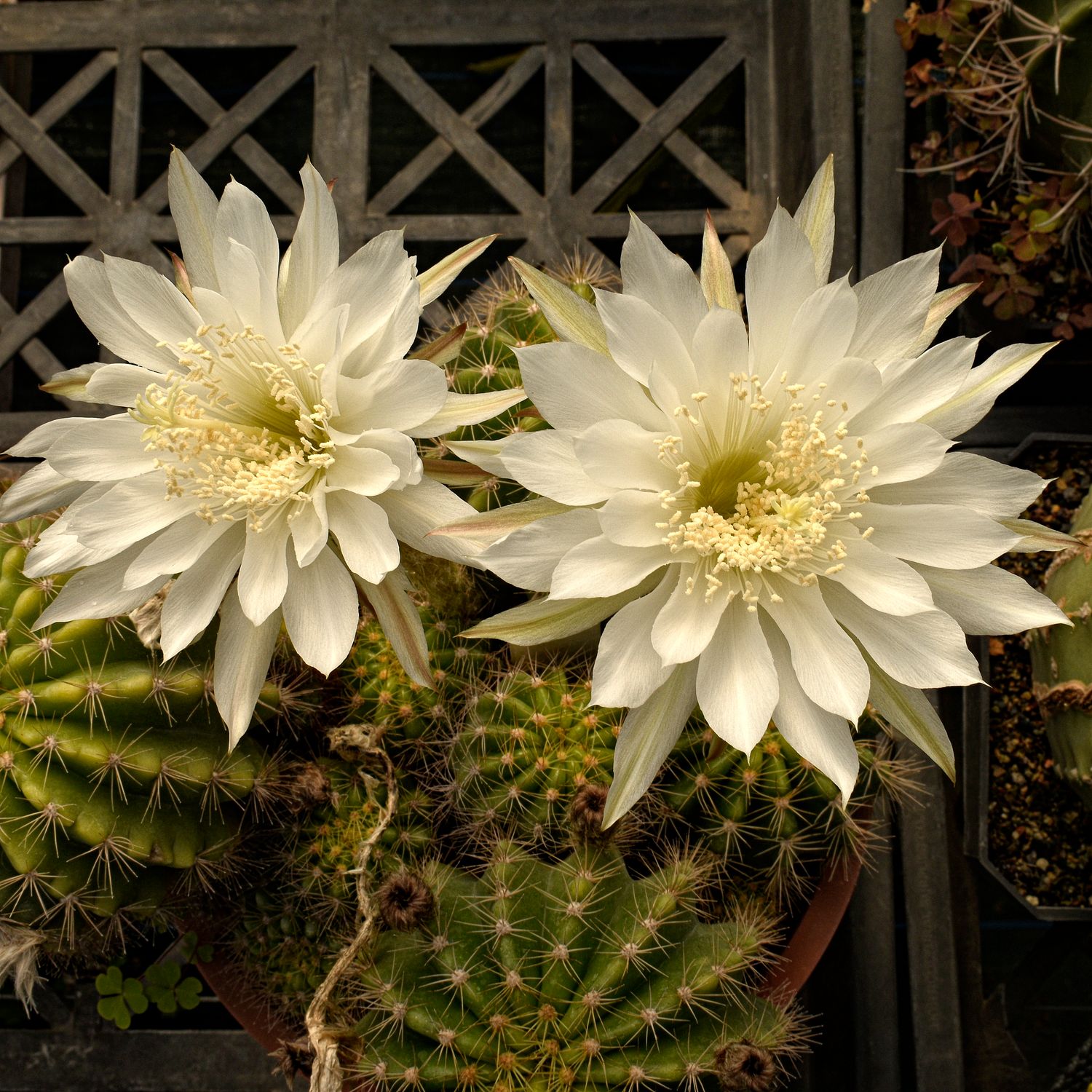
Echinopsis hybrid (White Flower)
SKU LET028
₹75.00
Sold out
Elegant white blooms open dramatically to transform your cactus collection with timeless beauty.
Sold out
Save this product for later
Customer reviews
Reviews only from verified customers
No reviews yet. You can buy this product and be the first to leave a review.
Echinopsis hybrid (White Flower)
Product Details
Moonlight Radiance: White-Petaled Echinopsis Hybrid
A breathtaking nocturnal spectacle featuring multi-layered, lanceolate blooms that transition from pure white to earthy, mossy gradients.
- Origin & History of Name: The genus name Echinopsis is derived from the Greek echinos (hedgehog or sea urchin) and opsis (appearance), describing the spiny, globular stems.
Historically, these were often called "Sea-Urchin Cacti." As a hybrid, this plant does not have a single botanical author but represents decades of selective breeding aimed at expanding the floral color palette beyond the standard white or pink of the parent species. - Morphology: This hybrid features a cylindrical, ribbed epidermis armed with short spines along the costae (ribs). Its primary draw is the multiseriate perianth (multiple layers of petals). The inner tepals are pointed and lance-shaped in stark white, while the outer bracts display a unique gradient of creamy-yellow and greenish-brown, providing a dramatic shadow effect to the bloom.
- Habitat & Origin: This plant is a horticultural cultivar. While its ancestors originate from the Andean regions of South America (Argentina, Uruguay, and Brazil), this specific hybrid was developed in a controlled greenhouse environment. Our stock is produced through sustainable vegetative propagation (offsets), ensuring no disruption to wild cacti ecosystems.
- Cultivation Profile:
- Substrate: Use a porous, mineral-heavy mix (60% volcanic rock or coarse sand, 40% compost). In India’s monsoon-heavy zones, adding extra charcoal helps prevent fungal pathogens.
- Light: Thrives in full morning sun with afternoon filtered light. In the Indian plains, protect from the scorching 12 PM–4 PM sun to avoid epidermal scarring.
- Water/Dormancy: Follow a "soak and dry" method. During the monsoon, keep the plant under cover. In the dry North Indian winter, restrict watering to once a month to trigger the spring flowering cycle.
- Scientific/Historical Anecdote: Echinopsis are famous for being "Night-Blooming Cereus" relatives. In their natural habitat, their massive, fragrant flowers typically open at dusk and last only 24 hours. They evolved this rapid, high-energy blooming strategy to attract specific nocturnal pollinators, such as hawk moths, which are capable of traveling long distances across South American scrublands.
You May Also Like


Cactus Seed Planting Mix
Cactus Seed Planting Mix
Sterile, Fine-Grain Media for Cactus & Succulent Seeds
SKU MNS005
₹74.85
New
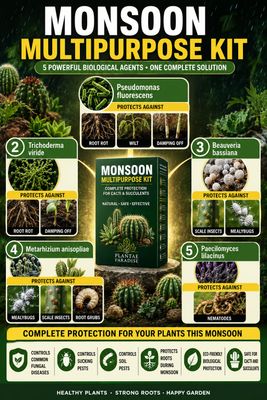

Monsoon Guardian Kit (5 in 1)
Monsoon Guardian Kit (5 in 1)
Complete 5-in-1 biological protection kit for cacti & succulents
SKU MNS024
₹850.00

Cactus & Succulent Planting Mix COARSE (aka Cactus Soil Mix or Succulent Soil Mix)
Cactus & Succulent Planting Mix COARSE (aka Cactus Soil Mix or Succulent Soil Mix)
Washed, Free-Draining Mineral Mix for Cactus & Succulents
SKU MNS003
5.0
(1)
₹44.85

FORTIFIED Cactus & Succulent SOIL (FINE)
FORTIFIED Cactus & Succulent SOIL (FINE)
SKU MNS002
5.0
(4)
₹49.85
Display prices in:INR
