
Categories
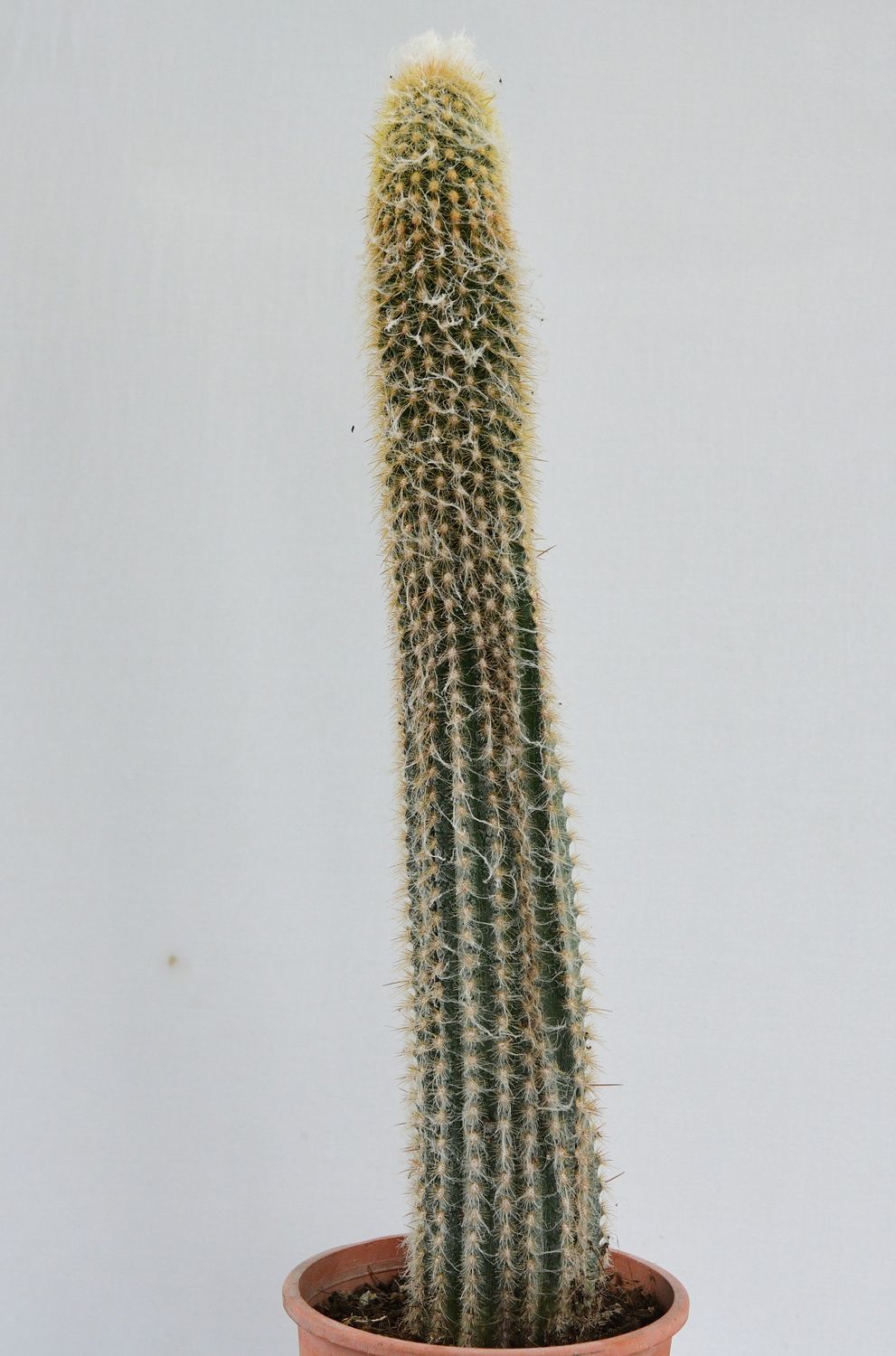
Espostoa melanostele
SKU ES002
₹3 300.00
In stock: 1 available
1
Save this product for later
Customer reviews
Reviews only from verified customers
No reviews yet. You can buy this product and be the first to leave a review.
Espostoa melanostele
Product Details
The Peruvian Old Lady: Espostoa melanostele
Wrapped in a cascade of silky white "hair" bristling with golden spines, this Peruvian Old Man Cactus looks less like a desert plant and more like a wizened, wise little sentinel — a slow-growing column that turns heads with texture alone.
1. Origin of Name
The genus name Espostoa honors Nicolas Esposto, a Peruvian botanist, commemorated when the genus was established for these distinctive woolly columnar cacti of the Andes. The species epithet melanostele comes from the Greek melas ("black" or "dark") combined with stele ("column" or "pillar") — literally "dark column," a reference to the way the stem's skin darkens with age beneath its woolly coat, becoming visibly blackish-green in mature growth even as the surface hairs stay bright white. In the trade this plant goes by several evocative common names — Peruvian Old Man Cactus, Peruvian Old Lady Cactus, and simply "Old Lady of the Andes" — all inspired by the same visual joke: a cactus that looks like it's wearing a full head of soft white hair, not unlike its more famous Mexican cousin, Cephalocereus senilis, though the two are unrelated and easily told apart by Espostoa's visible spines poking through the wool.
2. Origin of Plant
Espostoa melanostele is native to the high, arid mountain valleys and rocky slopes of the Andes in Peru and Bolivia, part of a genus of roughly a dozen species distributed along the Andean corridor from southern Ecuador down through Peru. It grows at elevation in cool, dry, intensely sunny conditions — habitat that has shaped both its dense insulating wool (protection against high-altitude UV and temperature swings) and its notably slow growth rate. In these rocky mountain environments it has also long held a place in local Andean tradition, valued not just visually but for traditional medicinal use.
3. Description
This is a columnar cactus built almost entirely around texture. The stem rises in a slightly tapered, ribbed column — typically 18 to 25 vertical ribs — but the ribs themselves are all but hidden beneath a thick, tangled coat of fine white wool that drapes and clings unevenly along the surface, giving the impression of matted fur or spun cotton. Poking through that wool are dense clusters of slender, needle-like spines, golden-yellow when young and darkening with maturity, giving the whole column a warm, sun-bleached glow at the tips that deepens toward amber and bronze further down the stem. At the growing tip, the wool thickens into a soft, brush-like tuft, the plant's most "hair-like" feature and the part that gives it its endearing "old man/old lady" nickname. Left undisturbed for many years in ideal conditions, a mature plant can eventually form a lateral cephalium — a specialized flowering zone — and produce large, bell-shaped white flowers that open at night and close during rain, followed by soft, berry-like fruit; in cultivation, however, most potted specimens grow far too slowly to ever reach flowering size.
4. Conservation Status
Espostoa melanostele faces real pressure in its native range from habitat destruction linked to mining, quarrying, and agricultural expansion, compounded by its inherent vulnerability as a slow-growing, long-lived species that struggles to recover from disturbance. Overcollection from the wild has also contributed to concern for the species, and it is regarded by some growers and sellers as increasingly rare in habitat. As with many slow-growing ornamental cacti, sourcing nursery-propagated plants rather than wild-collected specimens is the best way to support its conservation.
5. Care
- Light: Full sun to bright, partial shade — this species is adapted to intense high-altitude sunlight and colors up best with plenty of light.
- Water: Water moderately during the active growing season, allowing the soil to dry fully between waterings, and cut back to little or no water in winter, when the plant is prone to rot if kept damp.
- Soil: A gritty, fast-draining cactus mix — sandy or rocky in composition — is essential.
- Temperature: Not frost-hardy; keep above roughly 54°F (12°C) in winter, and bring indoors or under cover if temperatures threaten to drop lower.
- Growth tips: This is a genuinely slow grower — potted specimens may add only about an inch a year and can take a decade to reach modest size, so treat it as a long-term collector's piece rather than a fast-filling houseplant. Given enough age, space, and sun, it may eventually branch from the base to form a clustering specimen.
A Story Worth Telling
In the wild, a mature Espostoa melanostele can take so long to reach flowering maturity that most cultivated specimens — even decades-old ones in collections — never produce their strange nocturnal flowers at all, simply because pot culture slows growth to a crawl compared to plants rooted directly in Andean soil. That means the "old man" hairstyle you're admiring on a young plant like this one is, in a sense, a costume the plant puts on early — full of character and personality long before it's anywhere close to the "old age" its nickname suggests.
You May Also Like


Cactus & Succulent Planting Mix FINE (aka Cactus Soil Mix or Succulent Soil Mix)
Cactus & Succulent Planting Mix FINE (aka Cactus Soil Mix or Succulent Soil Mix)
Fine-Grain Potting Mix for Cactus & Succulent Roots
SKU MNS001
5.0
(3)
₹39.85

FORTIFIED Cactus & Succulent SOIL (COARSE)
FORTIFIED Cactus & Succulent SOIL (COARSE)
SKU MNS004
5.0
(11)
₹54.85
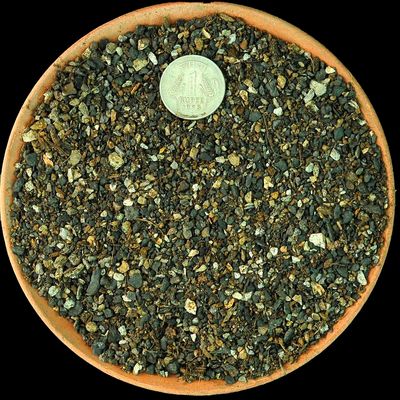
FORTIFIED Cactus & Succulent SOIL (FINE)
FORTIFIED Cactus & Succulent SOIL (FINE)
SKU MNS002
5.0
(4)
₹49.85

Cactus & Succulent Planting Mix COARSE (aka Cactus Soil Mix or Succulent Soil Mix)
Cactus & Succulent Planting Mix COARSE (aka Cactus Soil Mix or Succulent Soil Mix)
Washed, Free-Draining Mineral Mix for Cactus & Succulents
SKU MNS003
5.0
(1)
₹44.85
Display prices in:INR
