
Categories
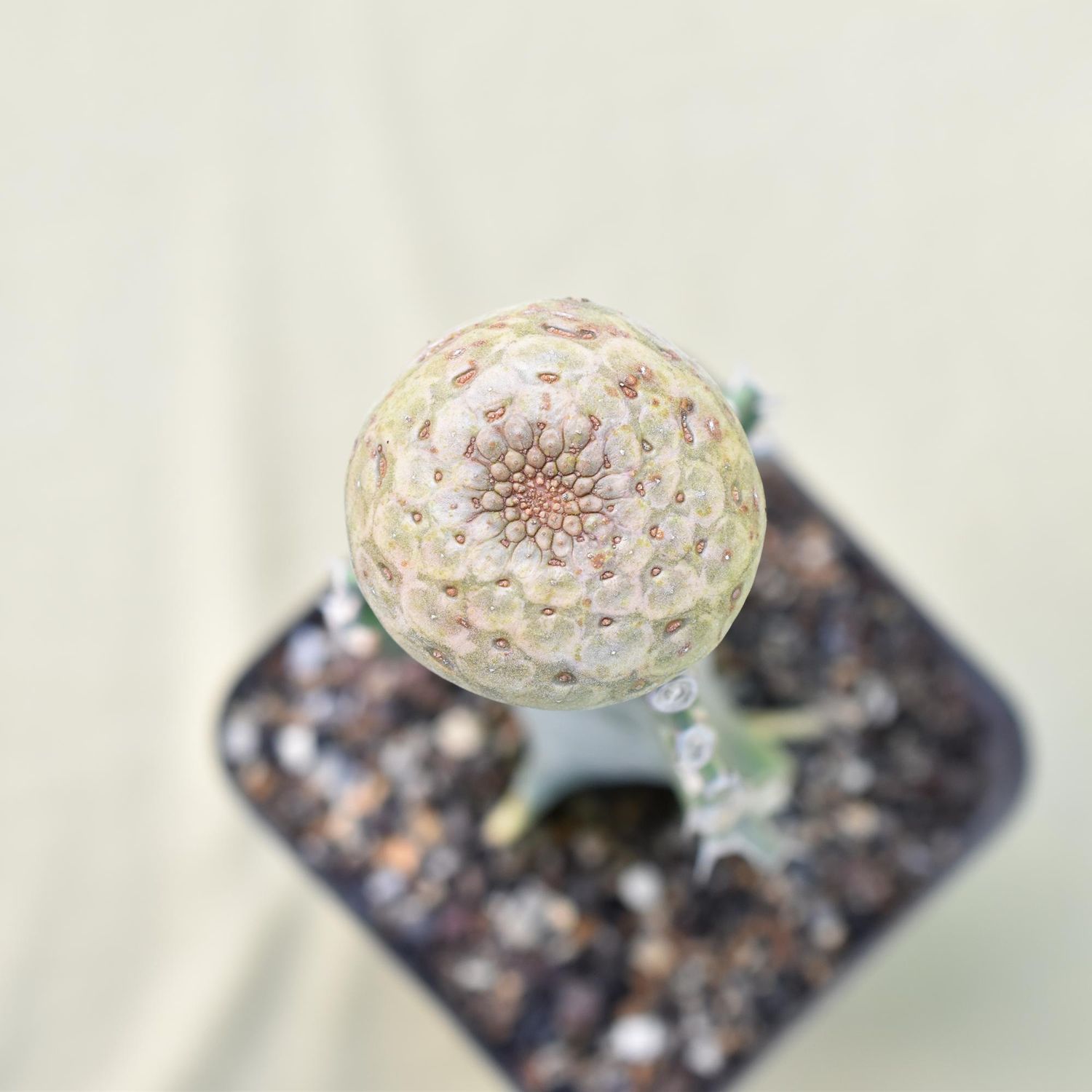
Euphorbia turbiniformis
SKU EU073
₹1 850.00
Sold out
Sold out
Save this product for later
Customer reviews
Reviews only from verified customers
No reviews yet. You can buy this product and be the first to leave a review.
Euphorbia turbiniformis
Product Details
Euphorbia turbiniformis: The Geometric Jewel of Somalia
A masterclass in botanical geometry, this exceptionally rare, top-shaped succulent is prized by advanced collectors for its cryptic, stone-like appearance and architectural symmetry.
1. Origin & History of Name The genus name Euphorbia commemorates Euphorbus, the Greek physician to King Juba II of Numidia (circa 50 BC), who reportedly used the plant’s potent latex for medicinal purposes.
2. Morphology This species is characterized by a spineless, turbinate (top-shaped) to globose body that rarely exceeds 10 cm in diameter. The epidermis (outer skin) is glabrous and typically greyish-green or light brown, featuring a unique tessellated pattern—a mosaic of polygonal tubercles that fit together like biological paving stones. The apex is slightly depressed and woolly, from which small yellow cyathia (specialized flower structures) emerge.
3. Habitat & Origin Euphorbia turbiniformis is a wild species endemic to the arid limestone plateaus of northeastern Somalia (Puntland).
4. Cultivation Profile
- Substrate: Requires an ultra-porous, mineral-heavy mix to prevent root rot. Use 80% grit (pumice, perlite, or gravel) and 20% cactus soil. Avoid heavy garden soil completely.
- Light: Thrives in bright, filtered light. In the Indian climate, provide partial shade (green net 50%) during peak summer afternoons to prevent scorching, but ensure ample light to maintain its compact, geometric shape.
- Water & Dormancy: A summer grower. Water sparingly only when the substrate is completely dry.
- Indian Context: During the Monsoon season, this plant must be kept strictly dry and protected from humidity, as it is highly susceptible to fungal rot. Keep bone dry during winter dormancy (December–February).
5. Scientific/Historical Anecdote Euphorbia turbiniformis presents a striking example of convergent evolution.
You May Also Like

FORTIFIED Cactus & Succulent SOIL (COARSE)
FORTIFIED Cactus & Succulent SOIL (COARSE)
SKU MNS004
5.0
(11)
₹54.85
New


Monsoon Guardian Kit (5 in 1)
Monsoon Guardian Kit (5 in 1)
Complete 5-in-1 biological protection kit for cacti & succulents
SKU MNS024
₹850.00


Cactus & Succulent Planting Mix FINE (aka Cactus Soil Mix or Succulent Soil Mix)
Cactus & Succulent Planting Mix FINE (aka Cactus Soil Mix or Succulent Soil Mix)
Fine-Grain Potting Mix for Cactus & Succulent Roots
SKU MNS001
5.0
(3)
₹39.85
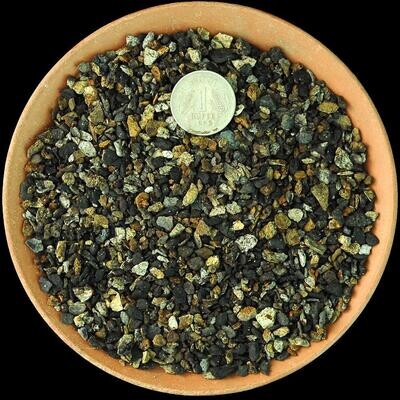
Cactus & Succulent Planting Mix COARSE (aka Cactus Soil Mix or Succulent Soil Mix)
Cactus & Succulent Planting Mix COARSE (aka Cactus Soil Mix or Succulent Soil Mix)
Washed, Free-Draining Mineral Mix for Cactus & Succulents
SKU MNS003
5.0
(1)
₹44.85
Display prices in:INR
