
Categories
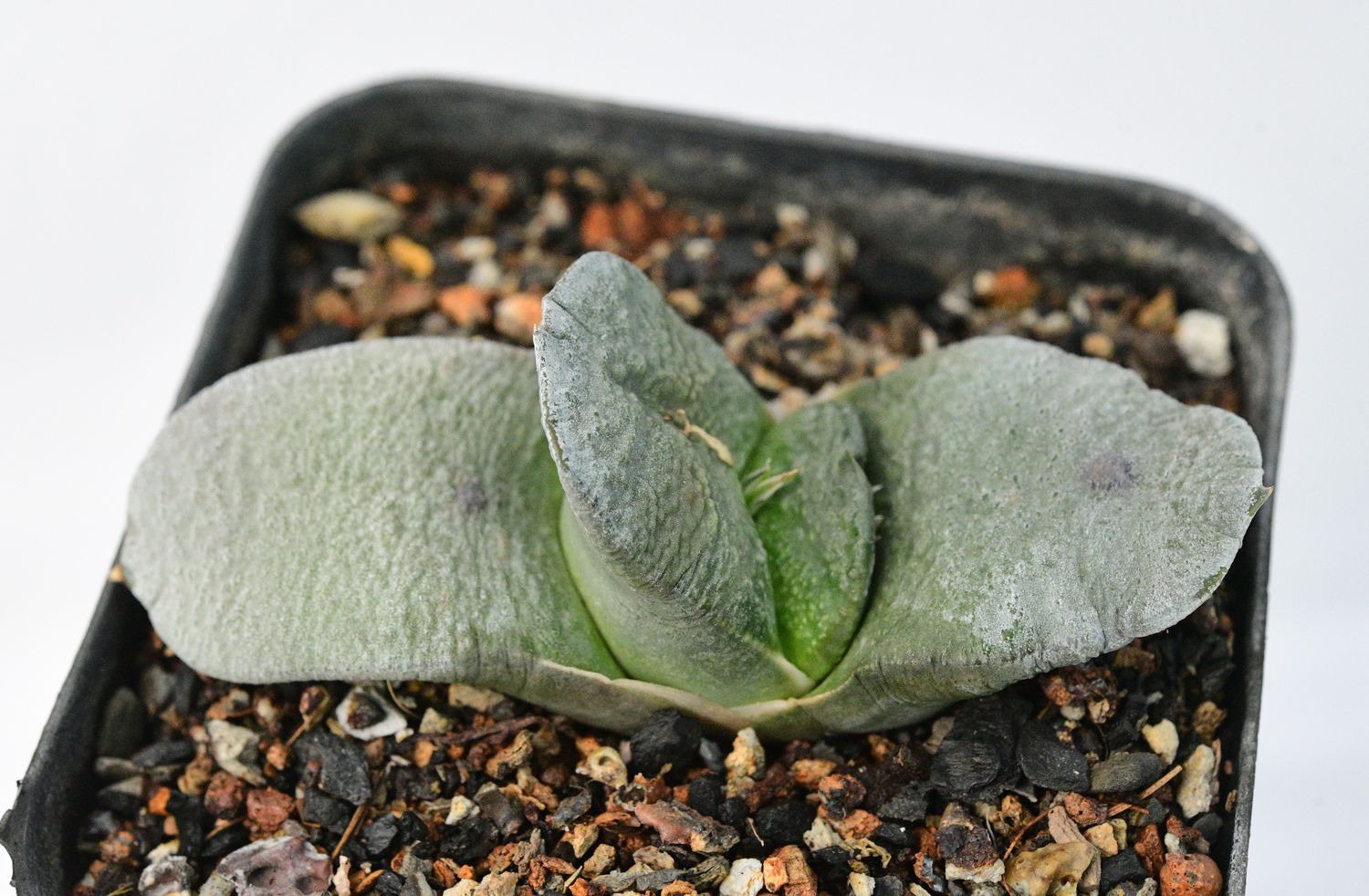
Gasteria armstrongii
SKU GA008
₹650.00
In stock: 1 available
1
Save this product for later
Customer reviews
Reviews only from verified customers
No reviews yet. You can buy this product and be the first to leave a review.
Gasteria armstrongii
Product Details
Sculptural Elegance: Gasteria armstrongii
A slow-growing masterpiece of living architecture, prized by collectors for its prehistoric aesthetic and obsidian-like foliage.
- Origin & History of Name: The genus name Gasteria is derived from the Greek word gaster (stomach), referencing the swollen, stomach-shaped base of the flowers. This specific species was named in 1912 by botanist William Frederick Barker in honor of William Armstrong, a South African plant collector who first brought the specimen to scientific attention.
- Morphology: Unlike many distichous succulents, G. armstrongii features thick, tongue-shaped leaves that are remarkably "truncate" (ending abruptly). The epidermis is characterized by a rugose, leathery texture with a dark, glaucous-green to nearly black coloration. Small, tuberculate bumps (papillae) often cover the surface, and the plant maintains a compact, solitary rosette that rarely offsets, making it a highly symmetrical specimen.
- Habitat & Origin: This is a true wild species, not a hybrid. It is endemic to a very restricted range in the Eastern Cape Province of South Africa, specifically near the Gamtoos River.
Due to its limited natural distribution, it is considered "Vulnerable" in the wild; our specimens are strictly nursery-propagated via sustainable seed-raising to ensure conservation. - Cultivation Profile:
- Substrate: Use a strictly mineral-based mix. In the Indian climate, a ratio of 70% grit (pumice, perlite, or crushed brick) to 30% organic matter is essential to prevent root rot during monsoon humidity.
- Light: Bright, indirect light is ideal. In North India, provide 50% shade during peak summer afternoons; in South India, a bright East-facing window or filtered patio light works year-round.
- Water & Dormancy: Water thoroughly only when the medium is completely dry. This species enters a semi-dormant state during the peak Indian summer (May–June); reduce watering significantly during this time and during the cold winter months to mimic its natural dry-spell cycles.
- Scientific/Historical Anecdote: For decades, Gasteria armstrongii was classified as its own distinct species, but recent botanical debates have sometimes seen it grouped as a variety of Gasteria nitida. However, collectors and taxonomists continue to treat it as a unique entity because of its "neotenic" nature—meaning it retains its juvenile, flattened leaf form even into maturity, unlike its relatives which grow taller and more upright.
You May Also Like
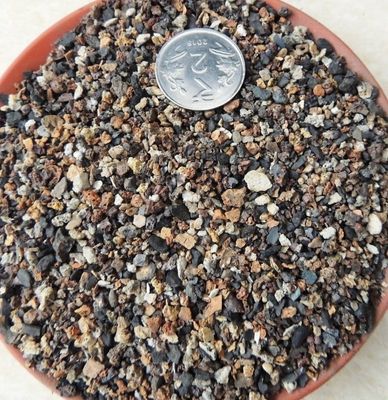
Cactus & Succulent Planting Mix FINE (aka Cactus Soil Mix or Succulent Soil Mix)
Cactus & Succulent Planting Mix FINE (aka Cactus Soil Mix or Succulent Soil Mix)
Fine-Grain Potting Mix for Cactus & Succulent Roots
SKU MNS001
5.0
(3)
₹39.85
New
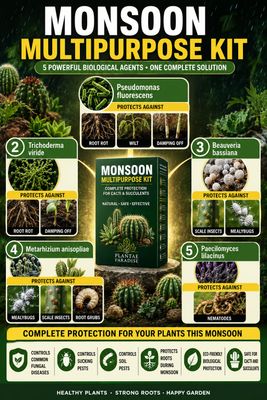
Monsoon Guardian Kit (5 in 1)
Monsoon Guardian Kit (5 in 1)
Complete 5-in-1 biological protection kit for cacti & succulents
SKU MNS024
₹850.00

FORTIFIED Cactus & Succulent SOIL (COARSE)
FORTIFIED Cactus & Succulent SOIL (COARSE)
SKU MNS004
5.0
(11)
₹54.85

Cactus & Succulent Planting Mix COARSE (aka Cactus Soil Mix or Succulent Soil Mix)
Cactus & Succulent Planting Mix COARSE (aka Cactus Soil Mix or Succulent Soil Mix)
Washed, Free-Draining Mineral Mix for Cactus & Succulents
SKU MNS003
5.0
(1)
₹44.85
Display prices in:INR
