
Categories
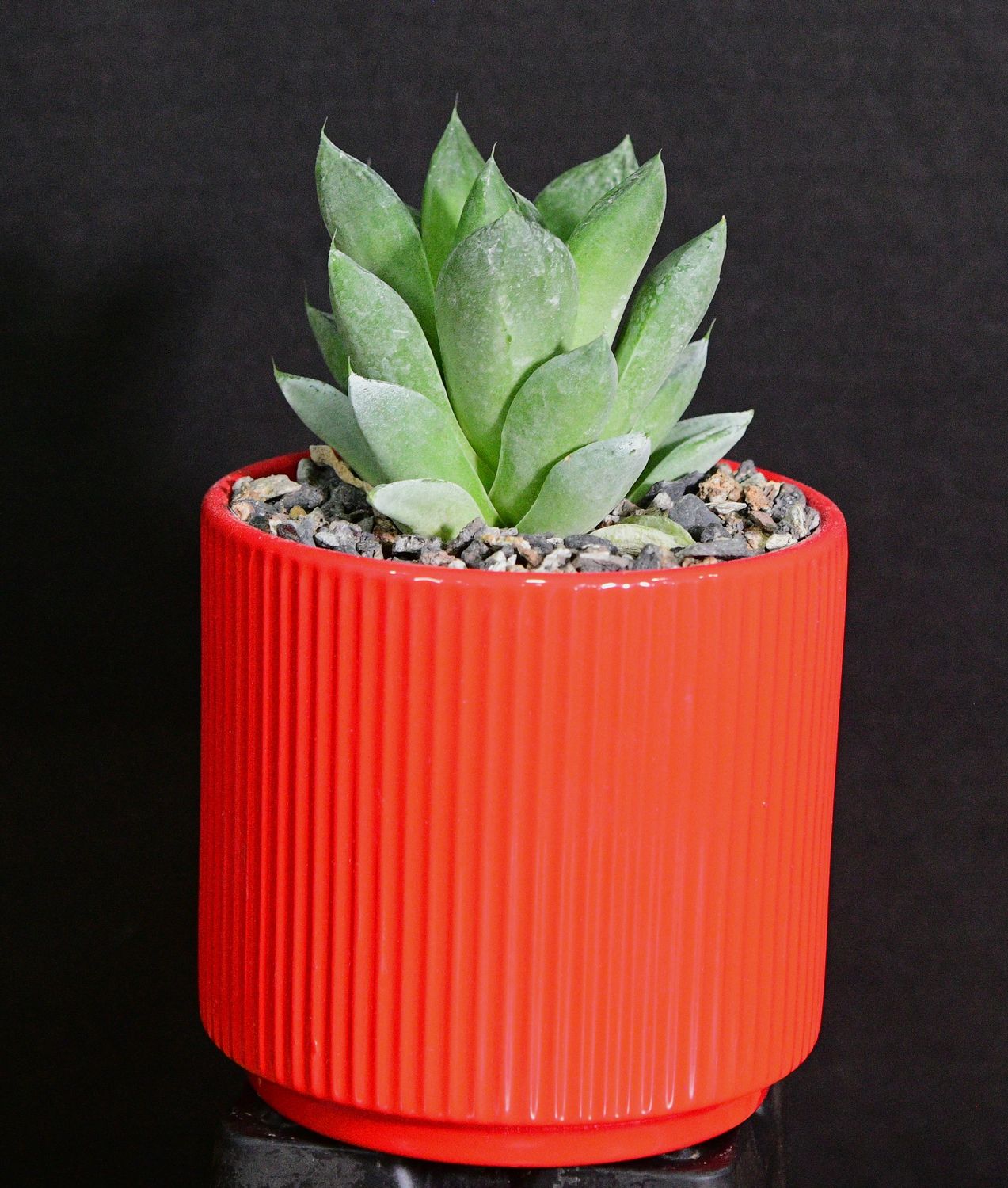
Haworthia cuspidata in Ceramic Gift Pot
SKU GG049
₹575.00
Star-shaped rosettes with translucent striped leaves
In stock: 5 available
1
Save this product for later
Customer reviews
Reviews only from verified customers
No reviews yet. You can buy this product and be the first to leave a review.
Haworthia cuspidata in Ceramic Gift Pot
Product Details
How your gift arrives: to keep both the ceramic pot and the plant safe in transit, we don't ship them potted. Instead, the plant, ceramic pot, potting mix and top dressing are packed separately in the same box, so everything reaches you in perfect condition and ready to pot up in minutes.
Haworthia cuspidata — Star Window Plant
A perfect little star carved in living jade. Plump, triangular leaves fan out in a symmetrical rosette, their tips glowing with translucent "windows" that catch the light like stained glass. Compact, forgiving and endlessly offsetting, this two-century-old classic is the ideal windowsill succulent for beginners and collectors alike.
Origin of Name
The genus Haworthia was named in 1809 by French botanist Henri-Auguste Duval in honour of Adrian Hardy Haworth (1767–1833), the English botanist and entomologist who was the leading authority on succulent plants of his time. The epithet cuspidata is Latin for "pointed" or "tipped with a cusp," describing the sharp tip on each leaf.
Haworth himself described this plant in 1819 in his Supplementum Plantarum Succulentarum. Otto Kuntze later transferred it to Catevala cuspidata in 1891, a name that never caught on. Today, Kew treats it as a synonym of Haworthia cymbiformis var. cymbiformis, while others consider it a long-established hybrid between H. cymbiformis and H. retusa, sometimes written Haworthia × cuspidata. Its common name, Star Window Plant, comes from its star-shaped rosette and translucent leaf tips.
Origin of Plant
Its parent species are native to South Africa. H. cymbiformis grows in the south-eastern Cape, often on shaded cliffs and rocky slopes, while H. retusa comes from the lowlands of the southern Western Cape. Because the plant cultivated as H. cuspidata is not clearly matched to any wild population, its exact origin remains uncertain. It has been grown in European collections for over 200 years, and today's plants are entirely nursery-propagated.
Description
A stemless succulent forming tight, star-shaped rosettes about 8–10 cm across. The fleshy, triangular leaves are bright green to blue-green, thicker and shorter than those of typical H. cymbiformis, ending in a pointed tip. The upper surface of each leaf carries translucent windowed areas with darker green lines that let light into the leaf's interior. It offsets freely, quickly building an attractive clump of smaller rosettes. In bright light, the leaves often take on pink, bronze or purple tones. Small, white tubular flowers with faint greenish-brown veins appear on slender, wiry stems, usually in spring.
Conservation Status
Haworthia is not listed under CITES. The parent species, H. cymbiformis, is widespread and not considered threatened in South Africa. The plant sold as H. cuspidata is a long-established horticultural plant and is not collected from the wild. Our plants are nursery-propagated.
Care
- Light: Bright, indirect light or gentle morning sun. Harsh afternoon sun can scorch the leaves, while too little light causes loose, stretched rosettes.
- Watering: Water thoroughly only when the soil is completely dry. Reduce watering in the hottest summer weeks and in winter, when growth slows.
- Soil: Very free-draining cactus and succulent mix with plenty of grit, pumice or perlite.
- Pot: Shallow pot with drainage holes. Terracotta helps the soil dry faster.
- Temperature: Best between 10–30 °C. Protect from frost and from waterlogging in cold weather.
- Feeding: Diluted cactus fertiliser once or twice in the growing season.
- Tips: Separate offsets once they have their own roots to create new plants. Translucent, mushy leaves usually mean overwatering. Red or bronze tones usually mean the plant is receiving strong light, which is normal in moderation.
A Story Worth Telling
Adrian Hardy Haworth, the man behind the genus name, studied plants and insects with equal enthusiasm. He was a founder of one of England's earliest entomological societies and described hundreds of succulents, many from specimens growing in London gardens after collectors sent them from the Cape. He died in Chelsea during the cholera epidemic of 1833, but his name lives on in one of the world's most popular succulent genera.
The "windows" on the leaves are a clever survival trick. In the wild, many Haworthia species grow partly buried in soil or tucked into rocky cracks, with only their leaf tips exposed. The translucent windows act like skylights, channelling sunlight deep into the leaf so the plant can photosynthesise while staying protected from heat and drying winds. Your Star Window Plant carries that desert-engineering legacy right onto your windowsill.
You May Also Like

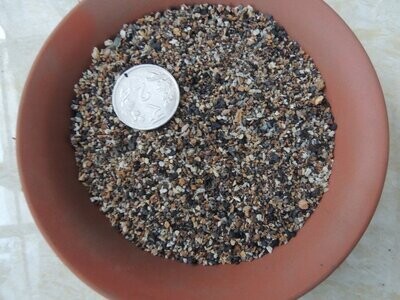
Cactus & Succulent Planting Mix COARSE (aka Cactus Soil Mix or Succulent Soil Mix)
Cactus & Succulent Planting Mix COARSE (aka Cactus Soil Mix or Succulent Soil Mix)
Washed, Free-Draining Mineral Mix for Cactus & Succulents
SKU MNS003
5.0
(1)
₹44.85

FORTIFIED Cactus & Succulent SOIL (COARSE)
FORTIFIED Cactus & Succulent SOIL (COARSE)
SKU MNS004
5.0
(12)
₹54.85
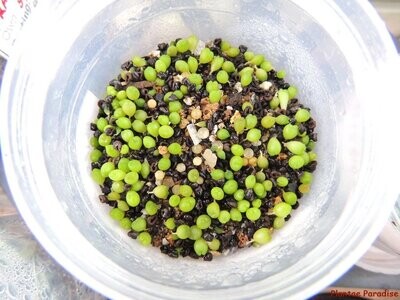
Cactus Seed Planting Mix
Cactus Seed Planting Mix
Sterile, Fine-Grain Media for Cactus & Succulent Seeds
SKU MNS005
₹74.85
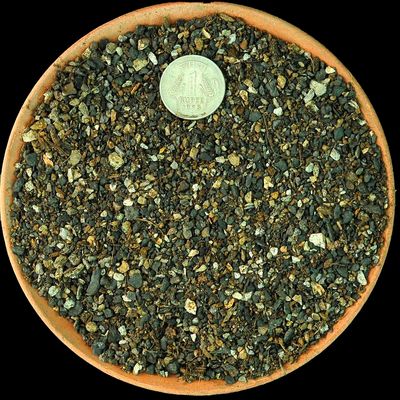
FORTIFIED Cactus & Succulent SOIL (FINE)
FORTIFIED Cactus & Succulent SOIL (FINE)
SKU MNS002
5.0
(4)
₹49.85
Display prices in:INR
