
Categories
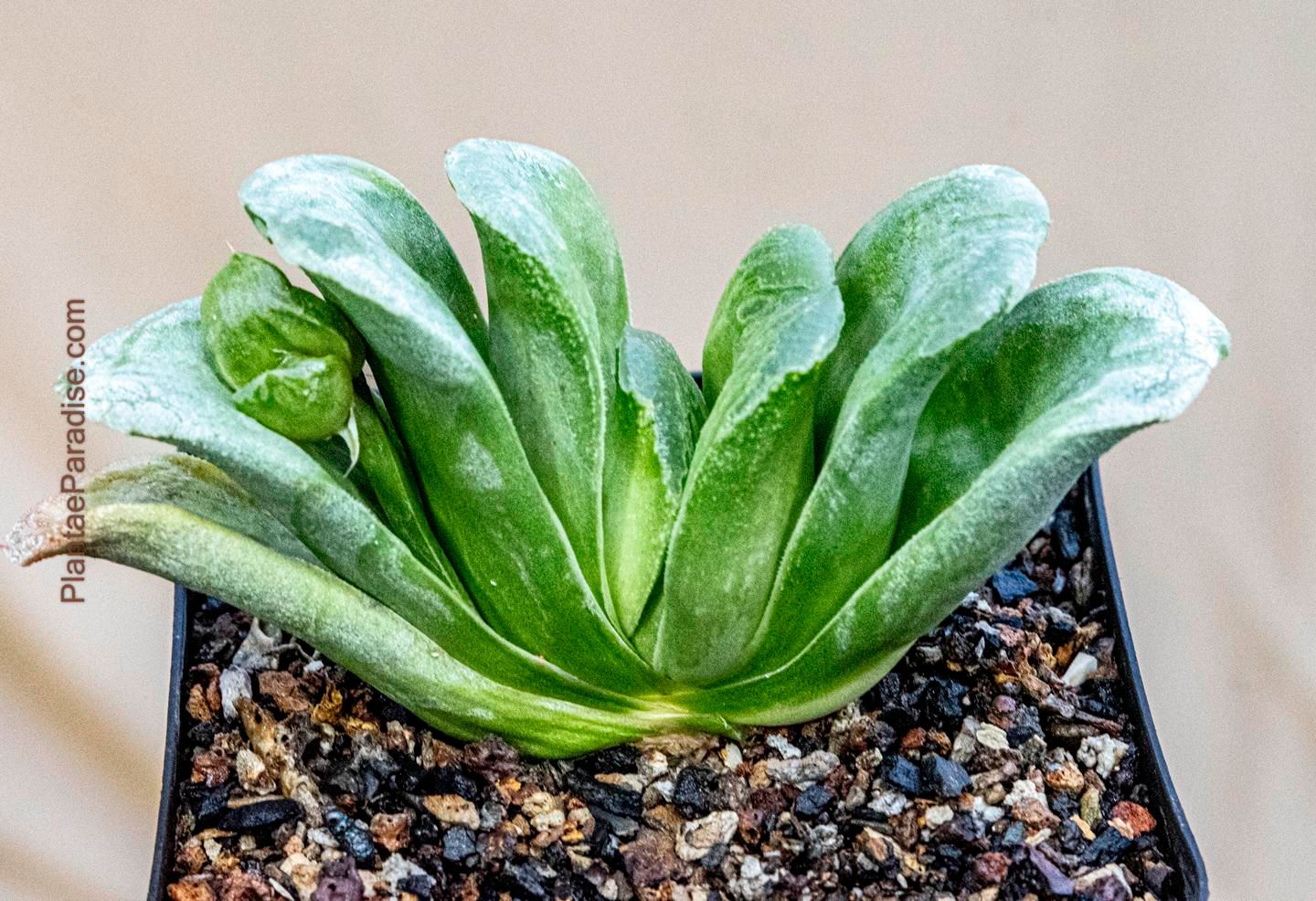
Haworthia maughanii x cooperi
5.0
1 review
Reviews from verified customers who have purchased products at this store.
SKU HH062
₹300.00
In stock: 4 available
1
Save this product for later
Customer reviews
Reviews only from verified customers
Reviews are only accepted from verified customers who have signed in and purchased the products. This ensures that each review is based on genuine customer experiences. All reviews are checked before publication to prevent spam.
Rajesh R.
Bengaluru,
India
Mon, August 10, 2026
Haworthia maughanii x cooperi
Product Details
Haworthia maughanii × cooperi
Somewhere between a jade rosette and a cluster of sea anemones sits this quiet hybrid — a plant built from two very different survival strategies, fused into one improbable, glassy-tipped whorl. It doesn't occur anywhere in the wild; it exists because a grower, at some point, wondered what would happen if two of South Africa's strangest window-leaved succulents were allowed to meet.
1. Origin of Name
The genus Haworthia honours Adrian Hardy Haworth (1767–1833), an English botanist and entomologist whose meticulous work on succulents shaped much of the early taxonomy of the group.
This particular plant is a horticultural cross between two named species, each carrying its own story. Haworthia truncata var. maughanii commemorates a collector surnamed Maughan, credited with bringing this unusual rosette-forming, underground-growing form to wider attention after its formal description by Karl von Poellnitz in 1932 (originally as Haworthia maughanii, later reclassified as a variety of H. truncata). The epithet truncata, from the Latin truncatus ("cut off"), describes the leaf tips, which look as though they've been sliced flat with a knife.
Haworthia cooperi honours Thomas Cooper (1815–1913), an English botanist and plant explorer who collected extensively across South Africa's Eastern Cape between 1859 and 1862, sending specimens back to English botanical circles where the species was formally published by J.G. Baker in 1871.
As a hybrid, this plant has no independent botanical name or formal publication of its own — it is a cultivated cross rather than a wild taxon, and its parentage (maughanii × cooperi) is its only formal designation. Hybrids of this kind circulate widely among specialist Haworthia breeders, particularly in Japan and Taiwan, where deliberate crosses between window-leaved species are a longstanding hobbyist tradition; we note this honestly rather than assign it a cultivar name it hasn't earned.
2. Origin of Plant
Both parent species are South African endemics, though from notably different corners of the country. Haworthia truncata var. maughanii is restricted to a very small area of the Little Karoo near Calitzdorp in the Western Cape, where it grows almost entirely sunken into the ground, with only the translucent, windowed leaf tips visible at soil level — a striking adaptation that shields the plant from browsing animals and temperature extremes while still admitting light to the leaf interior. Haworthia cooperi, by contrast, is native to the Eastern Cape Province, typically found in the shelter of rocks and low shrubs across a considerably wider range, forming small clustering rosettes rather than growing buried.
This hybrid brings the two lineages together under cultivation, combining a Little Karoo specialist with an Eastern Cape generalist — plants that would never meet in the wild, separated as they are by both geography and growth habit.
3. Description
The result is a fleshy, open rosette of thick, boat-shaped leaves in a cool blue-green, each finely dusted with a soft, almost frosted texture and tapering to a smooth, rounded, faintly translucent tip. The leaves curve outward and slightly downward in a manner reminiscent of cooperi's looser clustering habit, while their substance and heft nod to maughanii's fleshier, more architectural leaf form. Rather than the flat-topped "cut" window typical of pure maughanii, the windows here are softer and more gradual, following the tip's natural curve. Offsets form readily at the base, as seen developing here, and the rosette will slowly clump with age into a tighter congregation of heads.
4. Conservation Status
The genus Haworthia falls under CITES Appendix II, meaning international trade in these plants is legal but regulated through export permitting — a family-wide protection reflecting the genus's popularity and vulnerability to over-collection rather than imminent extinction risk for every species within it. Haworthia truncata var. maughanii, one parent of this hybrid, occupies a genuinely tiny native range and faces ongoing pressure from illegal wild collection in habitat, though this specific hybrid offspring is entirely nursery-raised and carries no wild-collection concerns whatsoever — it is, quite literally, a plant that only exists in cultivation.
5. Care
- Light: Bright, filtered light; protect from harsh midday sun, which can scorch the leaves and cause reddening or bleaching
- Watering: Water deeply, then allow the soil to dry completely before watering again; err on the side of underwatering, particularly in winter
- Soil: A gritty, fast-draining succulent mix — heavy or organic-rich soils invite rot in the fleshy roots and leaf bases
- Pot: Terracotta is preferable to plastic, whose non-porous walls trap moisture around the roots for longer than these plants prefer
- Temperature: Warm growing conditions suit it best; protect from frost and from prolonged cold, damp spells
- Feeding: A light feed with a diluted, low-nitrogen succulent fertiliser during the active growing season is sufficient; avoid feeding in dormancy
A Story Worth Telling
There's a particular thread of Haworthia culture — strongest among Japanese and Taiwanese collectors over the past few decades — built entirely around crossing window-leaved species to chase new leaf architectures: rounder windows, deeper translucency, tighter symmetry, denser clustering. Truncata var. maughanii and cooperi sit at opposite ends of that obsession. One buries itself for protection and shows the world only a handful of polished, light-catching tips; the other clusters openly on rocky slopes, its rosettes multiplying into small colonies. Crossing them is, in a sense, an attempt to ask both plants' evolutionary answers the same question — how do you let light in without giving everything away — and see what compromise they reach together. This plant is that compromise, still finding its shape.
You May Also Like

FORTIFIED Cactus & Succulent SOIL (COARSE)
FORTIFIED Cactus & Succulent SOIL (COARSE)
SKU MNS004
5.0
(11)
₹54.85

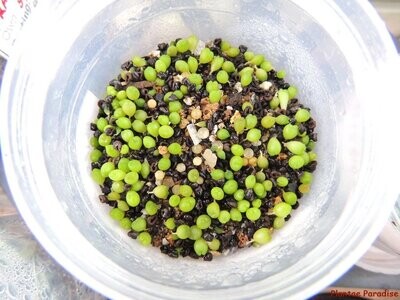
Cactus Seed Planting Mix
Cactus Seed Planting Mix
Sterile, Fine-Grain Media for Cactus & Succulent Seeds
SKU MNS005
₹74.85
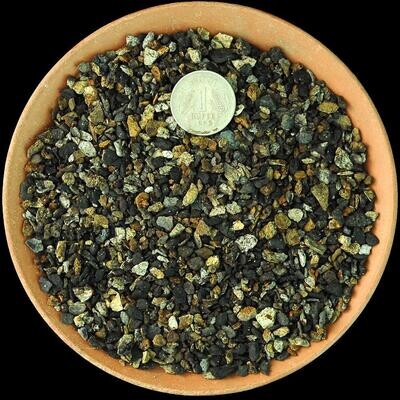
Cactus & Succulent Planting Mix COARSE (aka Cactus Soil Mix or Succulent Soil Mix)
Cactus & Succulent Planting Mix COARSE (aka Cactus Soil Mix or Succulent Soil Mix)
Washed, Free-Draining Mineral Mix for Cactus & Succulents
SKU MNS003
5.0
(1)
₹44.85


Cactus & Succulent Planting Mix FINE (aka Cactus Soil Mix or Succulent Soil Mix)
Cactus & Succulent Planting Mix FINE (aka Cactus Soil Mix or Succulent Soil Mix)
Fine-Grain Potting Mix for Cactus & Succulent Roots
SKU MNS001
5.0
(3)
₹39.85
Display prices in:INR
