
Categories
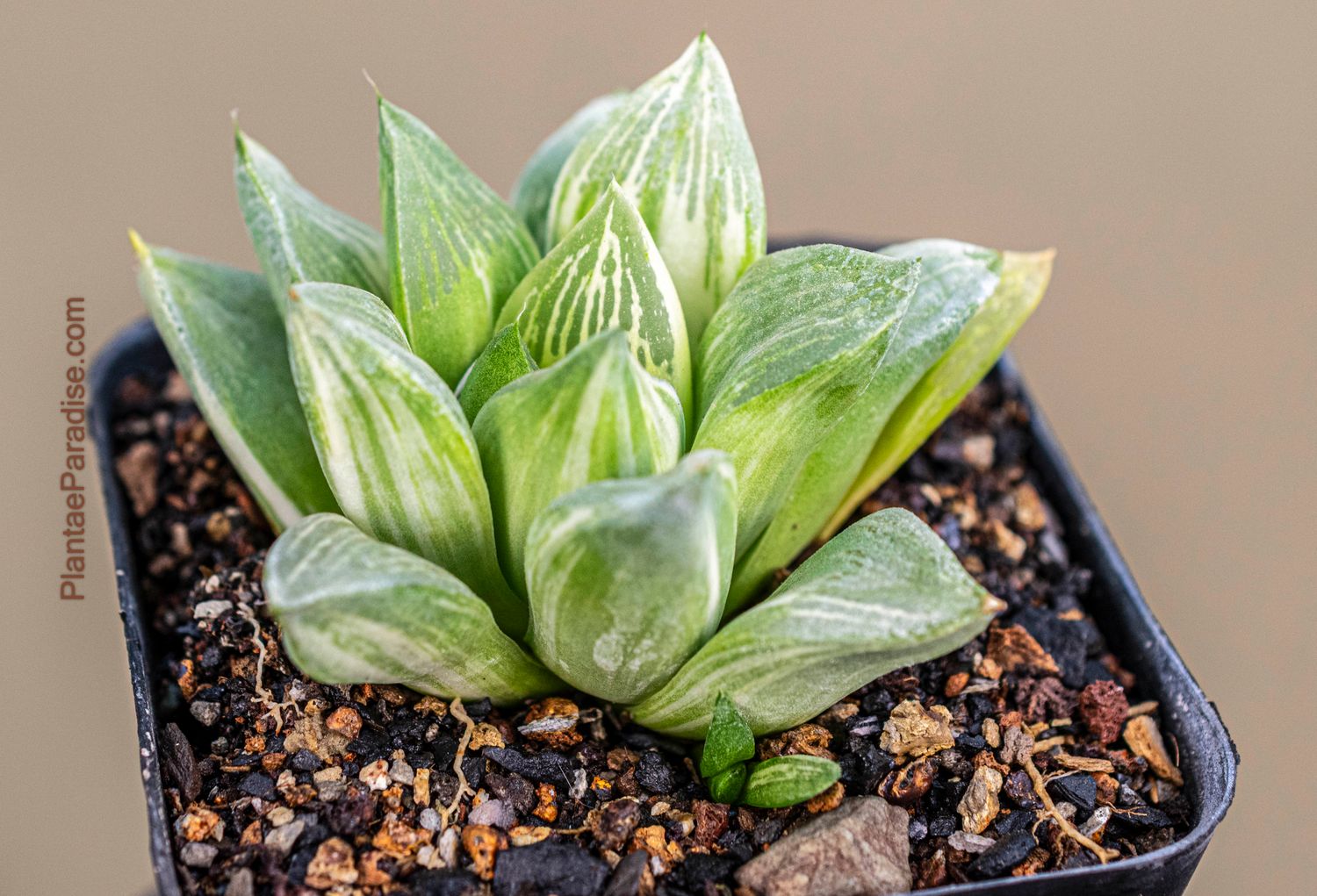
Haworthia retusa variegated
SKU HH122A
₹650.00
In stock: 1 available
1
Save this product for later
Customer reviews
Reviews only from verified customers
No reviews yet. You can buy this product and be the first to leave a review.
Haworthia retusa variegated
Product Details
Haworthia retusa variegata is an exceptional succulent celebrated for its striking, architectural form and beautifully patterned, variegated foliage. Its distinctive foliage and translucent "windows" make it a coveted piece for collectors seeking natural artistry.
1. Origin of Name:
The genus "Haworthia" is named in honor of Adrian Hardy Haworth (1767–1833), a pioneering English botanist specializing in succulents and cacti. The species name "retusa" refers to the plant’s characteristic notched or serrated leaf tips, derived from Latin meaning "notched." The variety "variegata" describes the plant’s unusual, ornamental coloration patterning—patches and streaks of cream, yellow, or white mixed with vibrant green. This name highlights its unique, mosaic-like foliage, which enhances its architectural appeal and decorative value.
2. Origin of Plant:
Haworthia retusa variegata is a cultivated mutation of the native South African species, found naturally in rocky, arid regions of the Western Cape. The variegation occurs due to a genetic mutation, resulting in irregular patches of different colors across its broad, wedge-shaped leaves. The plant’s natural habitat—rocky slopes and crevices—has shaped its low-growing, resilient form. It is primarily propagated through cultivation by hobbyists and nurseries to enhance its ornamental appeal.
3. Description:
This variegated variety features broad, wedge-shaped leaves that form a tight, low, rosette. The most striking feature is the patchwork of cream, yellow, or white variegation mixed with the plant’s natural green, creating a mosaic or watercolor effect. The translucent "windows" near the tips of the leaves add depth and light diffusion—perfect for photosynthesis. The variegation pattern varies greatly, often appearing as irregular patches or streaks, making each plant uniquely beautiful. During flowering, it produces delicate white or pale pink tubular flowers, adding a soft contrast to its striking foliage.
4. Conservation Status:
As a cultivar and mutation of a native South African species, Haworthia retusa variegata is widely propagated in cultivation and is commonly available. Its popularity helps reduce wild collection, supporting conservation efforts. Proper propagation and responsible sourcing ensure that this beautiful variety remains abundant and sustainable.
5. Care:
- Lighting: Bright, indirect sunlight; direct morning sun is ideal but avoid harsh afternoon rays to prevent leaf burn.
- Watering: Water sparingly, allowing the soil to dry out thoroughly between watering. Reduce watering in winter.
- Soil: Use a well-draining cactus or succulent mix with coarse sand or pumice for optimal drainage.
- Temperature: Prefers warm temperatures between 65°F and 80°F (18°C to 27°C); protect from frost—bring indoors or provide frost protection in colder climates.
- Additional Tips: Overwatering can lead to root rot. Fertilize lightly during active growth with a diluted cactus fertilizer.
6. Interesting Anecdote:
Native South Africans believe that plants with beautiful variegation, like Haworthia retusa variegata, are akin to tiny paintings or mosaics—symbols of beauty, patience, and artistry. Its patches and streaks are sometimes seen as earthly treasures, inspiring jewelry, decorative crafts, and miniature garden designs. Many enthusiasts consider it a "living piece of art," embodying the harmony between natural resilience and aesthetic elegance in desert flora.
Add Haworthia retusa variegata to your collection for a unique, mosaic-like display—an exquisite blend of natural artistry and resilience!
You May Also Like

FORTIFIED Cactus & Succulent SOIL (FINE)
FORTIFIED Cactus & Succulent SOIL (FINE)
SKU MNS002
5.0
(4)
₹49.85
New


Monsoon Guardian Kit (5 in 1)
Monsoon Guardian Kit (5 in 1)
Complete 5-in-1 biological protection kit for cacti & succulents
SKU MNS024
₹850.00
Cactus Seed Planting Mix
Cactus Seed Planting Mix
Sterile, Fine-Grain Media for Cactus & Succulent Seeds
SKU MNS005
₹74.85

Cactus & Succulent Planting Mix COARSE (aka Cactus Soil Mix or Succulent Soil Mix)
Cactus & Succulent Planting Mix COARSE (aka Cactus Soil Mix or Succulent Soil Mix)
Washed, Free-Draining Mineral Mix for Cactus & Succulents
SKU MNS003
5.0
(1)
₹44.85
Display prices in:INR
