
Categories
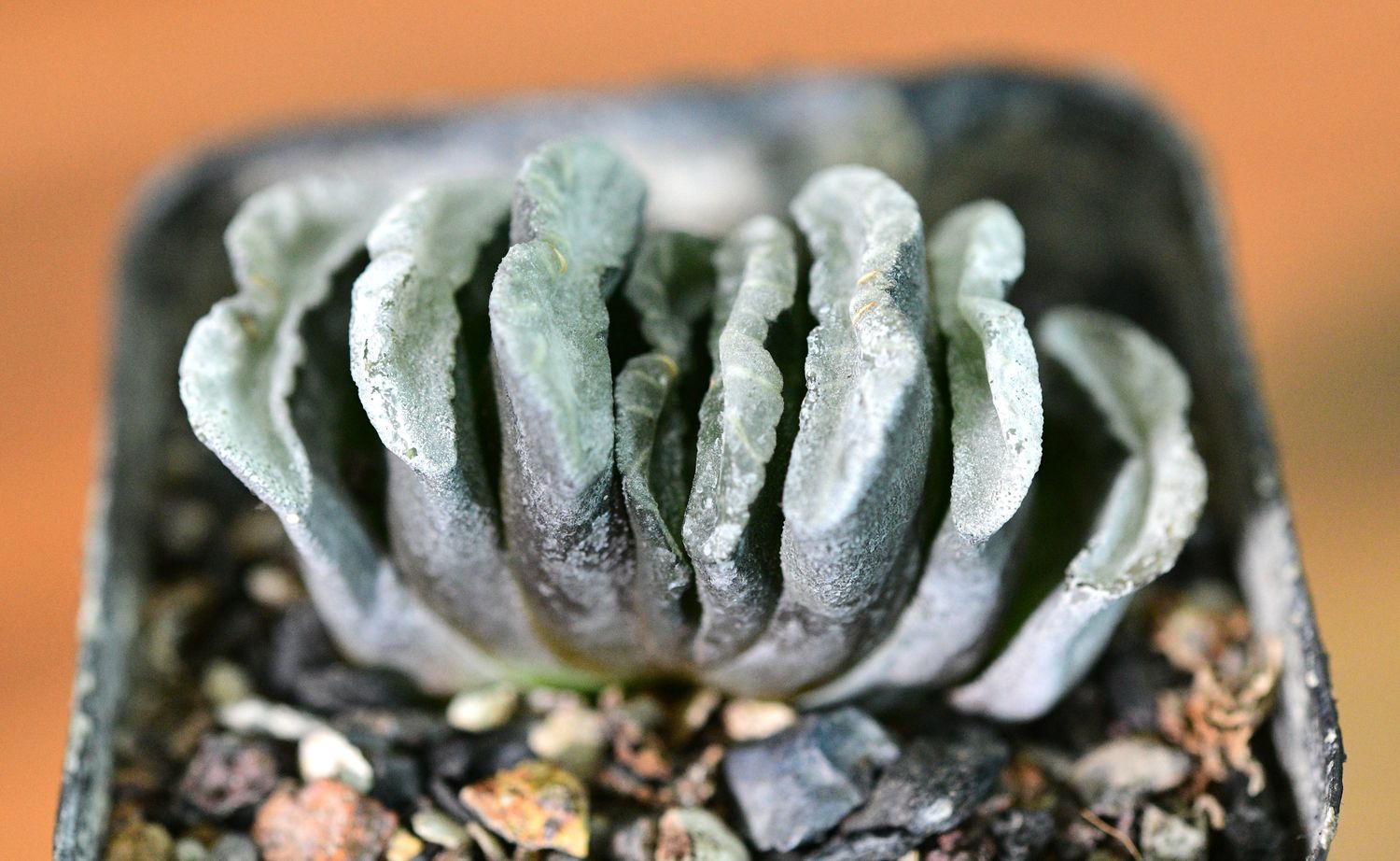
Haworthia truncata 'Silver Ribbon'
SKU HH052
₹400.00
In stock: 1 available
1
Save this product for later
Customer reviews
Reviews only from verified customers
No reviews yet. You can buy this product and be the first to leave a review.
Haworthia truncata 'Silver Ribbon'
Product Details
Haworthia truncata 'Silver Ribbon'
Most horse's teeth are chunky and square, but this one is a ribbon dancer. 'Silver Ribbon' is a distinct thin-leaf clone of the famous Haworthia truncata. Its slender leaves fan out in two neat rows, coated in silvery frost and curling at the tips like satin ribbon. It is a rare, graceful variation on one of the most sculptural succulents in the collector's world.
Origin of Name
The genus Haworthia honours Adrian Hardy Haworth (1767–1833), a leading English botanist and entomologist of his day, and one of the great early authorities on succulents. The species epithet truncata comes from the Latin truncatus, meaning "cut off" or "shortened by cutting." It refers to the leaf tips, which in typical plants end abruptly in a flat, windowed face, as if sliced with a knife. The species was described in 1910 by Selmar Schönland, a German-born botanist based at the Albany Museum in Grahamstown, South Africa. In Afrikaans the plant is called perdetande, meaning "horse's teeth." The name comes from the rows of squared-off leaves, which look just like a horse's front teeth. The cultivar name 'Silver Ribbon' describes this clone's unusually thin, frosted, ribbon-like leaves, which set it apart from the thick-leaved typical form.
Origin of Plant
Haworthia truncata is native to the Little Karoo, a semi-arid, winter-rainfall valley in the Western Cape of South Africa. It grows mainly between Oudtshoorn, De Rust and Calitzdorp. It lives in gritty, stony ground, often in the shade of small shrubs. In the wild it pulls itself down into the soil until only the leaf tips show. A second natural variety, var. maughanii, grows near Calitzdorp at the western edge of the range. Its leaves are rounded and arranged in a spiral. 'Silver Ribbon' is a horticultural selection, propagated in the nursery rather than collected from the wild.
Description
H. truncata is the only Haworthia whose leaves grow in two opposite rows (a distichous arrangement). This gives the plant its fan-like, "row of teeth" look. In 'Silver Ribbon' the usual thick, blocky leaves are replaced by slender, flattened ones that rise upright, fold slightly along their length and curl outward at the tips. The whole surface is finely rough and coated in a frosty silver-grey layer, with darker grey-green showing lower down and near the leaf bases. Fine teeth edge the leaf margins. The plant grows slowly, forming a compact fan of about 5–8 cm, and in time it offsets into small clusters. Slender stalks carry small white tubular flowers with faint green-brown veins, mainly in late spring.
Conservation Status
Haworthia is not listed under CITES, so nursery-propagated plants can be traded freely. However, H. truncata grows naturally in only a limited part of the Little Karoo. Illegal collectors target many Haworthias, and the genus appears regularly among plants confiscated by South African authorities. Buying nursery-propagated clones like this one keeps demand away from wild populations.
Care
- Light: Bright light with protection from the harshest afternoon sun. The equivalent of 50–60% shade cloth suits it well. Too little light dulls the silver frost and loosens the fan.
- Watering: Water thoroughly, then let the soil dry out completely. Water more freely in the cooler months, which are its main growing season, and cut right back in peak summer, when it rests. Keep it out of monsoon rain.
- Soil: A very gritty, fast-draining mix. For example, use 70% mineral grit (pumice, lava rock, coarse sand) and 30% organic matter.
- Pot: A pot slightly deeper than wide suits its thick roots. Good drainage is essential.
- Temperature: It grows best at 15–25 °C and tolerates 5–35 °C. Give it shade and strong airflow in extreme heat, and protect it from frost.
- Humidity: Good ventilation matters, since stagnant humid air can cause rot and mould on flower stalks.
- Feeding: Apply a half-strength liquid fertiliser during the cool growing season only, never during summer rest.
- Tip: In a gritty top layer, the plant can be set slightly deeper over time, the way it grows in the wild.
A Story Worth Telling
In its desert home, H. truncata survives by hiding. Its leaves sink into the soil so that only their flat tips stay above ground, which shields the plant from scorching sun, drying winds and hungry animals. Each tip is a translucent "window" that lets sunlight pass down into the buried leaf, where photosynthesis happens safely underground. The plant works like a tiny greenhouse built into the earth. This clever design has won H. truncata a devoted following, especially in Japan, where growers have spent decades selecting distinctive clones. Thin-leaved forms like 'Silver Ribbon' are among the most unusual results of that collectors' passion.
You May Also Like
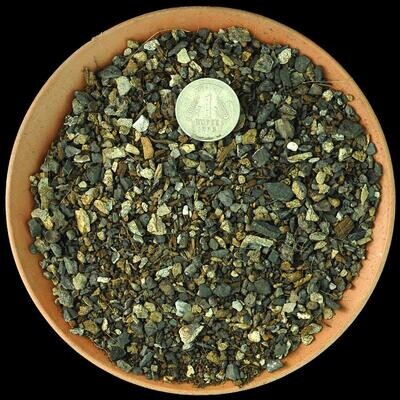
FORTIFIED Cactus & Succulent SOIL (COARSE)
FORTIFIED Cactus & Succulent SOIL (COARSE)
SKU MNS004
5.0
(11)
₹54.85
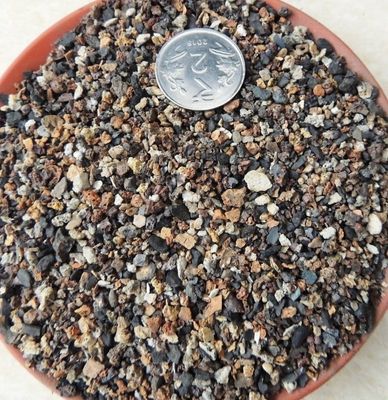
Cactus & Succulent Planting Mix FINE (aka Cactus Soil Mix or Succulent Soil Mix)
Cactus & Succulent Planting Mix FINE (aka Cactus Soil Mix or Succulent Soil Mix)
Fine-Grain Potting Mix for Cactus & Succulent Roots
SKU MNS001
5.0
(3)
₹39.85
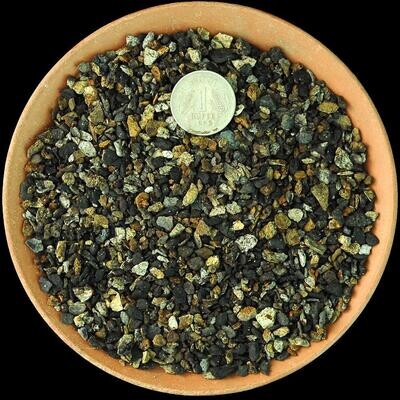
Cactus & Succulent Planting Mix COARSE (aka Cactus Soil Mix or Succulent Soil Mix)
Cactus & Succulent Planting Mix COARSE (aka Cactus Soil Mix or Succulent Soil Mix)
Washed, Free-Draining Mineral Mix for Cactus & Succulents
SKU MNS003
5.0
(1)
₹44.85
New

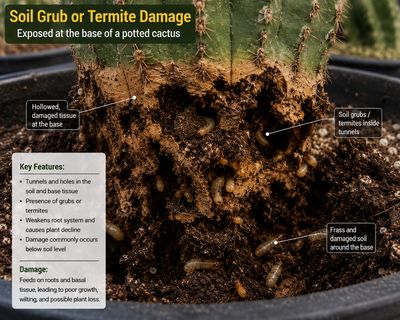
Monsoon Guardian Kit (5 in 1)
Monsoon Guardian Kit (5 in 1)
Complete 5-in-1 biological protection kit for cacti & succulents
SKU MNS024
₹850.00
Display prices in:INR
