
Categories
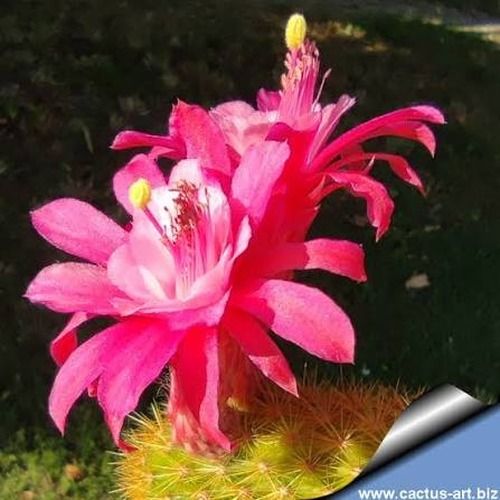
Hildewintera Hybrid Cv. Weixdorf
SKU HW025
₹800.00
Sold out
Sold out
Save this product for later
Customer reviews
Reviews only from verified customers
No reviews yet. You can buy this product and be the first to leave a review.
Hildewintera Hybrid Cv. Weixdorf
Product Details
Hildewintera Hybrid Cv. Weixdorf
A single unopened bud, tipped in butter-yellow, rises above an already-flowering rosette of deep magenta and rose-white — proof that this hybrid rarely settles for just one bloom at a time. Its fine, golden-spined stem carries flowers built from two very different Bolivian bloodlines, brought together in a German greenhouse and named for a quiet corner of Dresden.
1. Origin of Name
The "Hildewintera" in this hybrid's name follows the same lineage as its relatives — coined in 1966 by botanist Friedrich Ritter to honour his sister, Hildegarda "Hilde" Winter (1893–1975), who distributed the seeds he collected across the Bolivian Andes, even as taxonomists have since folded the genus back into Cleistocactus winteri.
The cultivar epithet 'Weixdorf' refers to a small district in the northern reaches of Dresden, in the German state of Saxony — one more entry in a broader pattern among German Hildewintera hybridisers of naming their crosses after local towns and landmarks. Hobbyist forum records credit this particular cross to a breeder identified as F. Jahn, pairing Akersia roseiflora with Hildewintera aureispina; beyond that forum documentation, we don't have a fuller public record of the breeder's own history, and it's more honest to say so than to invent one.
Akersia roseiflora itself carries a name honouring the American botanist John F. Akers (1906–1967). Today it's more often known under its senior synonym, Cleistocactus samaipatanus — an epithet referring directly to Samaipata, the Bolivian town near which the species was first collected, a naming choice as geographically literal as 'Weixdorf' is for this hybrid.
2. Origin of Plant
This hybrid's ancestry draws from two distinct pockets of Bolivia. Hildewintera aureispina is native to rocky cliffs in the Santa Cruz department's Florida province, at roughly 1,400–1,500 metres elevation. Akersia roseiflora (Cleistocactus samaipatanus) comes from the area around Samaipata, also in Santa Cruz department, where it grows as a vigorous, freely branching shrub rather than a single trailing stem.
As with its hybrid relatives, 'Weixdorf' exists only because a breeder brought these two wild lineages together under glass — it has no natural habitat of its own.
3. Description
A slender stem, finely clothed in soft, golden-bristled spines, carries flowers that shift dramatically in tone from centre to edge: pale, rose-white inner petals brushed with violet cup gently into a loose, semi-funnel form, their edges softly crinkled, while the outer petals darken into a richer rose-violet and curve back and away from the flower's face — occasionally taking on a warm pinkish-orange cast on their reverse. Buds emerge tipped in a contrasting pale yellow before unfurling, and the plant tends to carry several flowers and buds in different stages at once, giving the impression of continuous, layered bloom rather than a single synchronized flush.
4. Conservation Status
The Cactaceae family as a whole, including this hybrid's ancestry, falls under CITES Appendix II, regulating international trade through export permitting. The two wild parent lineages tell somewhat different conservation stories worth separating out: Cleistocactus winteri (Hildewintera aureispina) is assessed as Endangered on the IUCN Red List owing to its narrow Bolivian cliff habitat, while Cleistocactus samaipatanus (Akersia roseiflora) is assessed as Least Concern and has even earned the Royal Horticultural Society's Award of Garden Merit for its garden performance. 'Weixdorf' itself, as an entirely nursery-bred hybrid, inherits none of the wild-collection concerns attached to either parent.
5. Care
- Light: Bright light for most of the day, with tolerance for some direct sun; shield from the most intense midday exposure
- Watering: Water regularly through the growing season once the soil has dried; reduce markedly over winter
- Soil: A fast-draining cactus or succulent mix, prioritising drainage above all
- Pot: A hanging basket or elevated pot suits its trailing habit; terracotta helps avoid excess moisture retention around the roots
- Temperature: Keep reliably above 10°C (50°F) — one parent, C. samaipatanus, has no tolerance for temperatures below freezing, and this hybrid inherits that sensitivity
- Feeding: A diluted, balanced cactus fertiliser during active growth supports its generous flowering; withhold over winter dormancy
A Story Worth Telling
There's a nice symmetry in this plant's two names. One half of its parentage carries the memory of John F. Akers, an American botanist folded permanently into cactus taxonomy through a single genus name most growers now barely use. The other, 'Weixdorf,' is far more modest still — not a scientist's legacy but a quiet Dresden suburb, chosen simply because that's where, or for whom, this particular cross came into being. Between the two sits a plant that owes its existence to neither Bolivia nor Saxony alone, but to the patient, unglamorous work of amateur breeders trading pollen and cuttings across borders, turning wild cliff-dwelling cacti into something that flowers, again and again, on a windowsill thousands of miles from home.
You May Also Like
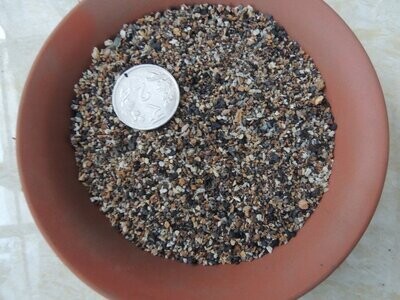
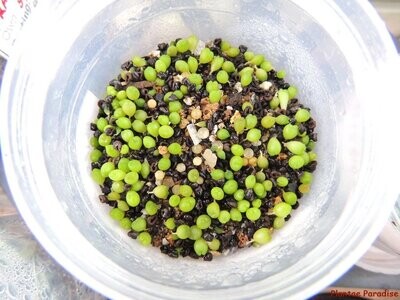
Cactus Seed Planting Mix
Cactus Seed Planting Mix
Sterile, Fine-Grain Media for Cactus & Succulent Seeds
SKU MNS005
₹74.85
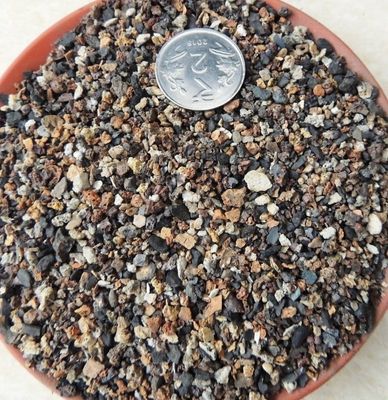

Cactus & Succulent Planting Mix FINE (aka Cactus Soil Mix or Succulent Soil Mix)
Cactus & Succulent Planting Mix FINE (aka Cactus Soil Mix or Succulent Soil Mix)
Fine-Grain Potting Mix for Cactus & Succulent Roots
SKU MNS001
5.0
(3)
₹39.85
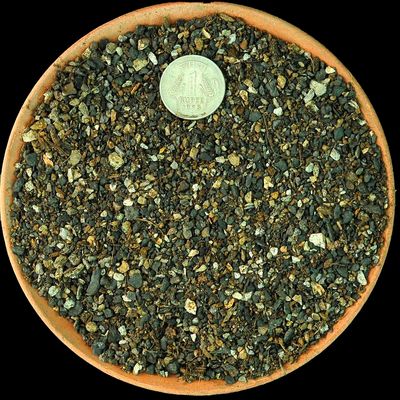
FORTIFIED Cactus & Succulent SOIL (FINE)
FORTIFIED Cactus & Succulent SOIL (FINE)
SKU MNS002
5.0
(4)
₹49.85
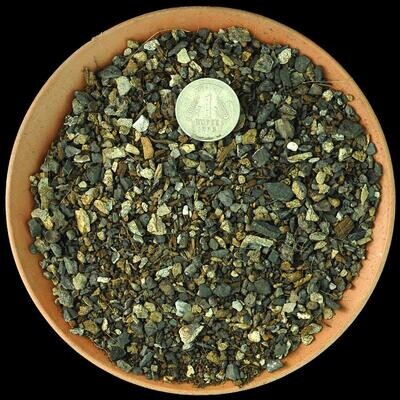
FORTIFIED Cactus & Succulent SOIL (COARSE)
FORTIFIED Cactus & Succulent SOIL (COARSE)
SKU MNS004
5.0
(12)
₹54.85
Display prices in:INR
