
Categories
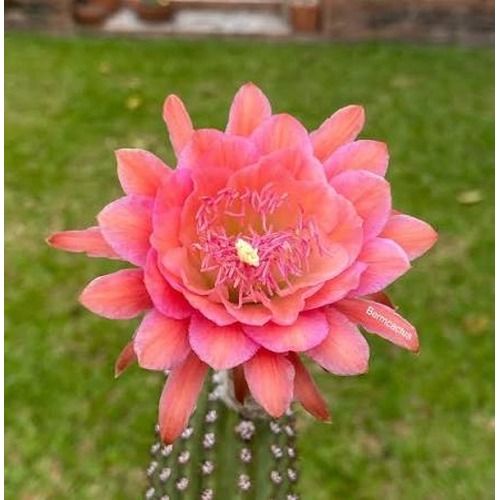
Hildewintera hybrid Ebernburg
SKU HW027
₹750.00
In stock: 2 available
1
Save this product for later
Customer reviews
Reviews only from verified customers
No reviews yet. You can buy this product and be the first to leave a review.
Hildewintera hybrid Ebernburg
Product Details
Hildewintera Hybrid 'Ebernburg'
A single, hair-fine stem climbs toward the light, and from it erupts something almost incongruous in scale — a wide, layered bloom in coral, magenta, and rose, ringed by a haze of pink-tipped stamens. This is a plant of deliberate contrast: understated body, extravagant flower.
1. Origin of Name
As with its relatives, the "Hildewintera" in this hybrid's name traces back to Friedrich Ritter's 1966 tribute to his sister, Hildegarda "Hilde" Winter (1893–1975), who distributed the cactus seeds he collected across the Bolivian Andes. Though the name has since been folded taxonomically into Cleistocactus winteri, it persists as the working name for this whole lineage of fine-spined, trailing hybrid cacti among specialist growers, and we retain it here for that reason.
The cultivar name 'Ebernburg' points somewhere very specific: a hilltop castle above the Nahe river in Rhineland-Palatinate, Germany, first documented in the early 13th century and overlooking one of Germany's noted wine-growing valleys. German Hildewintera hybridisers have a well-established habit of naming their cultivars after local landmarks in this Nahe valley region — 'Ebernburg' sits alongside sibling hybrids named for the nearby Rotenfels cliff face and the village of Traisen, all names drawn from the same stretch of countryside. We can't attach a confirmed individual breeder's name to 'Ebernburg' specifically, as documentation for these small-scale hobbyist crosses tends to live in forum threads and private collections rather than formal registries — worth saying plainly rather than inventing a fuller pedigree.
The precise parentage behind 'Ebernburg' isn't publicly recorded either. What we can say from observation: the fine, almost hair-like spination on the stem is characteristic of Hildewintera aureispina (Cleistocactus winteri) ancestry, while the flower's unusually wide, many-layered form departs from the smaller, narrower blooms typical of pure Cleistocactus — a trait German hybridisers have long pursued by crossing Hildewintera stock with larger-flowered relatives such as Echinopsis or Trichocereus to open up the bloom and deepen its colour range.
2. Origin of Plant
The wild ancestry behind this hybrid line traces to Bolivia's Santa Cruz department, where Cleistocactus winteri hangs from rocky cliff faces at roughly 1,400–1,500 metres elevation, and to the closely related Cleistocactus colademononis, which shares a similar cliff-dwelling habit nearby. Both are true Andean cliff specialists, adapted to hang rather than stand, drawing moisture from brief, intense rains and shedding it quickly on exposed rock.
'Ebernburg' itself, like its named siblings from the same hybridising tradition, was raised entirely in cultivation — its "habitat," such as it is, is a German grower's greenhouse rather than a Bolivian gorge.
3. Description
A slender, columnar stem, densely set with fine, pale spines that give it a soft, almost velvety texture rather than a defensive one — built for trailing rather than towering. From this understated body comes a flower dramatically out of proportion to it: broad, many-petaled, and richly layered in coral-pink through deep magenta, with outer petals paling toward their edges and a dense central boss of slender, pink-tipped stamens surrounding a pale, contrasting stigma. The overall effect is closer to a dahlia than to the narrow, half-closed tubes typical of unhybridised Cleistocactus flowers — the visible signature of generations of selective crossing for exactly this kind of floral extravagance.
4. Conservation Status
All Cactaceae, this hybrid's lineage included, fall under CITES Appendix II, regulating international trade through export permitting rather than prohibition. Separately worth noting: both of the likely wild ancestors behind this hybrid line — Cleistocactus winteri and Cleistocactus colademononis — are assessed as Endangered on the IUCN Red List, their narrow Bolivian cliff habitats leaving them genuinely vulnerable in the wild, quite apart from their trade status. 'Ebernburg' itself, however, is a nursery-raised hybrid with no wild population of its own, so it carries none of its ancestors' wild-collection concerns.
5. Care
- Light: Bright light for most of the day; some gentle direct sun is welcome, though intense midday exposure can still scorch the stem
- Watering: Water regularly through spring and summer once the soil has dried out; cut back substantially in winter
- Soil: A fast-draining cactus or succulent mix, prioritising drainage over fertility
- Pot: A hanging basket or elevated position suits the trailing growth habit best; terracotta helps prevent waterlogging around the roots
- Temperature: Keep above roughly 10°C (50°F); this hybrid has no frost tolerance
- Feeding: A diluted, balanced cactus fertiliser during active growth encourages stronger flowering; hold off entirely over winter
A Story Worth Telling
There's a quiet, almost parochial charm in a plant named after a castle most of its buyers will never visit — a small act of a grower rooting an exotic Andean hybrid firmly in home soil, tying a Bolivian cliff-dweller's descendant to the vineyards and rock faces of the Nahe valley instead. It's part of a much larger, largely undocumented tradition: hobbyist hybridisers across Germany, working in greenhouses and back gardens, quietly reshaping a modest Bolivian rat-tail cactus into something with flowers it never had in the wild, then naming their creations after the rivers, ruins, and rock formations they can see from their own windows. 'Ebernburg' is one small, brightly flowering entry in that much longer, largely unwritten catalogue.
You May Also Like
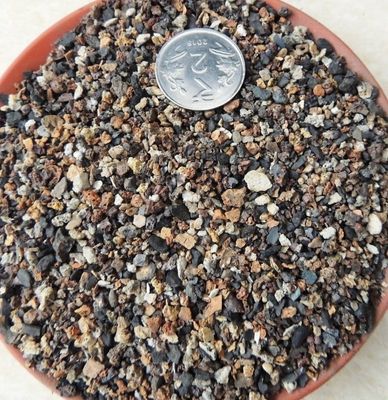

Cactus & Succulent Planting Mix FINE (aka Cactus Soil Mix or Succulent Soil Mix)
Cactus & Succulent Planting Mix FINE (aka Cactus Soil Mix or Succulent Soil Mix)
Fine-Grain Potting Mix for Cactus & Succulent Roots
SKU MNS001
5.0
(3)
₹39.85
New


Monsoon Guardian Kit (5 in 1)
Monsoon Guardian Kit (5 in 1)
Complete 5-in-1 biological protection kit for cacti & succulents
SKU MNS024
₹850.00
Cactus Seed Planting Mix
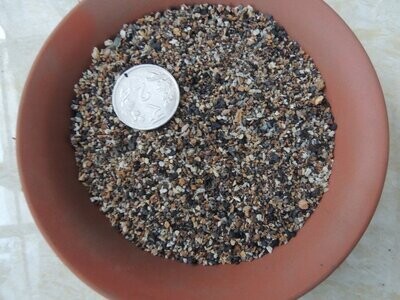
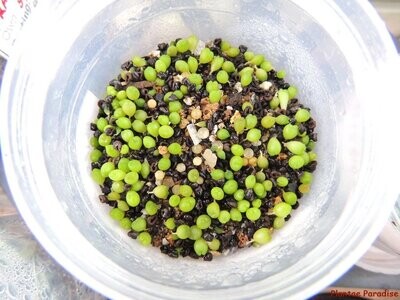
Cactus Seed Planting Mix
Sterile, Fine-Grain Media for Cactus & Succulent Seeds
SKU MNS005
₹74.85
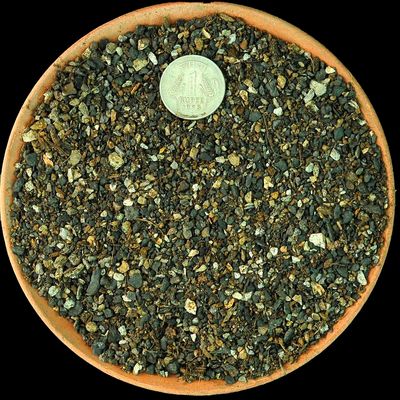
FORTIFIED Cactus & Succulent SOIL (FINE)
FORTIFIED Cactus & Succulent SOIL (FINE)
SKU MNS002
5.0
(4)
₹49.85
Display prices in:INR
