
Categories
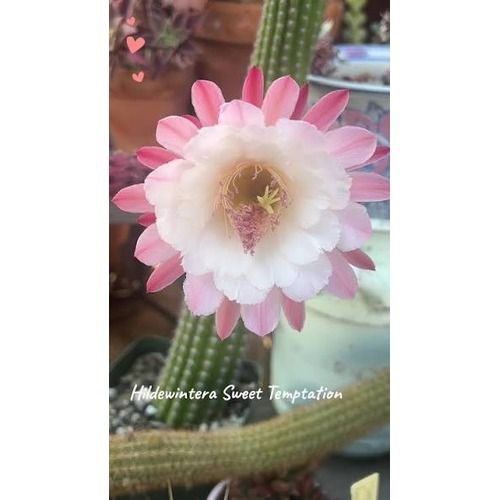
Hildewintera hybrid Sweet Temptation
SKU HW007
₹1 150.00
Free-flowering hybrid cactus with golden spines and tall stems
In stock: 1 available
1
Save this product for later
Customer reviews
Reviews only from verified customers
No reviews yet. You can buy this product and be the first to leave a review.
Hildewintera hybrid Sweet Temptation
Product Details
Hildewintera Hybrid 'Sweet Temptation'
Trained upright rather than left to trail, this stem carries a flower that seems to glow from the inside out — a soft, luminous white centre blushing outward through pale pink to a fringe of deeper rose at the petal tips, like the last light of sunset caught in a single bloom.
1. Origin of Name
The "Hildewintera" lineage carries the same story across every hybrid in this group: the name honours Hildegarda "Hilde" Winter (1893–1975), sister of the German botanist Friedrich Ritter, who distributed the cactus seeds he collected across Bolivia and had the genus named for her by her brother in 1966. Modern taxonomy has since absorbed Hildewintera into Cleistocactus winteri, but the name persists in the trade precisely because of stories like this one.
For the cultivar name 'Sweet Temptation' itself, we want to be upfront: unlike some of the German-named hybrids in this group with documented breeders and forum records, this one doesn't have a public record of its specific parentage or origin that we could verify. English-language cultivar names like this are common among international nurseries and hobbyists working with Hildewintera stock, but the detailed breeding history simply isn't published anywhere we could confirm. What the flower itself tells us is more reliable: its wide, fully-opening, many-petaled form is well outside what unhybridised Cleistocactus winteri produces on its own, strongly suggesting — as with many named hybrids in this group — a cross with a larger-flowered relative such as Echinopsis or Trichocereus, bred specifically to open up and lighten the bloom.
2. Origin of Plant
The Hildewintera side of this hybrid's ancestry traces to Cleistocactus winteri, native to rocky cliffs in Bolivia's Santa Cruz department at around 1,400–1,500 metres elevation, where it hangs from exposed rock faces rather than growing upright. Its likely larger-flowered counterpart in this hybrid draws from a different Andean lineage entirely, one bred over generations for size and colour rather than habitat.
As a cultivated hybrid, 'Sweet Temptation' has no wild habitat of its own — it exists purely as a nursery selection, the product of breeders working the same Hildewintera-hybridising tradition seen throughout this group.
3. Description
A columnar, ribbed stem, finely spined and pale green, here trained upright rather than left to trail — a departure from the pendant habit typical of unhybridised Cleistocactus winteri, and itself a sign of hybrid vigour reshaping the growth form. The flower is the plant's clear centrepiece: a large, fully open, daisy-like bloom with numerous narrow, pointed petals that shift gradually from a luminous, near-white centre through soft blush pink to a richer rose at the tips, framing a cluster of pink stamens and a pale yellow-green, star-shaped stigma at its heart. The layered gradient of colour, rather than a single flat tone, gives the flower unusual depth and dimension.
4. Conservation Status
As with all Cactaceae, this hybrid's ancestry falls under CITES Appendix II, which regulates international trade through export permitting rather than prohibiting it. Its Cleistocactus winteri parent lineage is separately assessed as Endangered on the IUCN Red List, owing to its narrow Bolivian cliff habitat — a wild conservation concern distinct from, and not reflected in, its family-wide CITES status. 'Sweet Temptation' itself, as a nursery-raised hybrid, carries none of these wild-collection concerns; it exists only in cultivation.
5. Care
- Light: Bright light for most of the day; some direct morning or late-afternoon sun is fine, but protect from intense midday exposure
- Watering: Water regularly through spring and summer once the soil has dried; cut back significantly over winter
- Soil: A fast-draining cactus or succulent mix, prioritising drainage
- Pot: Can be grown upright with staking, as pictured, or allowed to trail in a hanging pot as it matures and lengthens; terracotta helps prevent excess moisture retention
- Temperature: Keep above roughly 10°C (50°F); no meaningful frost tolerance
- Feeding: A diluted, balanced cactus fertiliser during active growth supports strong flowering; withhold in winter dormancy
A Story Worth Telling
Not every plant in this hybrid family carries a documented pedigree, and there's something worth sitting with in that gap rather than papering over it. Hildewintera hybridising has always been a scattered, largely amateur pursuit — pollen traded at plant club meetings, seedlings passed hand to hand, cultivars named on a whim and released into circulation long before anyone thinks to write down who bred what and when. 'Sweet Temptation' is very much a product of that culture: a plant whose flower speaks clearly for itself, even where its exact family tree has gone quietly unrecorded.
You May Also Like
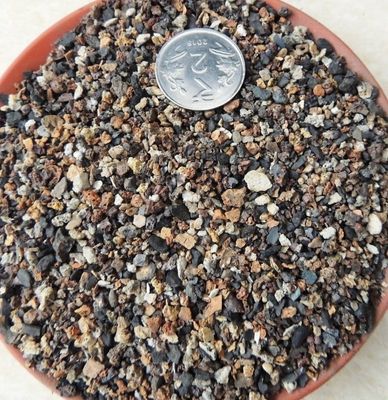

Cactus & Succulent Planting Mix FINE (aka Cactus Soil Mix or Succulent Soil Mix)
Cactus & Succulent Planting Mix FINE (aka Cactus Soil Mix or Succulent Soil Mix)
Fine-Grain Potting Mix for Cactus & Succulent Roots
SKU MNS001
5.0
(3)
₹39.85

Cactus & Succulent Planting Mix COARSE (aka Cactus Soil Mix or Succulent Soil Mix)
Cactus & Succulent Planting Mix COARSE (aka Cactus Soil Mix or Succulent Soil Mix)
Washed, Free-Draining Mineral Mix for Cactus & Succulents
SKU MNS003
5.0
(1)
₹44.85
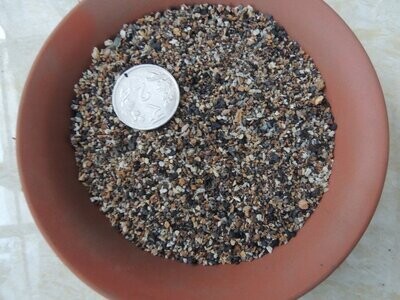
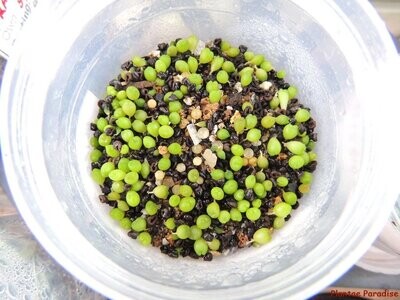
Cactus Seed Planting Mix
Cactus Seed Planting Mix
Sterile, Fine-Grain Media for Cactus & Succulent Seeds
SKU MNS005
₹74.85
New


Monsoon Guardian Kit (5 in 1)
Monsoon Guardian Kit (5 in 1)
Complete 5-in-1 biological protection kit for cacti & succulents
SKU MNS024
₹850.00
Display prices in:INR
