
Categories
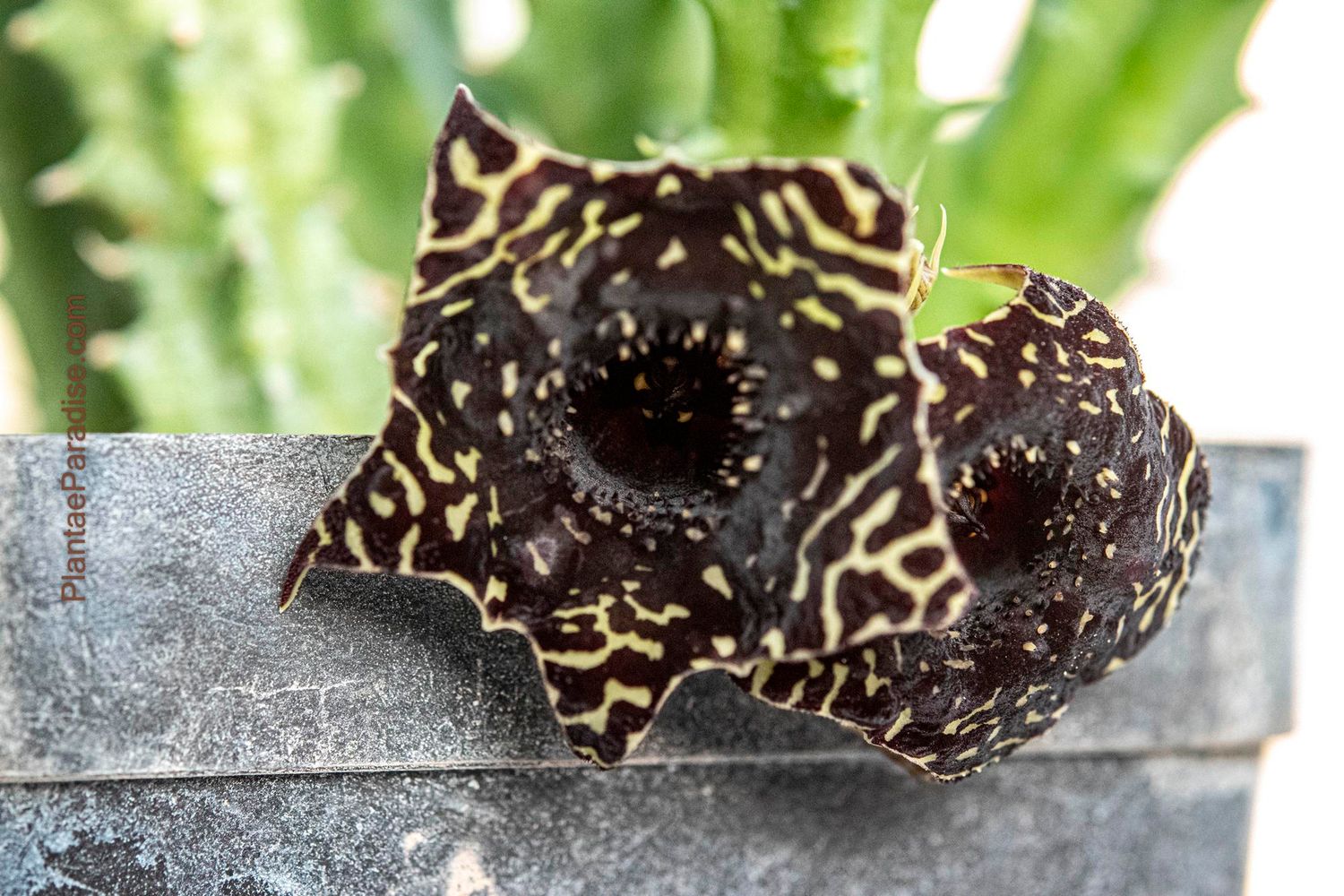
Huernia Saudi Arabica hybrid Ghost
SKU ASC086
₹200.00
Sold out
Sold out
Save this product for later
Customer reviews
Reviews only from verified customers
No reviews yet. You can buy this product and be the first to leave a review.
Huernia Saudi Arabica hybrid Ghost
Product Details
Spectral Etherealism: Huernia saudi-arabica hybrid 'Ghost'
An otherworldly succulent cultivar prized for its rare chlorophyll-deficient variegation and haunting, translucent aesthetic.
- Origin & History of Name: The genus Huernia was named by botanist Robert Brown in 1810 to honor Justin Heurnius, a Dutch missionary and the first European to document South African flora. The specific epithet saudi-arabica identifies its parentage from the Arabian Peninsula. The cultivar name 'Ghost' refers to the plant's high degree of variegation, which produces a pale, near-white appearance.
- Morphology: This hybrid features four-to-five-angled succulent stems with prominent, tooth-like tubercles along the costae (ribs). Its most striking feature is the epidermis, which displays extreme variegation, resulting in a cream-to-white marbled surface. Unlike the standard green form, 'Ghost' has reduced chlorophyll, giving the stems a ghostly, translucent quality. The flowers are typically bell-shaped with a dark, rugose (wrinkled) annulus at the center.
- Habitat & Origin: This plant is a cultivar, specifically a stabilized variegated selection derived from Huernia saudi-arabica. While the parent species is native to the rugged, rocky highlands of Saudi Arabia and Yemen, the 'Ghost' mutation is maintained through controlled greenhouse cultivation. This ensures a sustainable supply for the horticultural trade without impacting wild populations of the type species.
- Cultivation Profile:
- Substrate: Requires an extremely porous, mineral-heavy mix. Use a base of 80% volcanic cinder, crushed gravel, or grit mixed with 20% coco-peat to ensure rapid drainage and prevent stem rot.
- Light: Thrives in bright, indirect light. In the Indian subcontinent, direct midday sun will scorch the variegated epidermis; 50% shade-netting or a bright East-facing windowsill is ideal.
- Water/Dormancy: Follow a strict dry-start regime. Water only when stems show slight wrinkling. During the humid Indian monsoon, withhold water entirely if ventilation is poor. The plant undergoes semi-dormancy in peak winter; keep the substrate dry to prevent fungal pathogens.
- Scientific/Historical Anecdote: Huernia belong to the subtribe Stapeliinae, colloquially known as "Carrion Flowers." In their native habitats, they have evolved a specialized pollination strategy called sapromyiophily, where the flowers emit a scent mimicking decaying organic matter to attract blowflies. Interestingly, the 'Ghost' hybrid is often less "fragrant" than its wild counterparts, making it more suitable for indoor collections.
You May Also Like
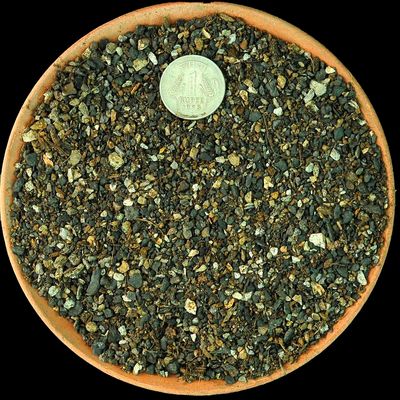
FORTIFIED Cactus & Succulent SOIL (FINE)
FORTIFIED Cactus & Succulent SOIL (FINE)
SKU MNS002
5.0
(4)
₹49.85
New


Monsoon Guardian Kit (5 in 1)
Monsoon Guardian Kit (5 in 1)
Complete 5-in-1 biological protection kit for cacti & succulents
SKU MNS024
₹850.00


Cactus Seed Planting Mix
Cactus Seed Planting Mix
Sterile, Fine-Grain Media for Cactus & Succulent Seeds
SKU MNS005
₹74.85

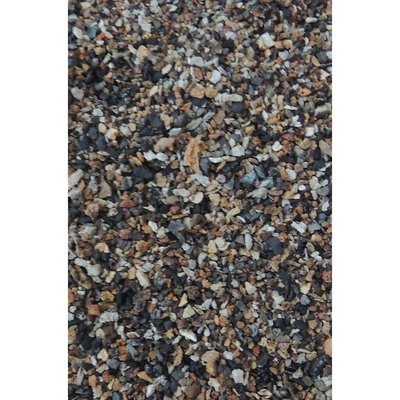
Cactus & Succulent Planting Mix FINE (aka Cactus Soil Mix or Succulent Soil Mix)
Cactus & Succulent Planting Mix FINE (aka Cactus Soil Mix or Succulent Soil Mix)
Fine-Grain Potting Mix for Cactus & Succulent Roots
SKU MNS001
5.0
(3)
₹39.85
Display prices in:INR
