
Categories
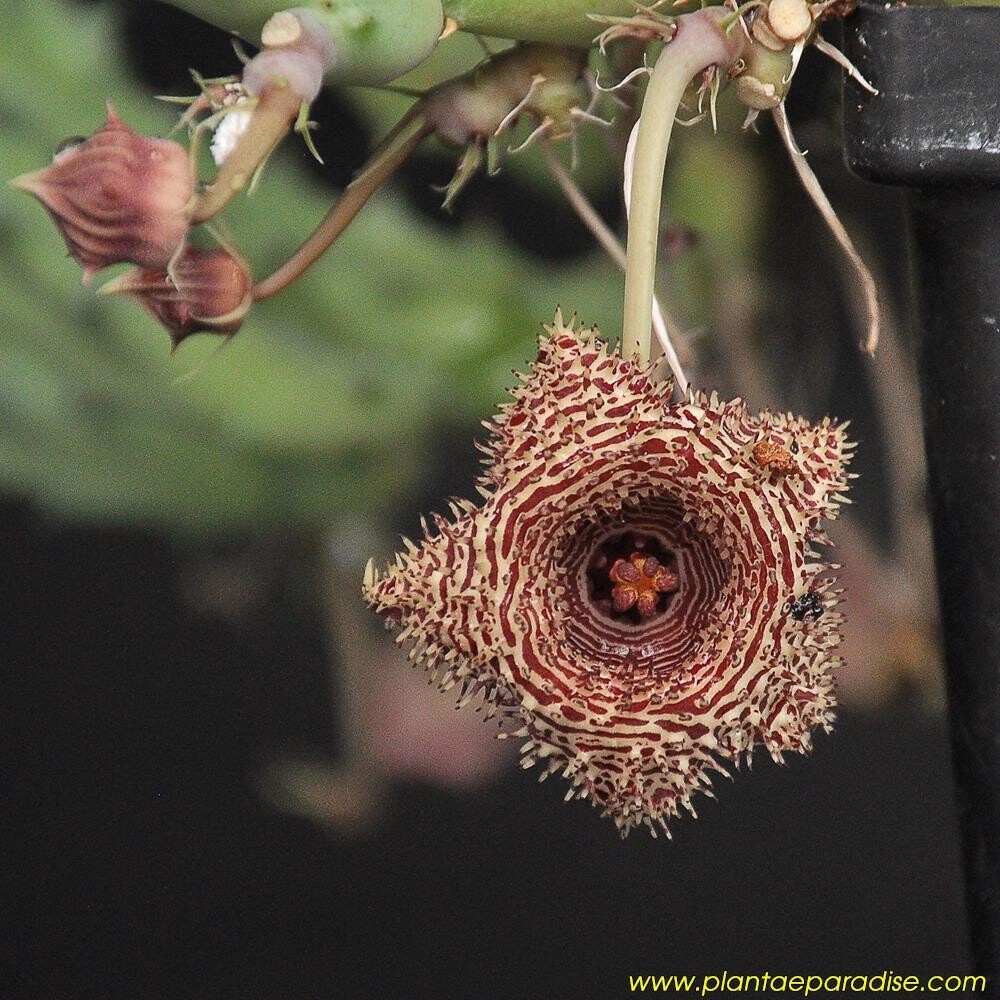
Huernia hystrix var appendiculata
SKU ASC065
₹300.00
In stock: 1 available
1
Save this product for later
Customer reviews
Reviews only from verified customers
No reviews yet. You can buy this product and be the first to leave a review.
Huernia hystrix var appendiculata
Product Details
Spiky stars with a porcupine’s coat. Huernia hystrix var. appendiculata produces striking star-shaped flowers striped in cream and red, with the inside of each flower covered in soft, fleshy spines. The toothed stems form a tidy clump, it flowers readily, and it stands out on any sunny windowsill.
Botanical name: Huernia hystrix (Hook.f.) N.E.Br. (trade name: var. appendiculata)
Synonyms: Huernia appendiculata A.Berger, Huernia hystrix var. appendiculata (A.Berger) A.C.White & B.Sloane, Stapelia hystrix Hook.f., Ceropegia hystrix (Hook.f.) Bruyns
Family: Apocynaceae (formerly Asclepiadaceae)
Origin of Name
The genus name honours Justus Heurnius (1587–1652), a Dutch missionary. He is credited with collecting some of the earliest botanical specimens from the Cape of Good Hope while on his way to the East Indies. When the genus was named in 1810, Heurnius’s name was misspelled. The error became permanent, which is why the plant is called Huernia and not Heurnia.
Hystrix is the Greek and Latin word for porcupine. It describes the dense, bristle-like fleshy papillae that cover the inside of the flower, and it gives the plant its common name, “porcupine huernia.”
Joseph Dalton Hooker, Director of Kew, first described the plant as Stapelia hystrix in Curtis’s Botanical Magazine from a plant growing at Kew. N. E. Brown transferred it to Huernia in 1876.
Appendiculata is Latin for “bearing small appendages.” Alwin Berger used it when he described Huernia appendiculata as a separate species. Alain White and Boyd Sloane later reduced it to a variety of H. hystrix in their landmark monograph The Stapelieae. Modern botanists no longer keep it separate, but the name is still widely used in the plant trade.
In 2017, Peter Bruyns proposed merging Huernia and other stapeliads into Ceropegia, which is why the name Ceropegia hystrix also appears in recent literature.
Origin of Plant
Huernia hystrix is native to southeastern Africa. Its range covers southeastern Zimbabwe, western Mozambique, Eswatini, and South Africa’s Mpumalanga, Limpopo, and KwaZulu-Natal regions. It grows in hot, dry savanna and bushveld, often in rocky ground or sheltering under shrubs, where its stems are partly shaded and protected from grazing animals.
Description
This is a low, clump-forming stem succulent. Its stems are four- to five-angled, grey-green, and tinged purple in strong light, with fleshy teeth along the ridges. They are usually 5–10 cm long and slowly form a tight cluster.
The flowers are the main attraction. Each is a five-pointed star with a central cup, about 3–5 cm across. They are cream to pale yellow, banded and spotted with red to maroon. The inner surface is thickly covered with soft, spine-like papillae, which gives the flower its porcupine look. Flowers appear from the base of the stems, mostly in summer and autumn, and the number open at once varies from plant to plant and season to season.
Like many stapeliads, the flowers have a faint carrion scent that attracts flies as pollinators. It is barely noticeable indoors. The plant has received the Royal Horticultural Society’s Award of Garden Merit.
Conservation Status
Huernia hystrix is not listed in the CITES appendices. It is widespread in the wild, but it is collected for sale in traditional medicine markets in South Africa and Eswatini. Researchers have raised concern about this pressure and studied laboratory propagation as a way to supply demand without wild collection.
Our plants are nursery-propagated, so buying one puts no pressure on wild populations.
Care
- Light: Bright light with gentle morning sun or filtered sun. Mild purple tones show healthy light levels. Harsh midday summer sun can scorch the stems.
- Watering: Water during the warm growing season (spring to early autumn) only when the mix is completely dry. Keep almost dry in winter. Overwatering is the most common cause of loss, because stapeliads rot quickly at the stem base.
- Soil: Use a very gritty, fast-draining mix of about 70% mineral grit (pumice, perlite, coarse sand) and 30% cactus mix. A layer of grit on top keeps the stem bases dry.
- Pot: A shallow, wide pot with drainage holes suits the spreading clump and fine, shallow roots. Terracotta works well.
- Temperature: Ideal range is 18–35 °C. Keep above about 10 °C and dry in winter, and protect from frost.
- Feeding: Use a dilute, low-nitrogen cactus fertiliser once a month during the growing season.
- Propagation: Take stem cuttings in the warm months, let them callus for a few days, and set them on dry grit until roots form.
- Tip: Check the roots for mealybugs when repotting, since they are common pests of stapeliads.
A Story Worth Telling
The genus name comes from a 17th-century missionary and a spelling mistake. The plant itself has a long history in African traditional medicine. In KwaZulu-Natal, the porcupine huernia has long been sold in Zulu traditional medicine markets for its supposed protective and healing powers. In Eswatini, it has a reputation as an aphrodisiac.
Modern researchers have studied extracts from the plant for possible anti-inflammatory properties. So this small plant, first described by Hooker from a pot at Kew, has a history in both traditional and modern medicine.
You May Also Like
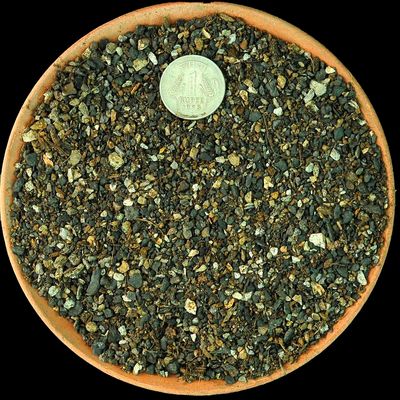
FORTIFIED Cactus & Succulent SOIL (FINE)
FORTIFIED Cactus & Succulent SOIL (FINE)
SKU MNS002
5.0
(4)
₹49.85
Cactus Seed Planting Mix
Cactus Seed Planting Mix
Sterile, Fine-Grain Media for Cactus & Succulent Seeds
SKU MNS005
₹74.85
New
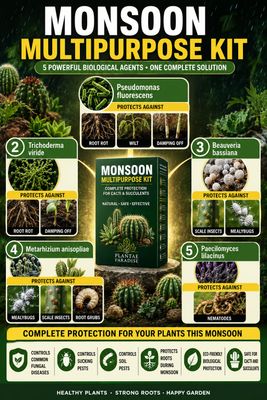
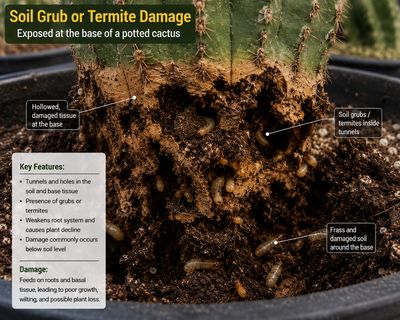
Monsoon Guardian Kit (5 in 1)
Monsoon Guardian Kit (5 in 1)
Complete 5-in-1 biological protection kit for cacti & succulents
SKU MNS024
₹850.00
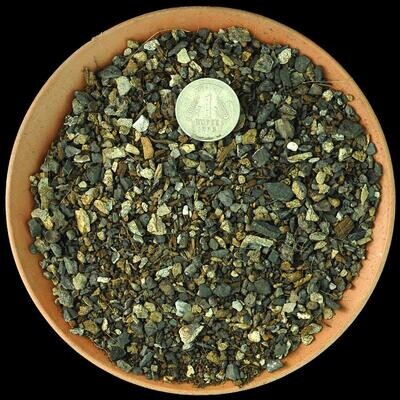
FORTIFIED Cactus & Succulent SOIL (COARSE)
FORTIFIED Cactus & Succulent SOIL (COARSE)
SKU MNS004
5.0
(12)
₹54.85
Display prices in:INR
