
Categories
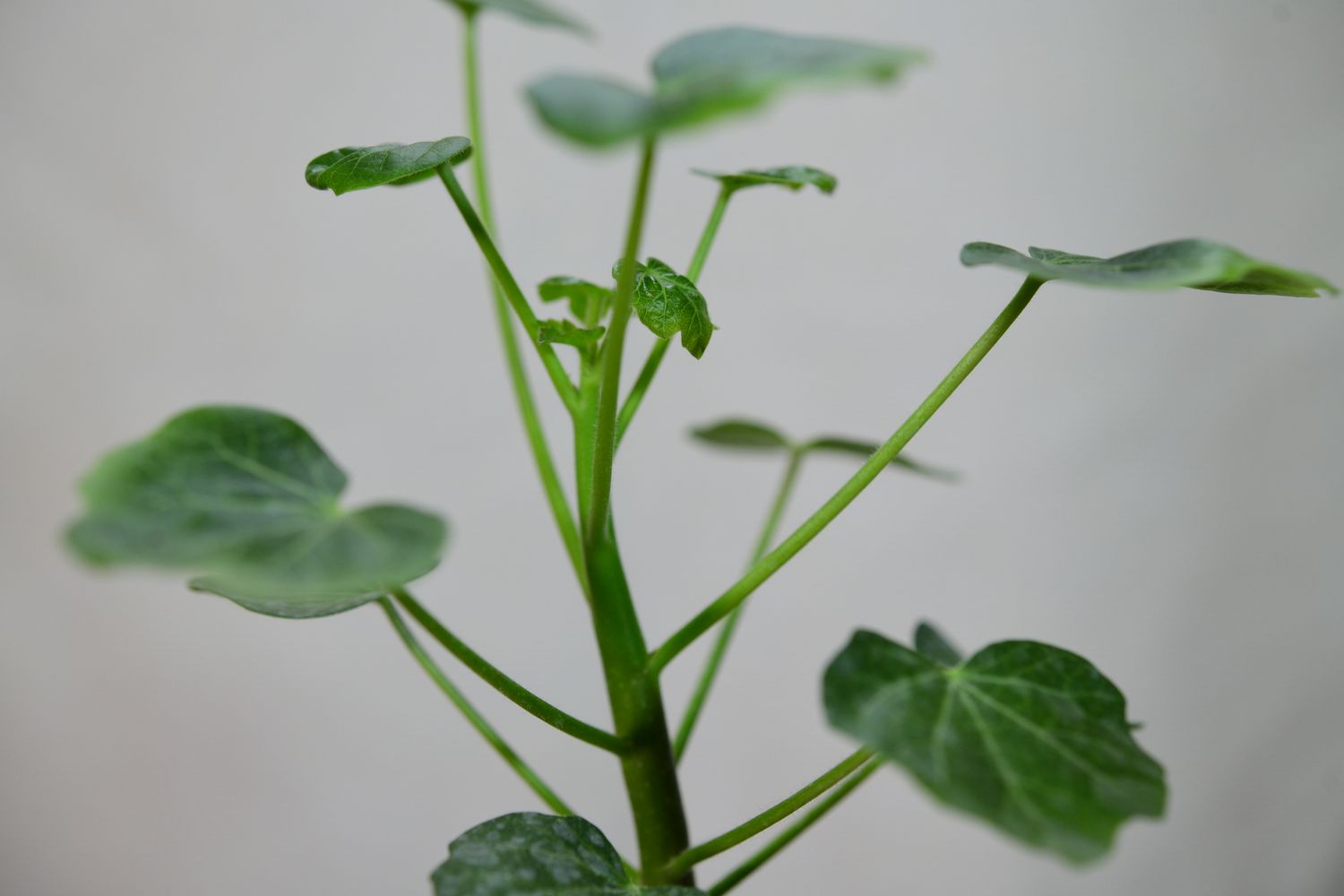
Jatropha conzattii
SKU PA082
₹2 850.00
Sold out
Sold out
Save this product for later
Customer reviews
Reviews only from verified customers
No reviews yet. You can buy this product and be the first to leave a review.
Jatropha conzattii
Product Details
Jatropha conzattii
A little-known Oaxacan spurge for the true completist — a species so seldom documented outside herbarium records that acquiring one is closer to collecting a footnote in Mexican botanical history than buying a houseplant.
Origin of Name
The genus name Jatropha comes from the Greek iatros (physician) and trophe (nutrition or food) — literally "food for physicians" or, more loosely, "physic," a name reflecting the long tradition of medicinal use across the genus's roughly 170–180 species, many of which have served in folk remedies throughout the tropics despite their notoriously toxic, irritant sap.
The species epithet conzattii honours Cassiano Conzatti (1862–1951), the Italian-born botanist who became one of the foremost authorities on the flora of Oaxaca. Jatropha conzattii was formally described by the Mexican botanist Jaime Jiménez Ramírez in 1991, in the Anales del Instituto de Biología de la Universidad Nacional Autónoma de México — a fittingly late addition to a genus that Conzatti himself spent decades cataloguing in the same state this species calls home. He's commemorated in several other Oaxacan plants beyond this one, including the tree genus Conzattia, the oak Quercus conzattii, the bromeliad Hechtia conzattiana, and the carnivorous Pinguicula conzattii — a small constellation of species named for a man who never trained formally as a botanist at all.
Origin of Plant
Jatropha conzattii is endemic to the Mexican state of Oaxaca, where it grows as a shrub or small tree within seasonally dry tropical forest — the same rugged, biodiverse terrain that drew Conzatti's own botanical expeditions a century earlier. Beyond this general habitat classification, detailed field data on the species' precise range, elevation, and population sites remain sparse in the literature accessible to us; it is a narrowly distributed species that has attracted comparatively little study outside specialist taxonomic works such as Bijan Dehgan's Flora Neotropica monograph on the genus.
Description
We'll be candid here rather than embellish: published morphological detail specific to J. conzattii is thin on the ground. What can be said with confidence, drawing on its placement within Jatropha and the Euphorbiaceae, is that it shares the family's defining traits — separate male and female flowers on the same plant, a milky, irritant latex sap running through its tissues, and a dry, splitting (loculicidal) seed capsule at fruiting. As a shrub or small tree of dry tropical forest, expect the kind of woody, drought-adapted habit typical of Oaxaca's Jatropha — many of its relatives in this region carry swollen, water-storing stems or a caudex-like base as an adaptation to the long dry season, though we can't confirm this trait specifically for conzattii without better documentation, and we'd rather tell you that honestly than invent a description to fit the genus's more famous caudiciform cousins like J. podagrica or J. berlandieri. This is very much a plant for the collector drawn to rarity and botanical pedigree over a guaranteed showpiece silhouette.
Conservation Status
Jatropha conzattii is listed as Endangered on the IUCN Red List, consistent with its narrow endemism to a single Mexican state and the broader pressures facing seasonally dry tropical forest across Oaxaca — one of the most botanically diverse but also most threatened habitat types in Mexico, subject to ongoing conversion for agriculture and grazing. It does not appear on any CITES appendix. All stock offered here is nursery-propagated, not wild-collected, in keeping with responsible practice for a species already under conservation pressure in its native range.
Care
- Light: Full sun to bright light, reflecting its dry tropical forest origins.
- Watering: Allow the substrate to dry out between waterings; reduce significantly during the cooler, drier months to mimic its natural dormancy cycle.
- Soil: A gritty, fast-draining succulent or cactus mix — standing moisture around the roots invites rot quickly in most dry-forest Jatropha species.
- Pot: An unglazed terracotta pot is preferable to plastic, since its porosity helps the mix dry evenly and reduces the risk of waterlogging.
- Temperature: Frost-tender; treat as a tropical/subtropical plant and bring under cover well before temperatures approach freezing.
- Feeding: A light, diluted feed during active summer growth is sufficient — avoid heavy fertilising, which can push soft, rot-prone growth.
- Handling: Like other Jatropha, the sap is irritant and toxic if ingested — handle pruning cuts and breakages with care, and keep away from children and pets.
A Story Worth Telling
Cassiano Conzatti's own path to becoming Oaxaca's great botanical chronicler is arguably a better story than any single plant that bears his name. Born in the Italian-speaking Tyrol in 1862, his formal education ended abruptly when his father died in 1877, forcing him into work rather than study. He arrived in Mexico in the early 1890s to teach, eventually settling permanently in Oaxaca — and it was there, largely through his own persistence rather than academic training, that he became the state's leading authority on its plant life, directing both a teacher-training school and, later, the Oaxaca Botanical Garden itself. A species described four decades after his death, drawn from the same dry forests he once combed on foot, feels like a quiet continuation of that work — proof that the flora of Oaxaca was still yielding new species to formally name well into the late twentieth century, and likely still is.
Display prices in:INR
