
Categories
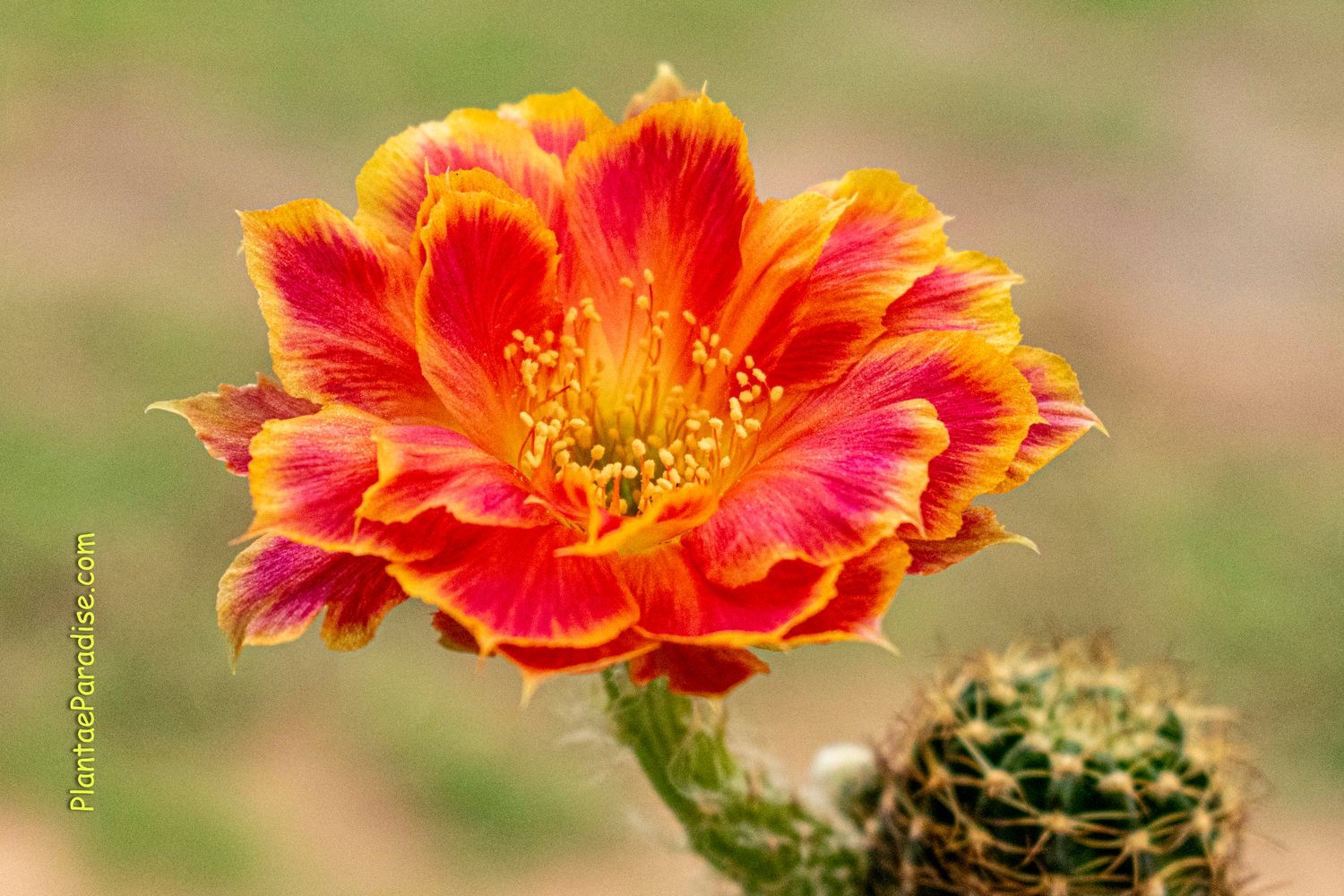
Lobivia hybrid Big Red Light
SKU LET465
₹650.00
In stock: 1 available
1
Save this product for later
Customer reviews
Reviews only from verified customers
No reviews yet. You can buy this product and be the first to leave a review.
Lobivia hybrid Big Red Light
Product Details
Radiant Sunset: Lobivia hybrid 'Big Red Light'
A rare spectacle for collectors, this hybrid defines drama with its bi-colored, serrated blooms that command attention in any desert garden.
- Origin & History of Name: The genus name Lobivia is an anagram of Bolivia, the primary country of origin for these high-altitude cacti.
This specific cultivar, 'Big Red Light', was named to evoke the glowing, luminous quality of its flowers, which appear to radiate light from their saturated red centers outward to the golden periphery. - Morphology: This cactus features a globose (ball-shaped) to cylindrical green epidermis with prominent costae (ribs) lined with small areoles and short spines.
Its most unique feature is the flower morphology: broad, ruffled petals that are significantly serrated at the tips, creating a fringed silhouette that differs from the smooth petals of typical species. - Habitat & Origin: This is a nursery-produced cultivar, not a wild species. It was selectively bred to enhance the bicolor contrast and petal texture. Unlike wild-collected specimens, this plant is a sustainable choice for enthusiasts, as it is propagated via offsets or seed in a controlled environment.
- Cultivation Profile:
- Substrate: Use a strictly mineral-based, gritty mix (50% coarse river sand or crushed brick, 25% perlite, 25% organic compost) to ensure rapid drainage during the Indian monsoon.
- Light: High intensity; thrives in 6–8 hours of direct morning sun. In the extreme heat of North India (May–June), provide 30% shade cloth to prevent epidermal scorching.
- Water/Dormancy: Water thoroughly when the medium is bone-dry. During the winter dormancy (November–February), withhold water entirely to trigger spring flowering.
- Scientific/Historical Anecdote: The genus Lobivia was first established by botanist Nathaniel Lord Britton and Joseph Nelson Rose in 1922.
These plants are "high-altitude specialists," originally evolving in the Andes. Because of their alpine heritage, they are among the few cacti that require a significant temperature drop at night to thrive—a trait that makes them surprisingly resilient to the cooler winter nights found in Northern India.
You May Also Like
New


Monsoon Guardian Kit (5 in 1)
Monsoon Guardian Kit (5 in 1)
Complete 5-in-1 biological protection kit for cacti & succulents
SKU MNS024
₹850.00

FORTIFIED Cactus & Succulent SOIL (COARSE)
FORTIFIED Cactus & Succulent SOIL (COARSE)
SKU MNS004
5.0
(11)
₹54.85

FORTIFIED Cactus & Succulent SOIL (FINE)
FORTIFIED Cactus & Succulent SOIL (FINE)
SKU MNS002
5.0
(4)
₹49.85

Cactus Seed Planting Mix
Cactus Seed Planting Mix
Sterile, Fine-Grain Media for Cactus & Succulent Seeds
SKU MNS005
₹74.85
Display prices in:INR
