
Categories
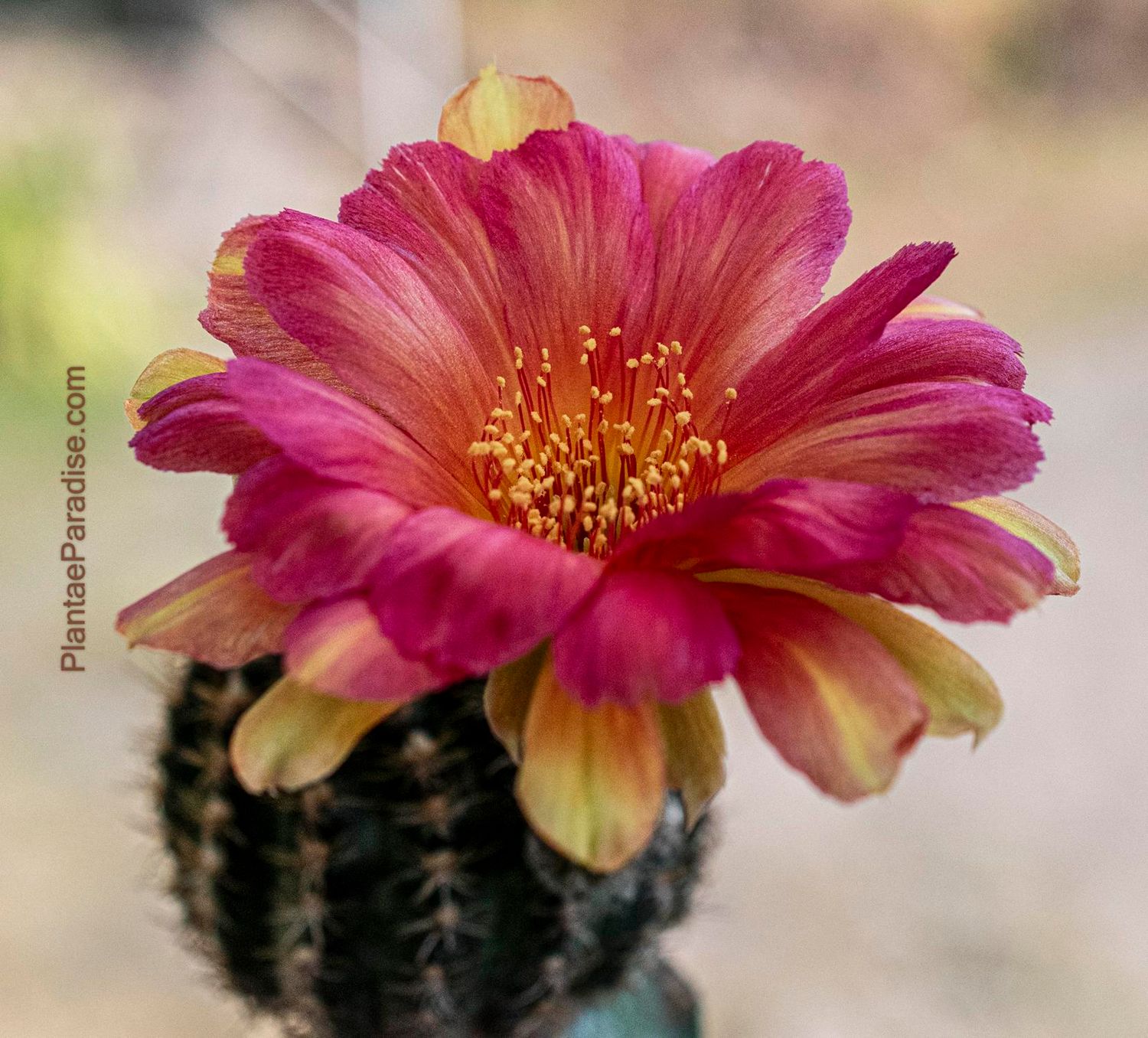
Lobivia hybrid Coral Blaze
SKU LET485
₹950.00
In stock: 1 available
1
Save this product for later
Customer reviews
Reviews only from verified customers
No reviews yet. You can buy this product and be the first to leave a review.
Lobivia hybrid Coral Blaze
Product Details
A cactus that flowers like it means to announce something — 'Coral Blaze' unfurls in a single wide burst of magenta and tangerine, the petals catching light like stained glass, the golden anthers trembling at the centre like a struck match. This is a plant bred for exactly this moment.
Origin of Name
Lobivia — the genus name under which hybrids of this type are still traded in horticulture — is an anagram coined by English botanists Nathaniel Lord Britton and Joseph Nelson Rose in their 1922 landmark work The Cactaceae, rearranging the letters of Bolivia, the country at the heart of the genus's native range. It was a naming convention typical of the era: elegant, geographically faithful, and easy to remember. Modern taxonomy has since folded Lobivia back into the broader genus Echinopsis, recognising that the anatomical boundaries once used to separate them don't hold up under closer genetic scrutiny — but among growers and collectors, the old name persists, prized precisely for the flamboyant, low-growing, free-flowering plants it describes.
'Coral Blaze' itself is a cultivar name, not a botanical one — the product of generations of selective hybridising among South American globular cacti bred specifically for flower size, saturation, and colour contrast. The name was chosen for the obvious reason: a flower that reads as living coral, its petal tips catching fire toward the centre in tones of deep coral-pink shading into molten orange and gold.
Origin of Plant
The wild ancestors behind this hybrid trace back to the high grasslands and rocky slopes of the Andes, spanning parts of Bolivia, northern Argentina, and southern Peru, where related Lobivia/Echinopsis species grow at elevations often exceeding 2,000–3,000 metres. At that altitude, plants endure intense daytime sun, thin dry air, and sharp temperature swings between day and night — conditions that shaped the compact, cold-tolerant, sun-loving growth habit seen in this hybrid today. 'Coral Blaze', like most named cultivars in this group, is a product of nursery selection rather than a single wild collection — bred deliberately for the garden and greenhouse trade rather than found in situ.
Description
A low, globular to short-cylindrical cactus, densely ribbed and armed with fine golden-brown spines that catch the light like a halo around the plant body. It stays compact and clump-forming with age, making it well suited to pot culture. The real spectacle is the flower: broad, funnel-shaped blooms open flat to reveal a striking gradient — hot coral-pink and magenta petal tips deepening in saturation toward a fiery orange-gold throat, with a dense central boss of golden anthers on slender red-orange filaments. Flowers appear at the crown of the plant during the warm growing season and can rival the plant body itself in size, giving 'Coral Blaze' a strikingly ornamental, almost tropical presence for a cold-hardy Andean cactus.
Conservation Status
As a cultivated hybrid rather than a wild-collected species, 'Coral Blaze' itself carries no individual conservation listing. However, its wild Lobivia/Echinopsis ancestors fall under CITES Appendix II, which regulates international trade in wild cactus populations to prevent over-collection. Nursery-propagated plants like this one are grown from cultivated stock and are exempt from the restrictions that apply to wild-harvested specimens, meaning it can be enjoyed and traded freely with a clear conscience.
Care
- Light: Full sun to very bright light — strong sun is essential for compact growth and generous flowering.
- Watering: Water generously through spring and summer, allowing the soil to dry between waterings; reduce sharply in winter to occasional light watering only.
- Soil: A fast-draining, mineral-rich cactus mix is essential — avoid organic-heavy, moisture-retentive blends.
- Pot: Terracotta is preferred over plastic, as it wicks away excess moisture and helps prevent root rot.
- Temperature: Tolerates cool conditions well; a cool, dry winter rest (above freezing but on the cold side) encourages strong spring flowering.
- Feeding: Feed during the growing season with a low-nitrogen, high-potassium fertiliser formulated for cacti and succulents, to support flower production over vegetative growth.
A Story Worth Telling
The Andean cacti behind hybrids like 'Coral Blaze' have a curious history in cultivation: nineteenth and early twentieth-century European plant hunters were drawn to them not for their spines but for exactly what draws collectors today — the almost theatrical contrast between an unassuming, spiny plant body and a flower that seems to belong to an entirely different kind of plant altogether. Breeders through the twentieth century — many working in Germany, the Czech Republic, and the United States — pushed that contrast further, selecting for ever bolder colour combinations. 'Coral Blaze' sits squarely in that tradition: proof that a plant built to survive thin air and scorching Andean sun can also be bred, patiently and deliberately, into something this vivid.
You May Also Like
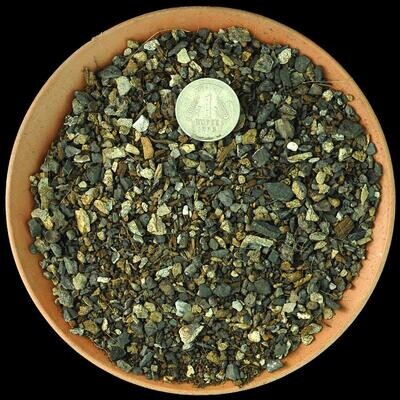
FORTIFIED Cactus & Succulent SOIL (COARSE)
FORTIFIED Cactus & Succulent SOIL (COARSE)
SKU MNS004
5.0
(11)
₹54.85
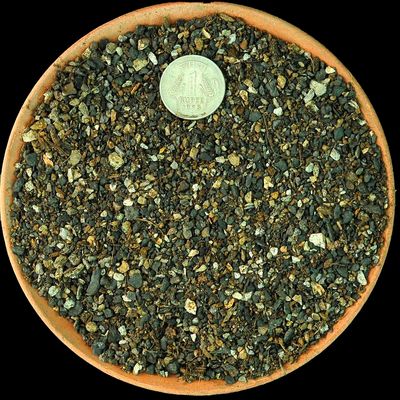
FORTIFIED Cactus & Succulent SOIL (FINE)
FORTIFIED Cactus & Succulent SOIL (FINE)
SKU MNS002
5.0
(4)
₹49.85
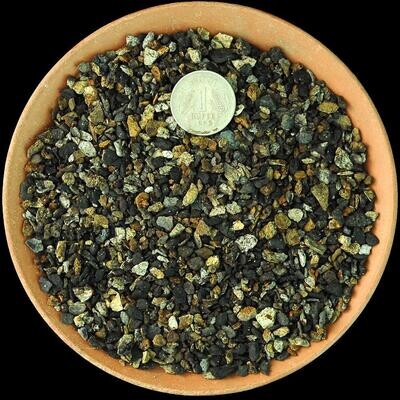
Cactus & Succulent Planting Mix COARSE (aka Cactus Soil Mix or Succulent Soil Mix)
Cactus & Succulent Planting Mix COARSE (aka Cactus Soil Mix or Succulent Soil Mix)
Washed, Free-Draining Mineral Mix for Cactus & Succulents
SKU MNS003
5.0
(1)
₹44.85

Cactus Seed Planting Mix
Cactus Seed Planting Mix
Sterile, Fine-Grain Media for Cactus & Succulent Seeds
SKU MNS005
₹74.85
Display prices in:INR
