
Categories
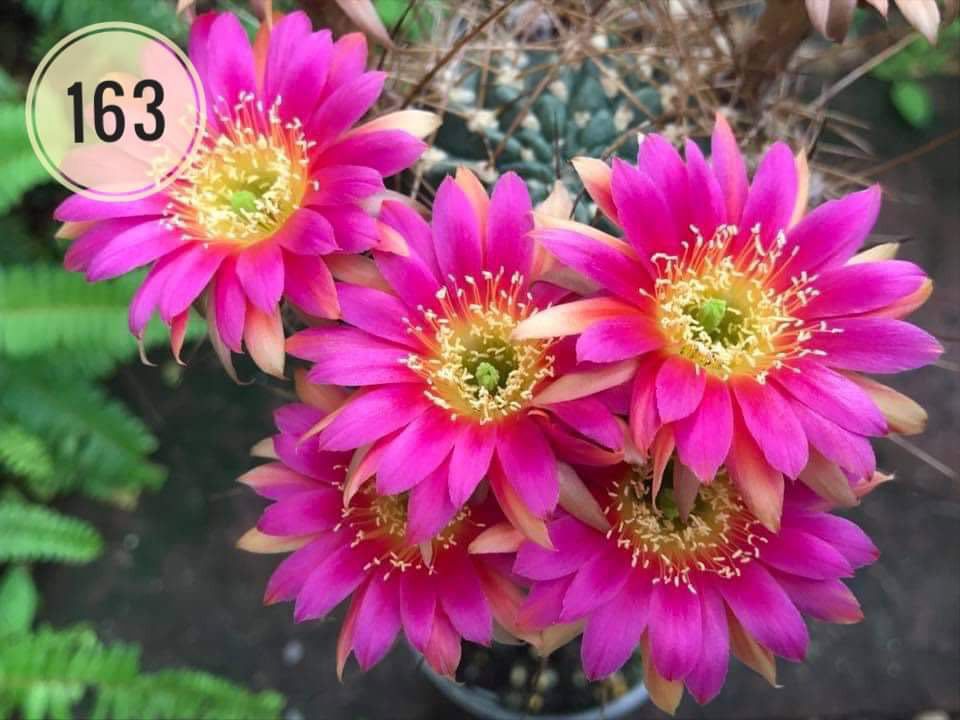
Lobivia hybrid Golden Sunset
SKU LET292
₹750.00
Sold out
An award-worthy hybrid showcasing scarlet layered flowers with a luminous green throat that becomes the centrepiece of any collection.
Sold out
Save this product for later
Customer reviews
Reviews only from verified customers
No reviews yet. You can buy this product and be the first to leave a review.
Lobivia hybrid Golden Sunset
Product Details
Lobivia Hybrid 'Golden Sunset'
A dazzling burst of magenta and gold, this hybrid delivers star-shaped blooms so vivid they seem to glow from within — proof that the boldest colors in the garden often come from the smallest plants.
1. Origin of Name
The genus Lobivia is an anagram of Bolivia, coined in 1922 by botanists Nathaniel Lord Britton and Joseph Nelson Rose in The Cactaceae to classify the many small, globular Andean cacti native to that region. Although contemporary taxonomy frequently absorbs Lobivia into the larger genus Echinopsis, the older name endures in horticultural and collector circles, especially as a label for named flowering hybrids.
The cultivar name 'Golden Sunset' is a hybridizer's descriptive name, chosen to capture the flower's striking two-tone color contrast — the brilliant magenta-pink petals radiating outward from a warm golden-yellow throat, evoking the layered colors of a sunset sky. This kind of poetic, color-inspired naming is standard practice among cactus breeders, who often name new hybrids after the visual impression their blooms create rather than any geographic or historical reference. As a deliberately bred hybrid, 'Golden Sunset' does not have a wild discovery history of its own; instead, it represents the careful selection and crossing of Lobivia/Echinopsis relatives to concentrate this vibrant, sunburst coloration.
2. Origin of Plant
The wild ancestry behind 'Golden Sunset' lies in the high-altitude regions of the Andes, spanning Bolivia, Peru, and northern Argentina, where Lobivia species grow among rocky outcrops and open grasslands, often above 2,000 meters elevation. These plants adapted to intense sunlight, wide temperature swings, and poor, well-drained soils — an environment that shaped both their compact, clustering growth form and their capacity for prolific, colorful flowering, traits hybridizers have since amplified in cultivars like this one.
3. Description
'Golden Sunset' forms a low, ribbed, spine-covered cactus body that clusters and offsets over time, but its true drama lies in the flowers. Each bloom opens into a wide, star-like form with slender, pointed petals in a rich, saturated magenta-pink, fading toward warm coral-orange near the base before opening into a vivid golden-yellow throat. At the very center, a small, apple-green stigma sits nestled among a dense ring of golden stamens, adding a final unexpected pop of color. Flowers are produced in generous flushes, often several open together, creating a dense, jewel-toned cluster that stands out dramatically against the cactus's spiny green body.
4. Conservation Status
'Golden Sunset' is a cultivated hybrid and, as such, carries no formal conservation status — it exists solely through deliberate nursery propagation. Its wild Lobivia/Echinopsis relatives in the Andes, however, face ongoing habitat pressures from mining, agricultural expansion, and over-collection, with several related species protected under CITES Appendix II to regulate international trade. Growing hybrids like 'Golden Sunset' allows collectors to enjoy spectacular flowering cacti without impacting vulnerable wild populations.
5. Care
- Light: Needs full sun to very bright light to maintain compact growth and encourage heavy flowering — at least 6 hours of direct sun daily, or the brightest possible indoor window.
- Watering: Water deeply during the active growing season (spring through summer), letting the soil dry out completely between waterings. Cut back sharply in winter, keeping the plant nearly dry to support dormancy and bud formation.
- Soil: Use a gritty, fast-draining cactus mix — combine potting soil with pumice, perlite, or coarse sand to keep roots from sitting in moisture.
- Temperature: Prefers warm days with cooler nights; tolerates light winter chill (around 5–10°C / 40–50°F) when kept dry, which helps trigger strong spring flowering.
- Fertilizing: Apply a low-nitrogen, phosphorus-rich cactus fertilizer during active growth to support vigorous, colorful blooms.
- Tip: Because the two-tone coloring is most vivid in strong light, give this hybrid the sunniest spot available — flowers grown in lower light often appear washed out or less contrasted between the pink petals and golden throat.
An Engaging Aside
The dramatic color-zoning seen in 'Golden Sunset' — magenta outer petals fading into a golden throat — is a hallmark trait that hybridizers specifically chase in Lobivia breeding programs, since it requires combining genes for two distinct pigment pathways within a single, stable bloom. Show growers often single out multi-toned hybrids like this one for competition entries (note the identifying show number in the photo), as the layered color effect photographs especially well and tends to draw the most attention on the exhibition table.
You May Also Like

FORTIFIED Cactus & Succulent SOIL (FINE)
FORTIFIED Cactus & Succulent SOIL (FINE)
SKU MNS002
5.0
(4)
₹49.85
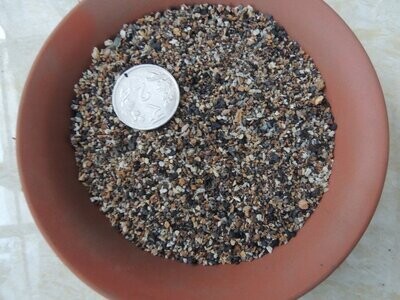
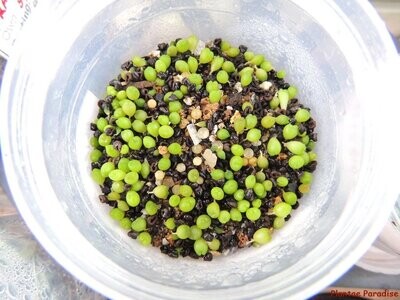
Cactus Seed Planting Mix
Cactus Seed Planting Mix
Sterile, Fine-Grain Media for Cactus & Succulent Seeds
SKU MNS005
₹74.85

Cactus & Succulent Planting Mix COARSE (aka Cactus Soil Mix or Succulent Soil Mix)
Cactus & Succulent Planting Mix COARSE (aka Cactus Soil Mix or Succulent Soil Mix)
Washed, Free-Draining Mineral Mix for Cactus & Succulents
SKU MNS003
5.0
(1)
₹44.85

FORTIFIED Cactus & Succulent SOIL (COARSE)
FORTIFIED Cactus & Succulent SOIL (COARSE)
SKU MNS004
5.0
(11)
₹54.85
Display prices in:INR
