
Categories
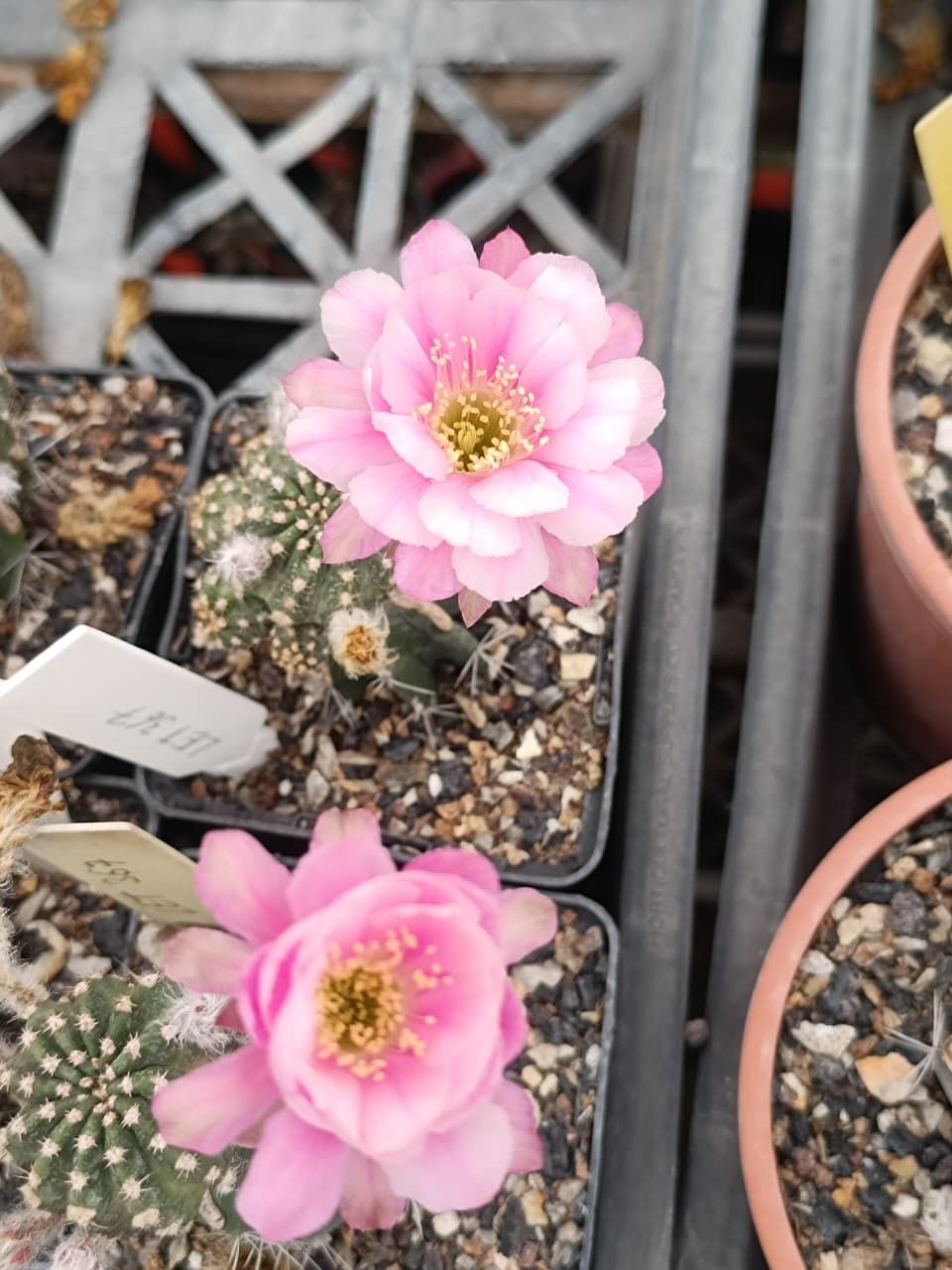
Lobivia hybrid Irin's 06
SKU LET367
₹650.00
In stock: 1 available
1
Save this product for later
Customer reviews
Reviews only from verified customers
No reviews yet. You can buy this product and be the first to leave a review.
Lobivia hybrid Irin's 06
Product Details
Ruffled, peony-like perfection in shades of bubblegum pink — this Lobivia hybrid produces densely petaled, double-form blooms that look more like a rose garden than a cactus flower. Prolific, compact, and utterly show-stopping in bud or bloom, 'Irin's 06' is a collector's dream for anyone chasing the frontier of ultra-double Lobivia breeding.
Lobivia hybrid "Irin's 06"
1. Origin of Name
As with all plants of this type, the genus name Lobivia is an anagram of Bolivia, the Andean nation from which the majority of the genus's wild species were first collected. The name was established in 1922 by Britton and Rose, who separated this group of clustering, prolifically flowering cacti from the broader Echinopsis concept of the time. Modern genetic studies have since re-absorbed Lobivia into an expanded Echinopsis sensu lato, though the name persists — affectionately and practically — throughout the hobbyist and breeder community, where it remains shorthand for a distinct flowering style and growth habit.
2. Origin of Plant
The wild ancestry behind Lobivia hybrids reaches back to the high-altitude Andes, spanning Bolivia, southern Peru, northern Argentina, and Chile, at elevations frequently between 2,000 and 4,000 metres. In this environment of intense daytime sun and sharply cold nights, wild Lobivia species evolved into low, clustering, densely spined cacti — a growth form built for resilience rather than height. European botanical expeditions through the late 19th and early 20th centuries brought these species into cultivation, where breeders gradually selected for larger, more colourful, and more elaborately structured flowers, culminating in the kind of dense, double-form blooms seen in modern named hybrids like this one.
3. Description
'Irin's 06' represents the far end of Lobivia flower breeding: a fully double, peony-form bloom in which the petal count has been multiplied well beyond the simple, single-layered flowers of wild species. Each flower opens into a dense, rounded rosette of soft, ruffled petals in a graduated wash of pink — deeper rose-pink toward the petal base, softening to a pale, almost white-pink at the ruffled outer edges. At the centre, a compact cluster of golden-yellow stamens surrounds a small green stigma, just visible beneath the layers of petals crowding in around it.
The plant itself grows as a low, clustering specimen typical of the genus, producing multiple offsets from a central body and, with maturity, several buds simultaneously — as shown by the three full blooms opening together here, each held on a short stem just above the spined, compact body. It's a plant that rewards patience: young offsets take a few seasons to reach flowering maturity, but a well-established clump can put on a genuinely dramatic multi-flower display.
4. Conservation Status
As a cultivated hybrid, 'Irin's 06' has no independent IUCN assessment and exerts no pressure on wild populations. Its wild Lobivia/Echinopsis parent species fall under CITES Appendix II, regulating trade in wild-sourced material. As an artificially propagated cultivar, it qualifies for the standard exemption applied to nursery-grown plants, allowing free trade and shipping, though documentation may still be required for certain international sales.
5. Care
- Light: Bright light is essential — a south- or west-facing window indoors, or several hours of direct morning sun outdoors, will keep growth compact and encourage the heaviest flowering. Low light leads to stretched, weak growth and fewer blooms.
- Watering: Water deeply, then let the soil dry out completely before watering again. Reduce watering sharply in winter, keeping the plant nearly dry to replicate its natural high-altitude dormancy.
- Soil: A fast-draining, mineral-rich cactus mix is essential — amend with extra pumice, coarse sand, or grit to prevent the root rot this species is prone to in overly moisture-retentive soil.
- Pot: Terracotta is strongly preferred over plastic, as its porous walls allow excess moisture to evaporate, helping maintain the sharp drainage this plant's roots need.
- Temperature: Inherits good cold tolerance from its high-altitude Andean ancestry and can handle cool winters, even light frost once mature — though as a container specimen, it's best protected from prolonged hard freezes.
- Feeding: A dilute, low-nitrogen cactus fertilizer through the spring and summer growing season supports both healthy offsetting and the density of bloom this double-flowered cultivar is prized for.
6. A Story Worth Telling
Double-flowered Lobivia hybrids like 'Irin's 06' sit at the cutting edge of a decades-long breeding pursuit: coaxing a genus whose wild flowers are typically simple and single-layered into producing blooms with the ruffled, multi-petaled density more commonly associated with roses or peonies. It's a slow, exacting process — breeders selecting generation after generation for the rare seedlings that show extra petal layers, then patiently stabilizing that trait through repeated propagation. A plant like this one, opening three full double blooms in a single flush, represents years of that quiet, deliberate work — a reminder that behind every spectacular flower in a specialist collection is usually a breeder who spent years chasing exactly this result.
You May Also Like
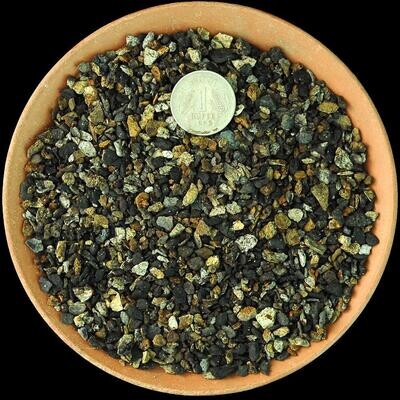
Cactus & Succulent Planting Mix COARSE (aka Cactus Soil Mix or Succulent Soil Mix)
Cactus & Succulent Planting Mix COARSE (aka Cactus Soil Mix or Succulent Soil Mix)
Washed, Free-Draining Mineral Mix for Cactus & Succulents
SKU MNS003
5.0
(1)
₹44.85
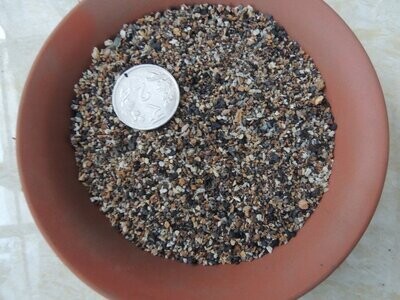
Cactus Seed Planting Mix
Cactus Seed Planting Mix
Sterile, Fine-Grain Media for Cactus & Succulent Seeds
SKU MNS005
₹74.85

FORTIFIED Cactus & Succulent SOIL (COARSE)
FORTIFIED Cactus & Succulent SOIL (COARSE)
SKU MNS004
5.0
(11)
₹54.85

FORTIFIED Cactus & Succulent SOIL (FINE)
FORTIFIED Cactus & Succulent SOIL (FINE)
SKU MNS002
5.0
(4)
₹49.85
Display prices in:INR
