
Categories
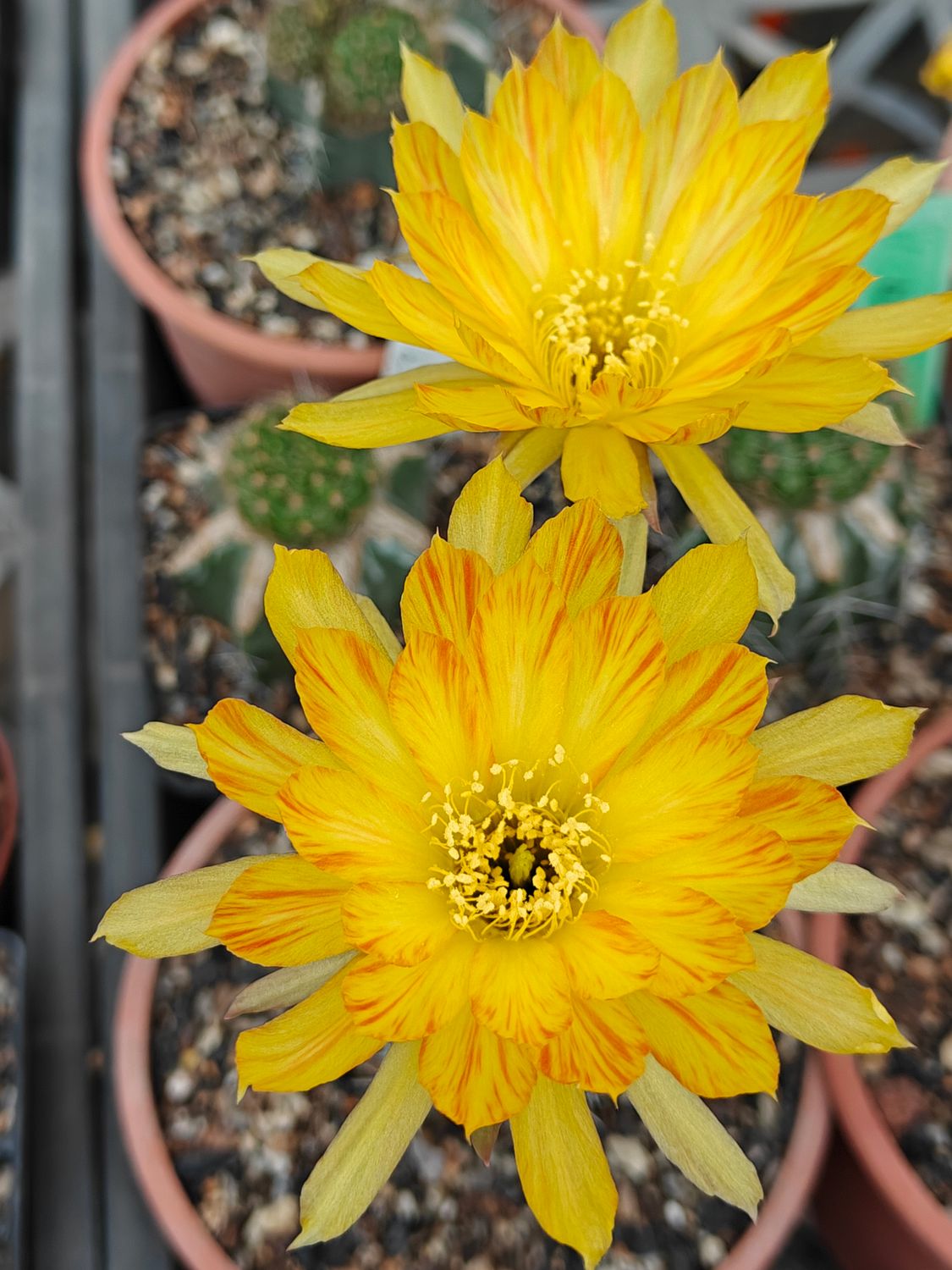
Lobivia hybrid PCL12
SKU LET359
₹650.00
In stock: 1 available
1
Save this product for later
Customer reviews
Reviews only from verified customers
No reviews yet. You can buy this product and be the first to leave a review.
Lobivia hybrid PCL12
Product Details
Lobivia Hybrid 'PCL12'
A double flush of sunlit gold — each petal streaked with fine orange flame, radiating out from a deep saffron throat. 'PCL12' brings the classic Lobivia starburst form in one of its most cheerful colourways, proof that this genus does subtlety and spectacle equally well.
Origin of Name
The genus name Lobivia is, famously, an anagram of Bolivia — coined by British botanist Britton and American botanist Rose in 1922 to honour the country where the majority of these small, clustering cacti are found. It's a rare case in botanical nomenclature of a genus name being built as a wordplay puzzle rather than derived from Greek or Latin roots or a person's name, which has made it something of a favourite trivia point among collectors.
As with much of this group, modern molecular phylogenetics has reclassified most Lobivia species under the older, more inclusive genus Echinopsis — a name built from the Greek echinos ("hedgehog" or "sea urchin") and opsis ("appearance" or "resemblance"), referring to the spiny, globular form of the type species. Despite the technical synonymy, "Lobivia" remains in wide horticultural use, valued for the precision it offers in describing the compact, offsetting, brilliantly-flowered plants that "Echinopsis" alone doesn't quite capture.
'PCL12' is a breeder's hybrid code rather than a registered cultivar name — the kind of working label hybridizers assign to track individual selections through a breeding line before, if ever, a plant earns a proper trade name.
Origin of Plant
Lobivia in its traditional sense is native to the high-altitude regions of Bolivia, Peru, and northern Argentina, where these cacti grow as low, clustering clumps tucked into rocky, sun-blasted terrain at elevations often exceeding 3,000 metres. Their compact growth habit and thick, water-storing bodies are direct adaptations to intense UV exposure, dramatic day–night temperature swings, and thin, fast-draining mountain soils.
'PCL12,' however, is a cultivated hybrid, bred deliberately by crossing selected Lobivia/Echinopsis parent lines for flower colour, pattern, and vigour rather than collected from any single wild population. Its origin lies in a breeder's pollination records rather than a field expedition — one more entry in the long tradition of Lobivia hybridizing that has, over decades, produced an enormous palette of flower colours from a genus whose wild forms already leaned dramatic.
Description
'PCL12' produces the classic Lobivia display: multiple funnel-shaped flowers erupting almost stemless from the body of the plant, each one a dense ring of narrow, pointed petals in bright golden-yellow, feathered through the centre of each petal with fine orange-red striping that intensifies toward the base. The effect is a flower that reads as gold at a distance but reveals a fiery, painterly detail up close. At the core, a compact cluster of yellow stamens surrounds a pale central stigma, tucked into a throat deepened by the same orange striping.
True to form for the genus, this hybrid tends to flower in flushes — often producing several blooms in close succession from the same clustering body, as seen here with two flowers open together. Individual blooms are short-lived, typically lasting only a day or two, but the plant's tendency to offset and clump means a well-grown specimen can put on a dense, repeated floral display across the season.
Conservation Status
The Cactaceae family is protected under CITES Appendix II, regulating international trade in wild specimens. As an artificially propagated hybrid, 'PCL12' carries no wild population and no conservation concern of its own, and qualifies for the artificially propagated exemption under CITES when sold — a good example of how hybridizing satisfies collector appetite for spectacular flowers without drawing on wild Lobivia populations in Bolivia and Peru, some of which face genuine habitat pressure.
Care
- Light: Full sun to very bright light is essential — Lobivia hybrids flower most heavily when given as much direct light as possible, replicating the intense high-altitude sun of their native range.
- Watering: Water generously during the growing season (spring through early autumn), letting the soil dry out fully between waterings. Cut back sharply in winter to encourage the plant's natural dormant rest, which is also important for reliable flowering the following season.
- Soil: A very fast-draining, mineral-rich cactus mix is essential — heavy on pumice, grit, or coarse sand. Terracotta pots are preferable to plastic, as their porous walls help excess moisture evaporate, reducing rot risk in this shallow-rooted, clustering genus.
- Temperature: Prefers 18–28°C during growth; tolerates cool winter temperatures well provided it's kept dry, a legacy of its high-altitude origins.
- Feeding: A diluted, low-nitrogen, high-phosphorus cactus fertilizer in spring supports both offsetting growth and bud production.
A Story Worth Telling
Few cactus genera have been hybridized as extensively — or as playfully — as Lobivia, and the results are visible in collections worldwide as an almost unreasonable range of flower colours from what are, genetically, very compact and unassuming plants. 'PCL12's streaked gold-and-orange blooms sit within a decades-long hobbyist tradition of hand-pollinating Lobivia flowers each spring, patiently growing out the resulting seed, and waiting years to see which seedlings produce something worth naming. It's slow, unglamorous work for a flower that lasts barely two days — which may be exactly why collectors treasure the results as much as they do.
You May Also Like
New

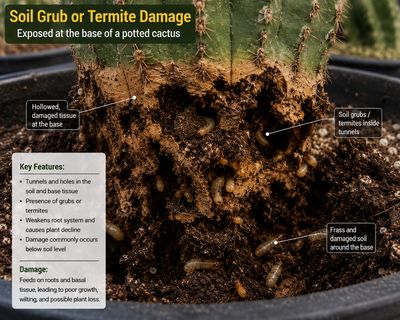
Monsoon Guardian Kit (5 in 1)
Monsoon Guardian Kit (5 in 1)
Complete 5-in-1 biological protection kit for cacti & succulents
SKU MNS024
₹850.00
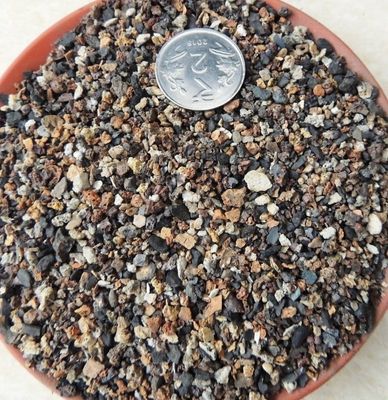
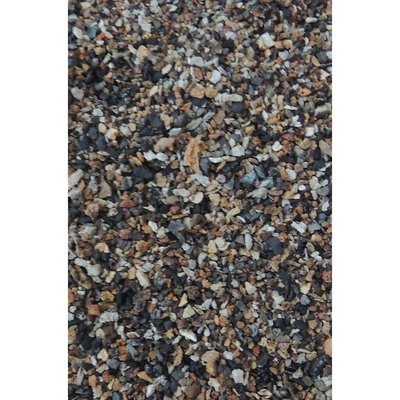
Cactus & Succulent Planting Mix FINE (aka Cactus Soil Mix or Succulent Soil Mix)
Cactus & Succulent Planting Mix FINE (aka Cactus Soil Mix or Succulent Soil Mix)
Fine-Grain Potting Mix for Cactus & Succulent Roots
SKU MNS001
5.0
(3)
₹39.85
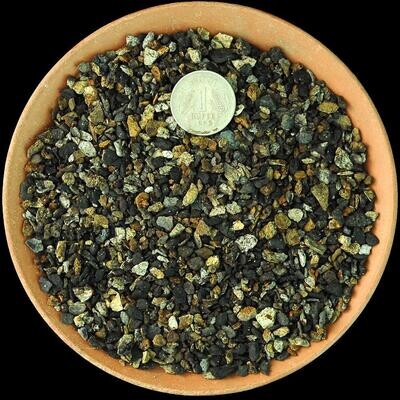
Cactus & Succulent Planting Mix COARSE (aka Cactus Soil Mix or Succulent Soil Mix)
Cactus & Succulent Planting Mix COARSE (aka Cactus Soil Mix or Succulent Soil Mix)
Washed, Free-Draining Mineral Mix for Cactus & Succulents
SKU MNS003
5.0
(1)
₹44.85
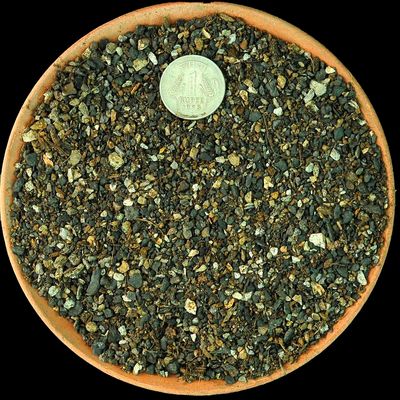
FORTIFIED Cactus & Succulent SOIL (FINE)
FORTIFIED Cactus & Succulent SOIL (FINE)
SKU MNS002
5.0
(4)
₹49.85
Display prices in:INR
