
Categories
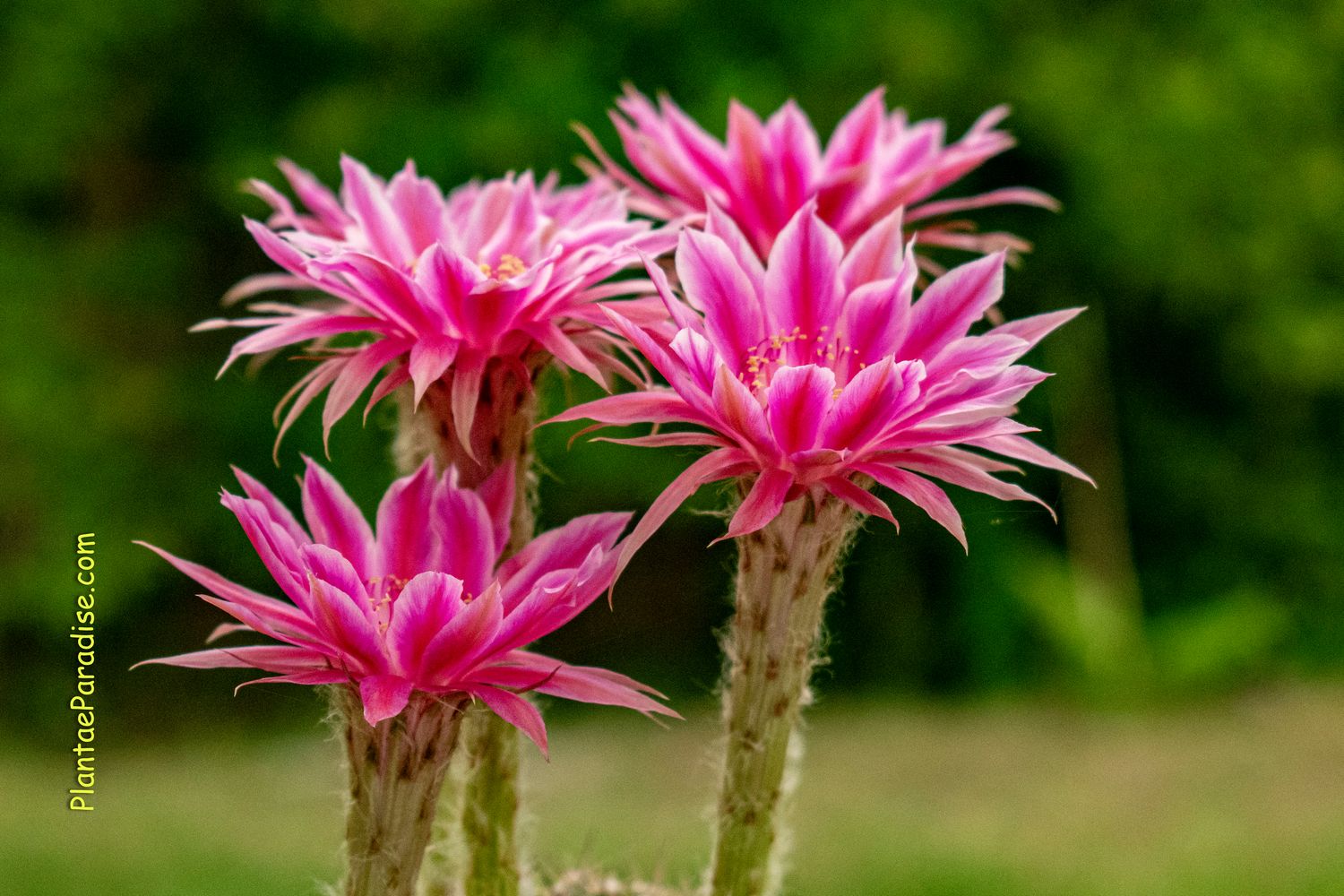
Lobivia hybrid Raspberry Ripple
SKU LET242
₹750.00
In stock: 1 available
1
Save this product for later
Customer reviews
Reviews only from verified customers
No reviews yet. You can buy this product and be the first to leave a review.
Lobivia hybrid Raspberry Ripple
Product Details
A cluster of tall, woolly stems tipped with an explosion of large, star-shaped blooms in vivid fuchsia-pink streaked with deep raspberry-red down each petal's centre — a hybrid whose flowers look almost good enough to eat, and whose name says exactly that.
Origin of Name
'Raspberry Ripple' is a descriptive cultivar name, chosen the way most modern Echinopsis and Lobivia hybrids are — for what the flower itself looks like, rather than for a person or place. The reference is unmistakably British: raspberry ripple is a classic ice cream flavour, vanilla swirled through with a bright red raspberry sauce so that each spoonful shows the same streaky, two-toned pattern this cactus wears on every petal — a pale, creamy base shot through with a deep, saturated raspberry-red stripe down the centre. It's the kind of playful, instantly evocative name that British hybridizers in particular have long favoured for their showiest Echinopsis crosses, and it does the job of a good cultivar name perfectly: one glance at the bloom and the name makes complete sense.
The cultivar is credited to Pat Hutchinson, part of the wave of dedicated amateur and specialist hybridizers within the UK cactus and succulent community who, through the latter half of the 20th century and into the 21st, have raised huge numbers of Echinopsis-group seedlings from deliberate crosses and released the very best of them — plants like this one — as named cultivars for collectors.
The genus name it's sold under, Lobivia, has its own tidy story: it's a straightforward anagram of Bolivia, coined in 1922 by American botanists Nathaniel Lord Britton and Joseph Nelson Rose in honour of the country at the heart of the genus's native range. Lobivia's classification has shifted repeatedly since — folded into the giant genus Echinopsis for long stretches, split back out in 2016 on the strength of new phylogenetic research, then merged into Echinopsis again in a major 2025 reclassification of the cactus family now followed by Kew's Plants of the World Online. Whichever label the botanists currently prefer, plants sold as "Lobivia hybrids" like this one are grown and loved under that name by collectors worldwide for exactly the trait 'Raspberry Ripple' shows off: outsized, richly coloured flowers on a compact, easy-to-house plant.
Origin of Plant
Like every named Echinopsis/Lobivia hybrid, 'Raspberry Ripple' has no wild habitat of its own — it's a garden-bred cross, raised from cultivated parent plants rather than collected from nature. Its genes, though, trace back to true wild Lobivia species native to the high grasslands and rocky slopes of southern Peru, western Bolivia, and northwestern Argentina, often growing at serious elevation in the Andes, where they've adapted to intense sun, thin soils, and sharp temperature swings between day and night. Generations of hybridizers have drawn on this tough wild gene pool — sometimes crossing it with related large-flowered Echinopsis lines — to breed plants that keep that hardiness while producing flowers many times larger and more vividly coloured than anything found in the wild.
Description
'Raspberry Ripple' grows as a cluster of upright, cylindrical, densely woolly-spined stems, offsetting readily from the base to build into a multi-headed clump rather than staying as a single plant — exactly the kind of tidy, spreading habit that lets a mature specimen produce several flowers at once, as it does when it puts on its best show.
The flower is the whole point. Each bloom opens wide into a many-petaled, starry form, with slender tepals that shade from a pale, almost white or blush base out to a bold, saturated fuchsia-pink at the tips — every petal running a deep raspberry-red stripe straight down its centre, giving the whole flower a distinctive streaked, two-toned look rather than a flat, single colour. A cluster of golden-cream stamens and a pale central stigma fill the throat. Blooms typically measure several inches across — dramatically larger than the stem that produces them — and, as with the rest of this hybrid group, each individual flower is short-lived, usually opening for only a day or two before fading, with a well-grown plant sending up repeat flushes of buds through the warmer months.
Conservation Status
As a cultivated hybrid propagated by offsets and cuttings, 'Raspberry Ripple' has no IUCN Red List status of its own and exists entirely in cultivation. Its wild Lobivia ancestors are not currently classified as broadly threatened, though as with cacti generally, international trade in wild-collected material is regulated under CITES Appendix II to prevent over-collection from natural populations. Choosing a nursery-raised hybrid like this one is always the sustainable way to add a spectacular flowering cactus to a collection.
Care
Light: Bright light is essential for strong, reliable flowering — a sunny south- or west-facing window indoors, or several hours of direct sun outdoors, with a little relief from the very harshest midday sun in hot climates to prevent scorching.
Watering: Water thoroughly through the growing season (spring to early autumn), letting the soil dry out completely between waterings. Cut back sharply in winter, keeping the plant nearly dry while dormant — overwatering in cool, low-light conditions is the most common way to lose one of these to rot.
Soil: A gritty, fast-draining cactus mix — ordinary potting soil cut generously with pumice, perlite, or coarse sand — suits it well and mirrors the free-draining mountain soils its wild ancestors grow in.
Temperature: Comfortable in typical warm-season conditions; thanks to its high-Andean ancestry it tolerates cooler winter temperatures better than many cacti (reports suggest hardiness down to around -5°C to -12°C for some clones when kept dry), but it should still be protected from hard frost and wet, cold roots.
General tips: Rooted offsets can be detached and potted up separately to build new plants or share with fellow collectors. Feed lightly with a diluted, low-nitrogen cactus fertilizer during the growing season to support strong bud production, and expect the fullest flower flushes once the clump has filled out its pot.
An Interesting Note
Naming a flower after a dessert is a small but telling piece of cactus-hybridizing culture — it's a tradition that treats a spectacular new bloom the same way a confectioner treats a new flavour: something to be named for the sheer, immediate pleasure it promises. 'Raspberry Ripple' the ice cream has been a fixture of British freezers for generations precisely because of that same streaky, two-toned appeal the cactus borrows for its name — and it's a fitting reminder that behind every named cactus cultivar sits a real person who grew out a tray of unremarkable seedlings, waited years for them to flower, and picked out the one bloom striking enough to deserve a name of its own.
You May Also Like

FORTIFIED Cactus & Succulent SOIL (COARSE)
FORTIFIED Cactus & Succulent SOIL (COARSE)
SKU MNS004
5.0
(12)
₹54.85

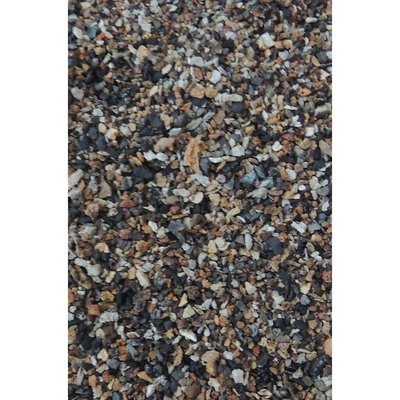
Cactus & Succulent Planting Mix FINE (aka Cactus Soil Mix or Succulent Soil Mix)
Cactus & Succulent Planting Mix FINE (aka Cactus Soil Mix or Succulent Soil Mix)
Fine-Grain Potting Mix for Cactus & Succulent Roots
SKU MNS001
5.0
(3)
₹39.85
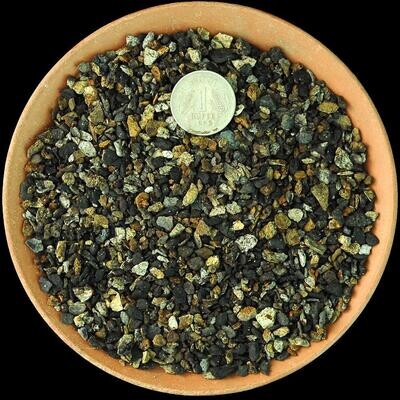
Cactus & Succulent Planting Mix COARSE (aka Cactus Soil Mix or Succulent Soil Mix)
Cactus & Succulent Planting Mix COARSE (aka Cactus Soil Mix or Succulent Soil Mix)
Washed, Free-Draining Mineral Mix for Cactus & Succulents
SKU MNS003
5.0
(1)
₹44.85
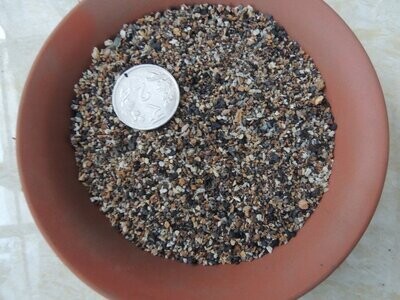
Cactus Seed Planting Mix
Cactus Seed Planting Mix
Sterile, Fine-Grain Media for Cactus & Succulent Seeds
SKU MNS005
₹74.85
Display prices in:INR
