
Categories
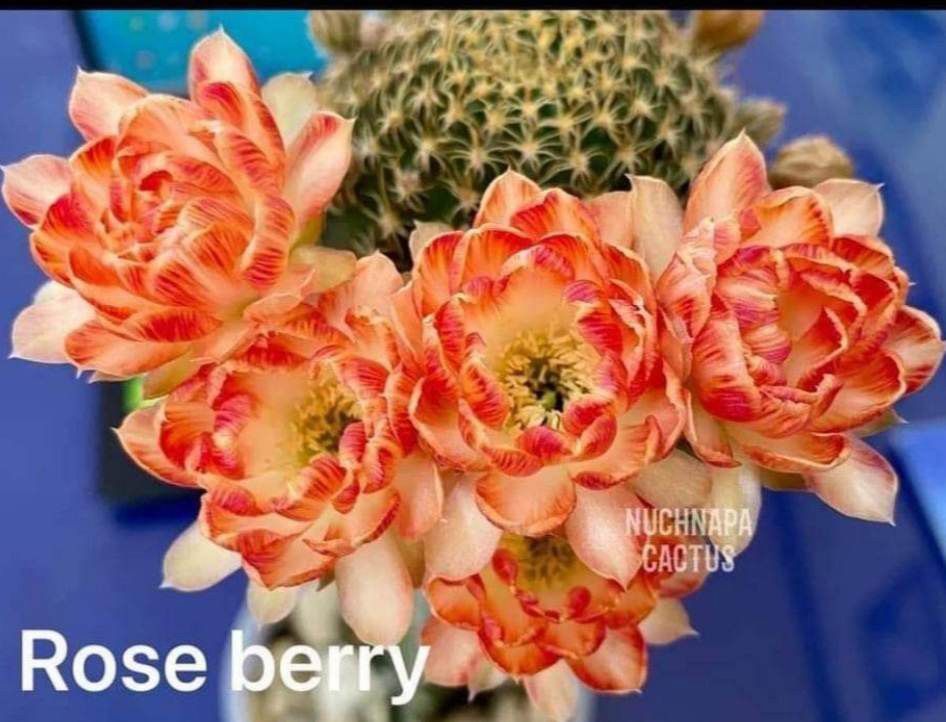
Lobivia hybrid Rose Berry
SKU LET371
₹850.00
In stock: 1 available
1
Save this product for later
Customer reviews
Reviews only from verified customers
No reviews yet. You can buy this product and be the first to leave a review.
Lobivia hybrid Rose Berry
Product Details
Lobivia Hybrid 'Rose Berry'
A cluster of ruffled blooms in cream and coral-red, each petal edged in a sharp red rim that fades to soft peach and white toward the base — like a bouquet of tiny roses caught mid-bloom. 'Rose Berry' delivers one of the genus's most abundant floral displays, several flowers opening together in a single, generous flush.
Origin of Name
The genus name Lobivia is an anagram of Bolivia, coined by botanists Nathaniel Britton and Joseph Rose in 1922 in honour of the country home to the majority of the genus's wild species — one of botanical nomenclature's more playful naming choices, built as a puzzle rather than derived from Greek or Latin roots. Modern taxonomy has since folded most Lobivia species into the broader genus Echinopsis (from the Greek echinos, "hedgehog," and opsis, "appearance," describing the spiny, globular young growth typical of the group), though "Lobivia" remains firmly in use among growers and hybridizers for the precision it lends to this particular style of compact, offsetting, richly-flowered cactus.
Unlike the coded seedling designations common in breeding lines, 'Rose Berry' is a proper trade name — descriptive rather than technical, built from the visual impression the flower makes rather than any breeding-record shorthand. The name draws directly on the bloom's appearance: petals layered and ruffled like the tightly furled form of a rose, with a warm, berry-toned red-orange rim deepening toward the petal edges. It's the kind of evocative naming choice hybridizers reach for once a seedling has proven itself distinctive enough — and pretty enough — to be worth the honour of a real name rather than a code.
Origin of Plant
Wild Lobivia species are native to the high-altitude regions of Bolivia, Peru, and northern Argentina, growing as low, clustering cacti rooted into rocky mountain terrain, often above 3,000 metres. At these elevations, plants contend with intense sun, sharp temperature swings between day and night, and thin, fast-draining soils — pressures that shaped the genus's compact bodies, thick water-storing tissue, and habit of offsetting into dense clumps.
'Rose Berry,' however, is a cultivated hybrid, not a wild-collected species. It is the product of deliberate hybridizing among Lobivia/Echinopsis parent lines, selected and refined for exactly this kind of layered, richly bicoloured flower and its tendency to bloom prolifically in clusters. Its origin traces to a breeder's pollination bench rather than a mountainside — one of many named cultivars that have emerged from the decades-long tradition of hand-crossing Lobivia flowers to chase new colour combinations.
Description
'Rose Berry' produces densely double, many-layered flowers with a distinctive two-tone effect: petals are cream to pale peach at the base, shading upward into a vivid coral-red that concentrates along the petal edges and midrib, giving each bloom a hand-painted, almost rose-like ruffled appearance. At the centre, a compact cluster of golden-yellow stamens sits low in a pale throat, providing a warm, contrasting eye to draw the gaze inward.
True to the genus's clustering habit, this hybrid is a heavy, synchronized bloomer — as shown here, it's common for four or more flowers to open together from the same clump, creating a dense, bouquet-like floral display rather than single, isolated blooms. Each flower typically lasts only a day or two, but the sheer volume of simultaneous blooms means a well-grown, mature clump can put on a genuinely showstopping display each flowering cycle.
Conservation Status
The Cactaceae family is protected under CITES Appendix II, regulating international trade in wild-collected specimens. As an artificially propagated hybrid with no wild counterpart, 'Rose Berry' carries no conservation concern of its own and typically qualifies for the artificially propagated exemption under CITES when sold — allowing collectors to enjoy this cultivar's dense, layered blooms without any impact on wild Lobivia populations across the Andes.
Care
- Light: Full sun to very bright light is essential for compact growth and heavy flowering; too little light results in stretched growth and a disappointing bloom count.
- Watering: Water thoroughly during the growing season (spring through early autumn), allowing the soil to dry out fully between waterings. Cut back sharply in winter to support the plant's natural dormancy, which also encourages stronger, more synchronized flowering the following season.
- Soil: A fast-draining, mineral-rich cactus mix — heavy on pumice, grit, or coarse sand — is essential. Terracotta pots are preferred over plastic, as their porous walls let excess moisture evaporate rather than sit around the roots, an important safeguard for this clustering, shallow-rooted genus.
- Temperature: Grows best between 18–28°C; tolerates cool winter conditions well provided it's kept dry, in keeping with its high-altitude origins.
- Feeding: A diluted, low-nitrogen, phosphorus-leaning cactus fertilizer in spring supports both offsetting growth and generous bud production.
A Story Worth Telling
The layered, "double" petal effect seen in cultivars like 'Rose Berry' is one of the more sought-after traits in modern Lobivia breeding, requiring hybridizers to select for extra petal rows across multiple generations rather than the single-layer form typical of wild species. Combined with the genus's natural tendency to flower in synchronized clusters, the result is cultivars capable of a floral display disproportionate to the plant's modest size — a single clump, no larger than a dinner plate, capable of producing a dozen or more blooms at once, each one built from years of patient selection for exactly this kind of abundance.
You May Also Like
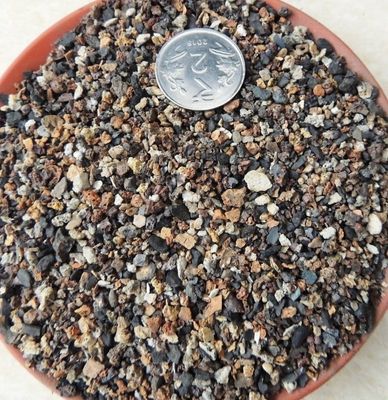
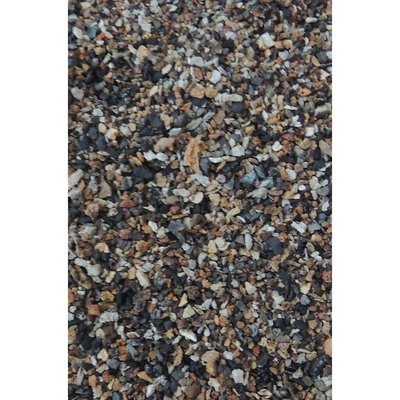
Cactus & Succulent Planting Mix FINE (aka Cactus Soil Mix or Succulent Soil Mix)
Cactus & Succulent Planting Mix FINE (aka Cactus Soil Mix or Succulent Soil Mix)
Fine-Grain Potting Mix for Cactus & Succulent Roots
SKU MNS001
5.0
(3)
₹39.85
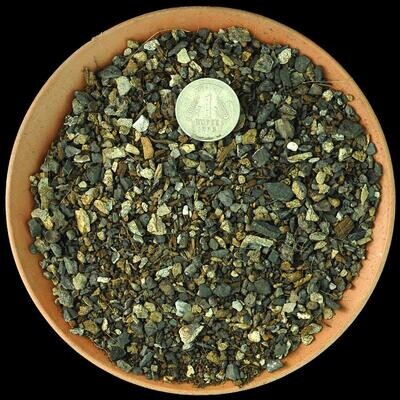
FORTIFIED Cactus & Succulent SOIL (COARSE)
FORTIFIED Cactus & Succulent SOIL (COARSE)
SKU MNS004
5.0
(11)
₹54.85
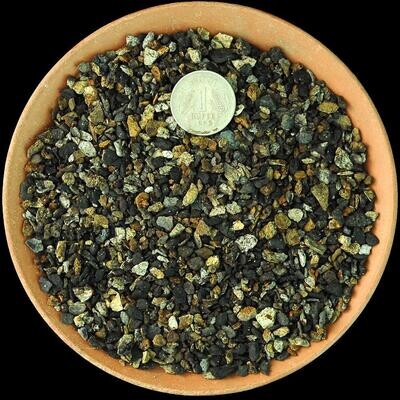
Cactus & Succulent Planting Mix COARSE (aka Cactus Soil Mix or Succulent Soil Mix)
Cactus & Succulent Planting Mix COARSE (aka Cactus Soil Mix or Succulent Soil Mix)
Washed, Free-Draining Mineral Mix for Cactus & Succulents
SKU MNS003
5.0
(1)
₹44.85
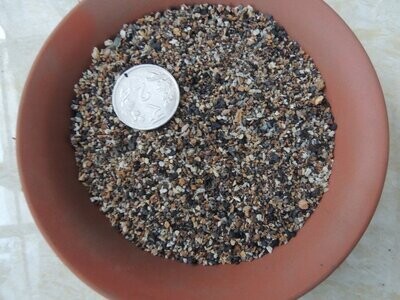
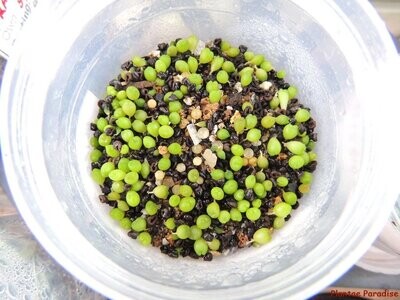
Cactus Seed Planting Mix
Cactus Seed Planting Mix
Sterile, Fine-Grain Media for Cactus & Succulent Seeds
SKU MNS005
₹74.85
Display prices in:INR
