
Categories
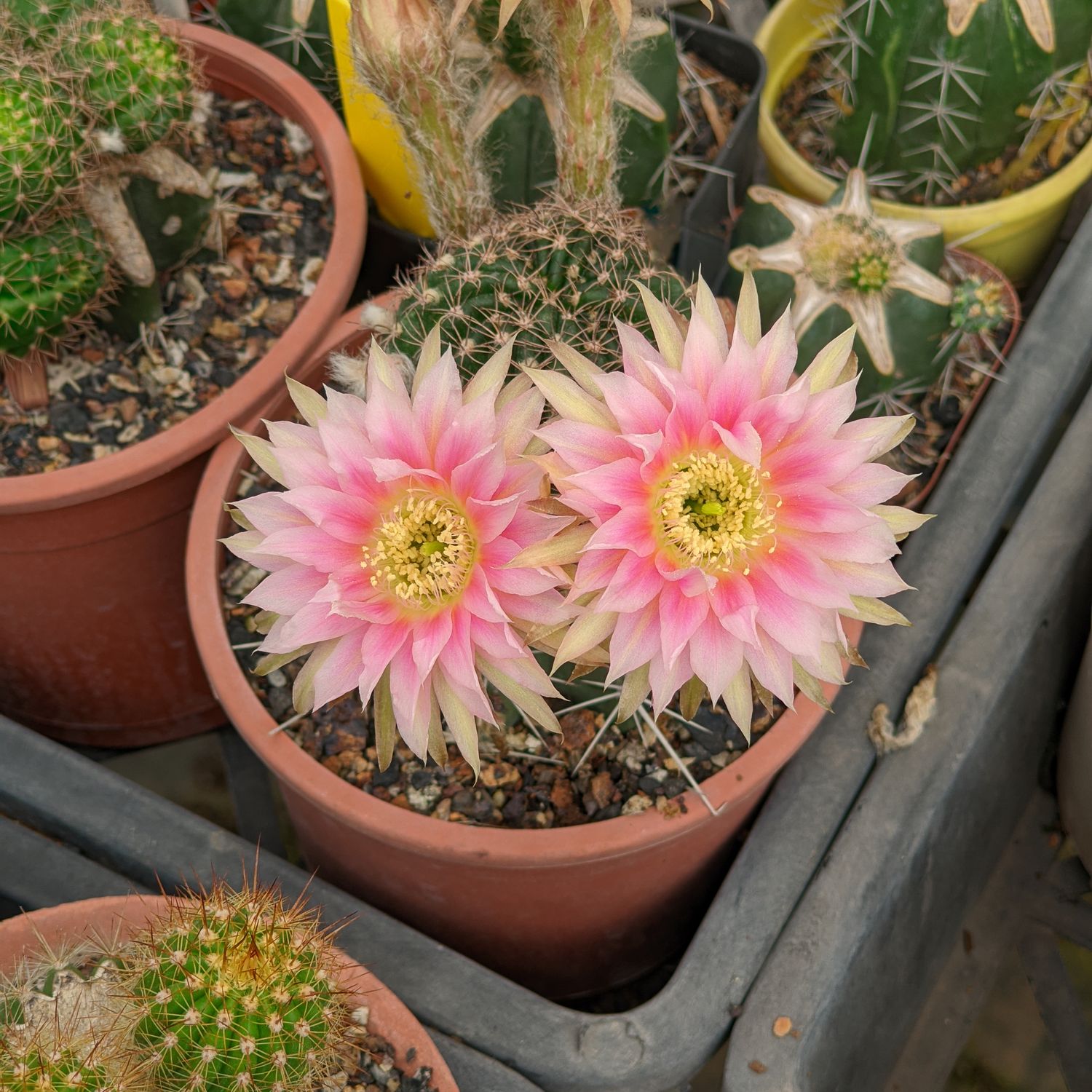
Lobivia hybrid SA342
SKU LET469
₹600.00
In stock: 1 available
1
Save this product for later
Customer reviews
Reviews only from verified customers
No reviews yet. You can buy this product and be the first to leave a review.
Lobivia hybrid SA342
Product Details
Delicate as spun sugar and twice as luminous — this Lobivia hybrid opens in soft blush pink, its narrow petals shading from a pale, almost translucent rim into a deeper rose at the base, gathered around a sunny yellow-green center. It's the kind of flower that photographs like a watercolor and looks even better in person.
Origin of Name
The genus Lobivia takes its name from a simple anagram of Bolivia, the country that anchors much of the group's native range — a naming device employed by American botanists Nathaniel Lord Britton and Joseph Nelson Rose when they formally described the genus in 1922. The designation "SA342" attached to this particular hybrid is a breeder's seedling code rather than a published cultivar name — a common practice among hobbyist hybridizers, who track unnamed or still-being-evaluated crosses by an alphanumeric code (often the grower's initials followed by a sequential number) until a plant proves distinctive enough to earn a formal cultivar name. Plants carrying such codes are typically hand-pollinated selections chosen from a larger batch of seedlings for a standout trait — in this case, its refined, soft-pink coloring.
Origin of Plant
This hybrid's ancestry runs back to the wild Lobivia of the high Andes — plants native to Bolivia, Peru, northwestern Argentina, and northern Chile, typically found rooted in rocky, well-drained slopes at considerable elevation. Modern taxonomic treatments have absorbed Lobivia into the broader genus Echinopsis, following a major 2025 reclassification of the Cactaceae family accepted by Plants of the World Online, though the older name remains in everyday use among growers and breeders working with this group. The specific hybrid seen here is a product of contemporary cultivation rather than a wild collection, bred for its flower quality from parent stock within this Andean lineage.
Description
A low-growing, ribbed cactus with fine, pale spination, this plant channels all its drama into its blooms. Each flower unfurls in a wide, many-petaled rosette of soft pink — paler and almost cream-white at the petal edges, intensifying to a warmer rose toward the base — encircling a compact, greenish-yellow center packed with fine stamens. The overall effect is gentle and painterly rather than saturated, a contrast to the hotter oranges and magentas seen in many other Lobivia hybrids. Blooms appear in flushes through the warm growing season, with the number of open flowers varying from one flush to the next.
Conservation Status
This hybrid exists only in cultivation and carries no individual conservation listing. Its parent genus, Lobivia, falls under CITES Appendix II, which governs trade in wild-collected specimens of Andean cacti. As a nursery-propagated hybrid, this plant qualifies under the artificially propagated exemption, meaning it can be sold and shipped without any impact on wild populations.
Care
- Light: Full sun to bright light for the strongest flowering and compact growth
- Watering: Water generously through spring and summer once the soil has dried out; cut back sharply in winter
- Soil: Fast-draining, mineral-based cactus mix
- Pot: Terracotta is preferred over plastic to help the soil dry evenly
- Temperature: Warm and sunny in the growing season; cool, dry, and frost-free over winter to set up strong spring flowering
- Feeding: Low-nitrogen, high-potassium fertilizer during active growth to support blooms over foliage
A Story Worth Telling
Numbered seedlings like SA342 are the unsung backbone of the hybrid cactus world — the vast majority of crosses a breeder makes never earn a flashy name; they're grown on, flowered, photographed, and judged purely on merit under a working code. Only a fraction go on to be named and released more widely. For the collector, acquiring a plant while it still carries its working number is a bit like owning an early pressing — a direct link to the breeder's raw selection process, before the marketing name ever gets attached.
You May Also Like
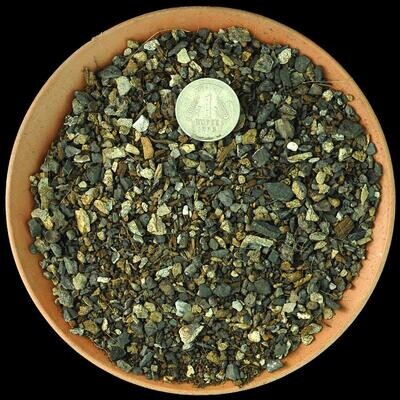
FORTIFIED Cactus & Succulent SOIL (COARSE)
FORTIFIED Cactus & Succulent SOIL (COARSE)
SKU MNS004
5.0
(11)
₹54.85
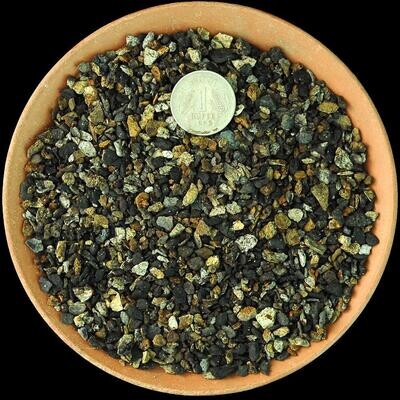
Cactus & Succulent Planting Mix COARSE (aka Cactus Soil Mix or Succulent Soil Mix)
Cactus & Succulent Planting Mix COARSE (aka Cactus Soil Mix or Succulent Soil Mix)
Washed, Free-Draining Mineral Mix for Cactus & Succulents
SKU MNS003
5.0
(1)
₹44.85
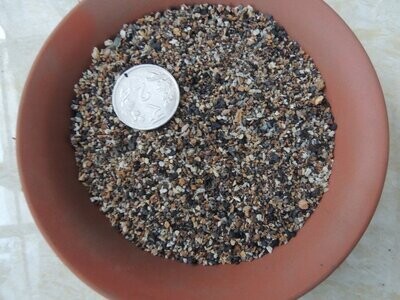
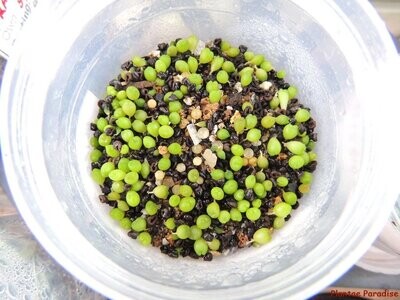
Cactus Seed Planting Mix
Cactus Seed Planting Mix
Sterile, Fine-Grain Media for Cactus & Succulent Seeds
SKU MNS005
₹74.85
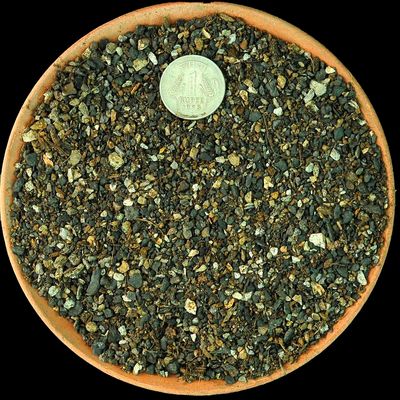
FORTIFIED Cactus & Succulent SOIL (FINE)
FORTIFIED Cactus & Succulent SOIL (FINE)
SKU MNS002
5.0
(4)
₹49.85
Display prices in:INR
