
Categories
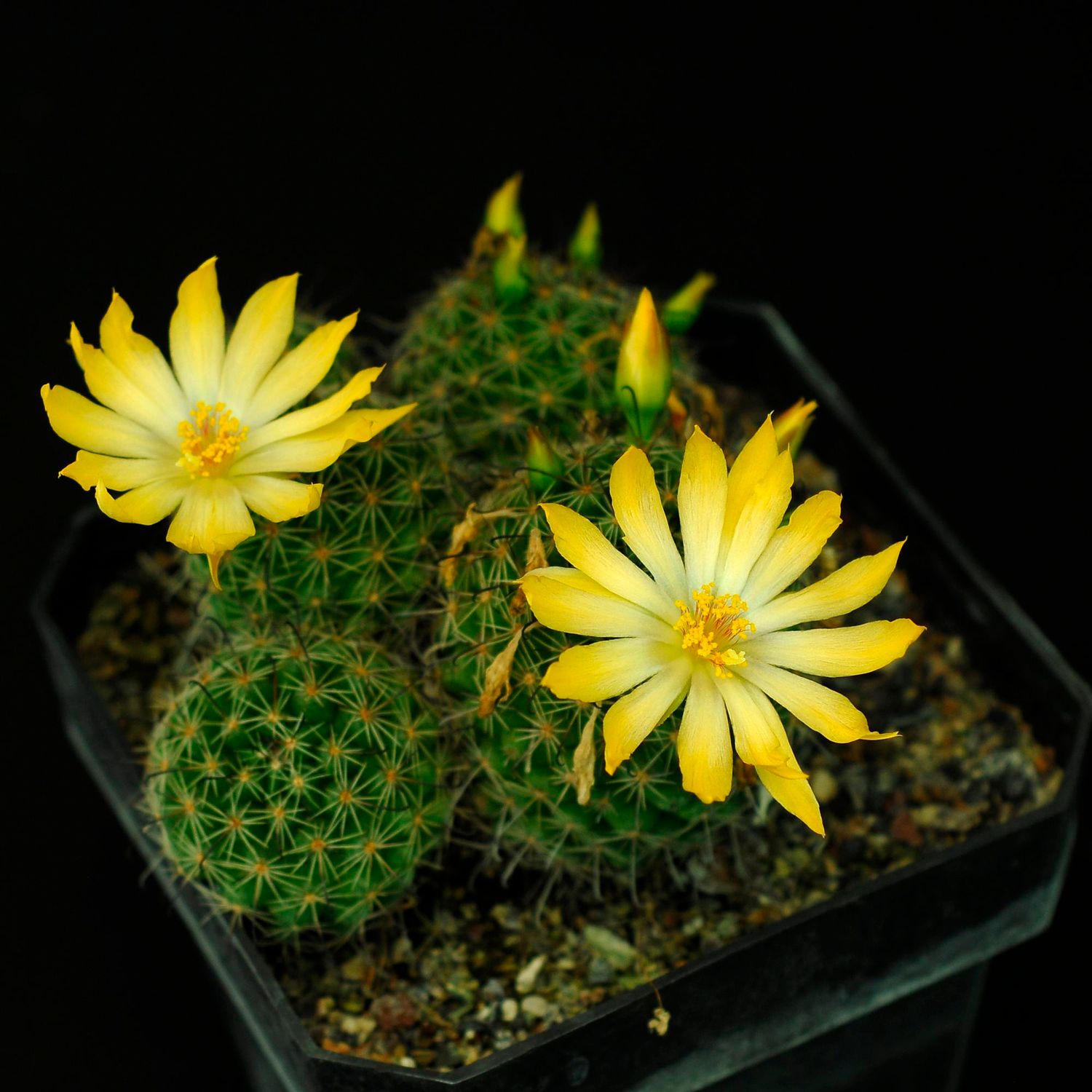
Mammillaria beneckei
SKU MA048
₹350.00
In stock: 1 available
1
Save this product for later
Customer reviews
Reviews only from verified customers
No reviews yet. You can buy this product and be the first to leave a review.
Mammillaria beneckei
Product Details
Mammillaria beneckei
A wide-ranging Mexican pincushion that breaks nearly every rule of its own genus — flowers twice the usual size, seeds coarse enough to have earned it a genus of its own for a while, and blooms so committed to their single day of glory that they never open again. Loosely clustering, easy-tempered, and full of botanical eccentricity, it's a rewarding oddball for any collector who likes their Mammillaria with a story attached.
Origin of Name
The genus Mammillaria comes from the Latin mammilla, "little nipple," a reference to the tubercles — the small, fleshy projections — that cover the stems of every species in the group instead of true ribs.
The species epithet beneckei honors Stephan (Étienne) Benecke, a Berlin-born trader who emigrated to Mexico, rose to become German consul there, and in 1875 founded the Camara Nacional de Comercio. The plant was formally described in 1844 by Carl August Ehrenberg, a German merchant-turned-botanist who spent a decade in Mexico collecting cacti, minerals, and natural history specimens on the side of his day job with a mining company, shipping much of what he found back to the Berlin herbarium of his correspondent Daniel Schlechtendal. Ehrenberg named a considerable number of Mexican cacti still grown today, and dedicating this one to Benecke was very likely a nod to a fellow German expatriate whose commercial connections in Mexico made specimen shipments home to Europe that much easier to arrange.
Few Mammillarias have accumulated as many aliases. Over the decades this plant has also been published as Cactus beneckei, Dolichothele beneckei, Mammillaria balsasoides, M. balsasensis, M. barkeri, M. colonensis, M. guiengolensis, M. nelsonii, and Oehmea beneckei, among others — a direct consequence of the wide, variable range described below, which led different botanists in different regions to describe what looked like distinct species. Its unusually large flowers and coarse, oversized seeds were once considered different enough from typical Mammillaria to justify splitting it into its own genus, Oehmea, in 1951; more recent taxonomy has folded it back into Mammillaria, where it now sits in the small subgenus Oehmea alongside a handful of similarly large-flowered relatives.
Origin of Plant
Mammillaria beneckei is native to western and central Mexico, found across a broad swath of states — Sinaloa, Nayarit, Jalisco, Colima, Michoacán, México, Guerrero, and Oaxaca — typically at low elevations in tropical deciduous forest, growing alongside other xerophytes and columnar cacti in seasonally dry scrub. It's a common and widespread species through this range, one reason it has picked up so many regional names over the years as botanists working in different states encountered what appeared to be separate plants.
Description
A small, low-growing cactus with green to greenish-brown stems, solitary at first but soon offsetting into loose, spreading clumps that can eventually reach 50 cm (20 inches) or more across — the offsets detach easily, a trait that likely helps the species spread vegetatively in the wild. Individual stems are depressed and globular when young, lengthening into short cylinders with age, typically 5–10 cm (2–4 inches) tall. The tubercles are broadly conical and soft, often flushed with reddish or purple tones, each tipped with an areole bearing 2 to 6 brown or black central spines (one or two usually hooked) and 12 to 15 fine, needle-like radial spines in white or pale yellow with darker tips.
Where this species truly departs from its relatives is in flower. Rather than the small, modest blooms typical of most Mammillarias, it produces genuinely large, fragrant, funnel-shaped flowers — some of the biggest in the entire genus — in shades of deep yellow and, occasionally, a striking orange, with a floral tube reaching up to 3 cm. Stranger still is their timing: the flowers open at night and close permanently by around midday, never to reopen, unlike the multi-day blooms of most other pincushion cacti. They're followed by red, club-shaped fruits packed with unusually large, rough seeds — coarser than those of any other Mammillaria — the very feature that once justified giving this plant a genus of its own.
Conservation Status
Mammillaria beneckei is assessed by the IUCN as Least Concern, reflecting its wide distribution and generally healthy, abundant populations across its range; the main localized pressure noted is the flooding of some habitat in Jalisco caused by dam construction. As with cacti generally, international trade is regulated under CITES, and this species falls under Appendix II, alongside the great majority of the family — only a small handful of Mammillarias (such as M. pectinifera and M. solisioides) are listed under the more restrictive Appendix I. All plants offered here are nursery-propagated, not wild-collected, so this artificially propagated status keeps them clear of any wild-collection concerns.
Care
- Light: Bright light to full sun; some light shade during the harshest summer afternoons helps prevent scorching in very hot climates.
- Watering: Water thoroughly during the active spring and summer growing season, allowing the soil to dry out fully between waterings; reduce sharply in autumn and keep nearly dry through winter.
- Soil: A fast-draining, mineral-rich cactus mix — standard cactus compost cut with extra pumice, perlite, or coarse sand works well.
- Pot: A terracotta pot is a good match for this species, since its unglazed walls wick away excess moisture faster than plastic — helpful insurance for a cactus that dislikes sitting wet.
- Temperature: Best kept frost-free; protect below around 5°C (41°F) and bring indoors or under cover before any hard winter cold.
- General tips: Give offsets a chance to callus for a few days after removal before potting them up separately — since they detach so readily, this is one of the easiest Mammillarias to propagate by division. Expect flowering in spring, though each bloom lasts only a single day, so it's worth checking your plants each morning during the season so you don't miss the show.
A Story Worth Telling
There's a small irony bound up in this plant's history: Carl Ehrenberg named his cactus after Stephan Benecke, but for most of his working life Ehrenberg lived in the shadow of his own more famous relative. His elder brother, Christian Gottfried Ehrenberg, was one of the great naturalists of the nineteenth century — a protozoologist and Berlin University professor whose name adorns whole genera of algae and protists. Carl, by contrast, spent his career as a working merchant, squeezing his cactus-collecting into whatever hours a Mexican mining job left him, and shipping his finds home in his spare time purely out of enthusiasm for the plants. Yet it's Carl's name, not his brother's, that lives on across a whole roster of cacti still sold and grown today — Mammillaria beneckei among them — a reminder that in botany, as in mining, sometimes it's the amateur digging in the field who strikes the richer vein.
You May Also Like

FORTIFIED Cactus & Succulent SOIL (FINE)
FORTIFIED Cactus & Succulent SOIL (FINE)
SKU MNS002
5.0
(4)
₹49.85

FORTIFIED Cactus & Succulent SOIL (COARSE)
FORTIFIED Cactus & Succulent SOIL (COARSE)
SKU MNS004
5.0
(11)
₹54.85

Cactus & Succulent Planting Mix COARSE (aka Cactus Soil Mix or Succulent Soil Mix)
Cactus & Succulent Planting Mix COARSE (aka Cactus Soil Mix or Succulent Soil Mix)
Washed, Free-Draining Mineral Mix for Cactus & Succulents
SKU MNS003
5.0
(1)
₹44.85
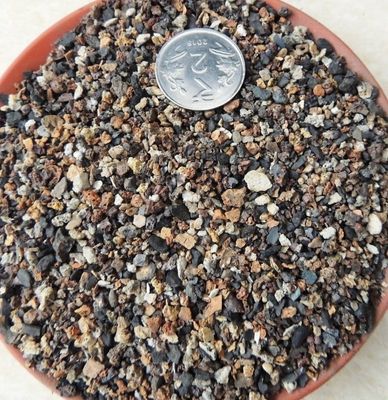
Cactus & Succulent Planting Mix FINE (aka Cactus Soil Mix or Succulent Soil Mix)
Cactus & Succulent Planting Mix FINE (aka Cactus Soil Mix or Succulent Soil Mix)
Fine-Grain Potting Mix for Cactus & Succulent Roots
SKU MNS001
5.0
(3)
₹39.85
Display prices in:INR
