
Categories
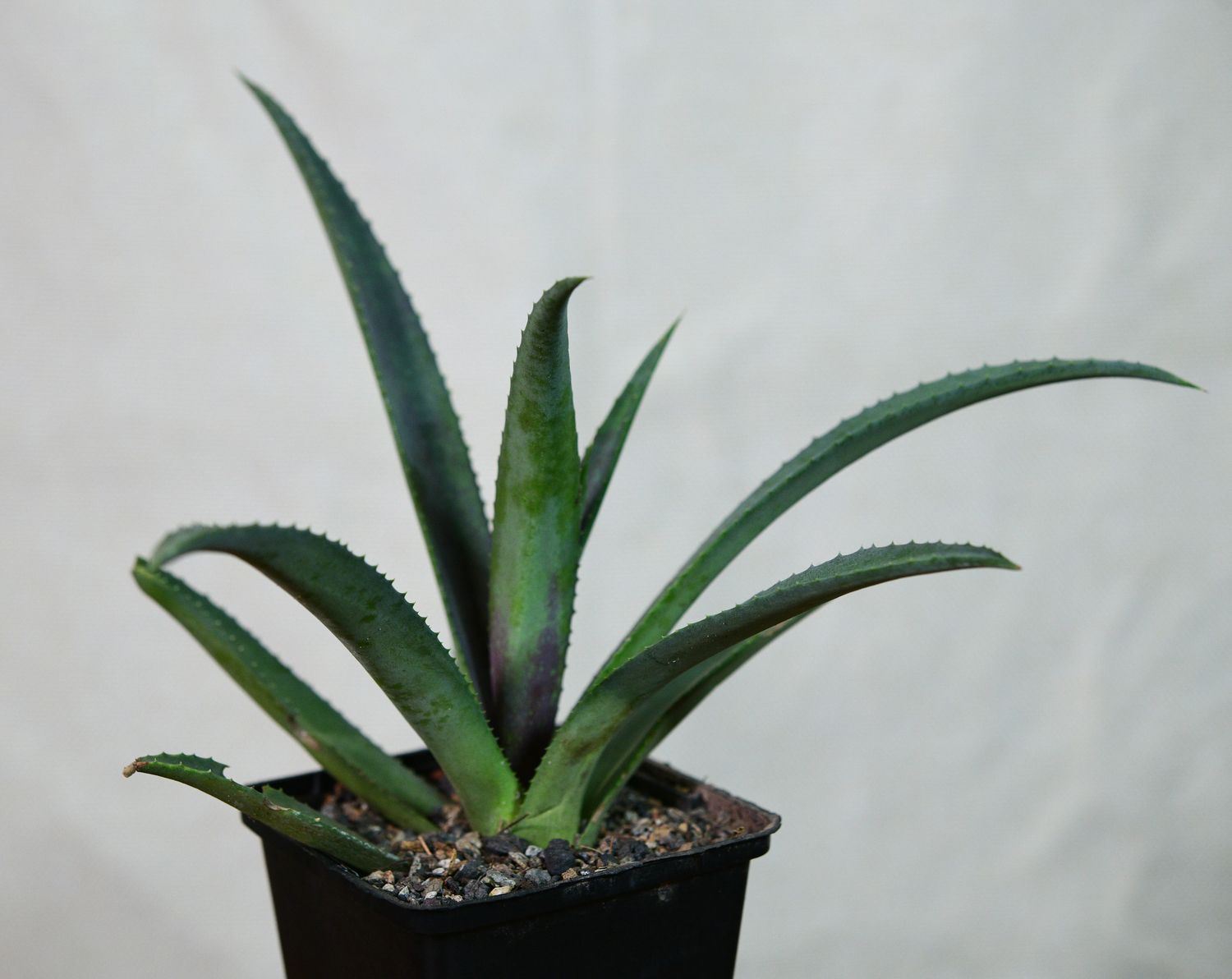
Mangave Center of Attention
SKU MG025
₹1 550.00
Olive green leaves with purple spotting and golden midrib
In stock: 2 available
1
Save this product for later
Customer reviews
Reviews only from verified customers
No reviews yet. You can buy this product and be the first to leave a review.
Mangave Center of Attention
Product Details
× Mangave 'Center of Attention'
A compact, stiffly arching rosette in waxy, glaucous grey-green, split down the centre of every leaf by a wide, glowing band of burgundy-red and dusted along the margins with dense, dark reddish-purple spotting — new growth flushes almost entirely deep wine-purple before settling into its mature two-tone pattern.
Origin of Name
The name × Mangave marks this out as a bigeneric hybrid — the "×" is botanical shorthand for a cross between two different genera, here Manfreda and Agave, telescoped into the portmanteau "Mangave." The nothogenus name itself is a relatively recent coinage, formalized in 2005 by nurserymen Tony Avent, Carl Schoenfeld, and Wade Roitsch after unexpected hybrid seedlings turned up at their Texas nursery where wild-collected Manfreda seed had happened to grow beside a flowering agave.
'Center of Attention' is a straightforward, purely descriptive cultivar name, chosen for exactly the trait that makes this plant stand out on a nursery bench: that bold, glowing central stripe and heavily spotted margin, impossible to miss next to a plain green agave. It was bred by Hans A. Hansen at Walters Gardens in Zeeland, Michigan — the breeder behind 'Red Wing' and many other releases in the company's Mad About Mangave® program — who made the deliberate hand-pollinated cross on June 27, 2015. Unusually for a mangave, this one is a three-generation hybrid rather than a simple two-species cross: the seed (female) parent was a proprietary selection of the rare Mexican species Agave nizandensis, while the pollen (male) parent was itself an unreleased hybrid, internally coded 12-3-31, produced by crossing the older, mysterious-origin cultivar × Mangave 'Bloodspot' with a proprietary selection of Agave gypsophila. Hansen filed for a US plant patent on the resulting seedling in July 2020, and it was granted as US Plant Patent PP33,630 in November 2021.
Origin of Plant
Every strand of this hybrid's ancestry traces back to real, and in several cases genuinely rare, corners of Mexico. Agave nizandensis, the seed parent, is endemic to a small area of the state of Oaxaca, where it grows as a compact, narrow-leaved rosette in a very restricted range — rare enough in the wild that its 2020 IUCN assessment flagged it as a species of real conservation concern. Agave gypsophila, one grandparent on the pollen side, is even more precarious: endemic to gypsum-rich soils in a tiny pocket of Guerrero and currently assessed as Critically Endangered, threatened by agricultural expansion and infrastructure development with no protected areas covering its range. The other grandparent, × Mangave 'Bloodspot', is itself a hybrid of uncertain, possibly Japanese origin, combining Agave macroacantha — a common, black-spined agave from the dry hillsides of Oaxaca and Puebla — with Manfreda maculosa, a soft-leaved succulent perennial from the thornscrub of South Texas and northeastern Mexico whose species name, maculosa ("spotted"), describes the dark leaf speckling it has now passed down through two more generations into 'Center of Attention's own richly spotted margins.
Hansen's breeding program brought these distant, wild Mexican lineages together under cultivation in Michigan — a combination of narrow-range, conservation-concern species and a hardier ornamental hybrid that would never occur together in nature, engineered instead through deliberate, hand-pollinated crosses over multiple generations.
Description
'Center of Attention' forms a compact, tidy, rounded mound of around 64 stiffly arching, linear to lance-shaped leaves radiating from a short central stem, each leaf roughly 36 cm (14 in) long, 5.7 cm wide, and pleasingly thick and fleshy. The leaf surface is glaucous — waxy and slightly frosted — in a background colour that shifts from light greyed-green to a soft greyed-purple, split by a broad, glowing burgundy-red band running the full length of the midrib and bordered by dense, dark greyed-purple spotting concentrated toward the margins. New central growth, as seen emerging here, often flushes an even deeper, near-solid wine-purple before settling into the plant's characteristic two-tone striping as the leaf matures and expands. Leaf margins carry small, flexible, medium-spaced teeth roughly 5 mm apart, finishing in a soft, flexible terminal spine rather than the rigid, needle-sharp tip of a true agave — decorative rather than dangerous. At maturity the whole rosette reaches about 30 cm (12 in) tall and 75 cm (up to about 30 in) across. A well-established plant can send up a tall, upright flowering stalk carrying roughly 200 small, yellowish flowers in branched terminal clusters, each individual bloom lasting just three to four days.
Conservation Status
× Mangave 'Center of Attention' itself is a patented nursery cultivar with no wild population of its own — it exists only in cultivation, propagated by division. Its ancestry, though, runs directly through two genuinely threatened wild species: Agave gypsophila is IUCN-assessed as Critically Endangered, confined to a tiny, unprotected pocket of gypsum soil in Guerrero, and Agave nizandensis is a narrowly endemic Oaxacan species of real conservation concern in its own right. Growing a cultivated hybrid like this one places no pressure whatsoever on either wild population — a pleasant way to enjoy a thread of their genetics, and their striking colouring, without any collection impact on plants that can genuinely ill afford it.
Care
Light: Full sun to part sun brings out the richest red banding and deepest spotting; in lower light the plant tends to stay greener with less contrast.
Watering: Drought-tolerant once established, and more forgiving of regular moisture than a pure agave thanks to its Manfreda ancestry — water thoroughly, then let the soil dry out substantially before watering again, and cut back significantly in winter.
Soil: A gritty, fast-draining succulent or cactus mix is essential; poor drainage and soggy roots are by far the most common problem with mangaves generally.
Temperature: Hardy outdoors in USDA zones 9a–11; elsewhere, treat as a container or tender perennial and bring it under cover well before frost, ideally keeping it above about 15°C (60°F) for best appearance through winter.
General tips: Feed lightly with a diluted, balanced fertilizer during the growing season. It's naturally deer- and rabbit-resistant and largely pest-free, and although the mother rosette is monocarpic (it dies after flowering), it typically offsets freely from the base well before that happens, so a healthy clump rarely disappears with a single bloom cycle.
An Interesting Note
'Center of Attention' is a genuine three-generation hybrid rather than a simple cross — its pollen parent was itself the product of an earlier cross between a rare Oaxacan agave and an older, mystery-origin mangave, which was in turn descended from a spotted Texas manfreda and a common Mexican agave. Four wild species and one uncertain-origin hybrid, spanning several distinct regions of Mexico and the American South, all had to come together across at least three separate breeding generations before this single richly patterned rosette existed — a reminder of just how much accumulated hybridizing effort can sit behind a plant that looks, at a glance, like it might simply have grown that way.
You May Also Like
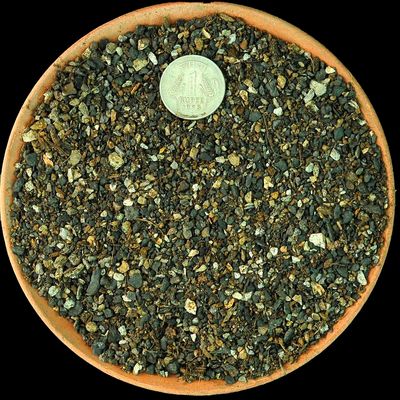
FORTIFIED Cactus & Succulent SOIL (FINE)
FORTIFIED Cactus & Succulent SOIL (FINE)
SKU MNS002
5.0
(4)
₹49.85
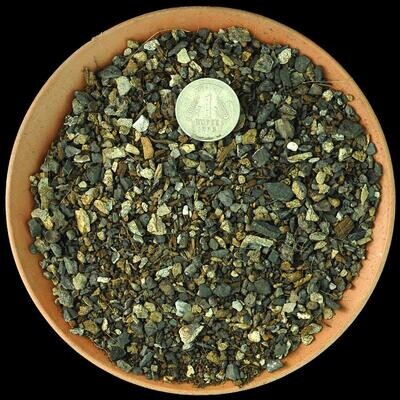
FORTIFIED Cactus & Succulent SOIL (COARSE)
FORTIFIED Cactus & Succulent SOIL (COARSE)
SKU MNS004
5.0
(11)
₹54.85
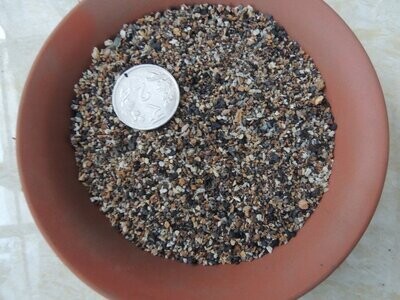
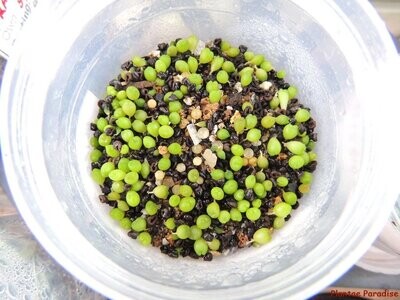
Cactus Seed Planting Mix
Cactus Seed Planting Mix
Sterile, Fine-Grain Media for Cactus & Succulent Seeds
SKU MNS005
₹74.85
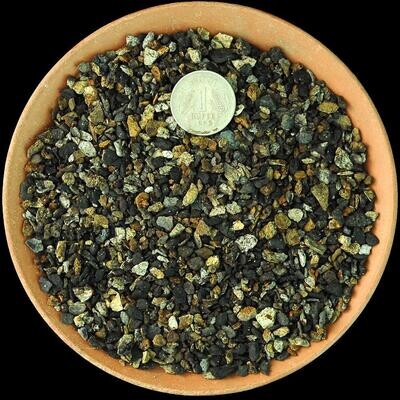
Cactus & Succulent Planting Mix COARSE (aka Cactus Soil Mix or Succulent Soil Mix)
Cactus & Succulent Planting Mix COARSE (aka Cactus Soil Mix or Succulent Soil Mix)
Washed, Free-Draining Mineral Mix for Cactus & Succulents
SKU MNS003
5.0
(1)
₹44.85
Display prices in:INR
