
Categories
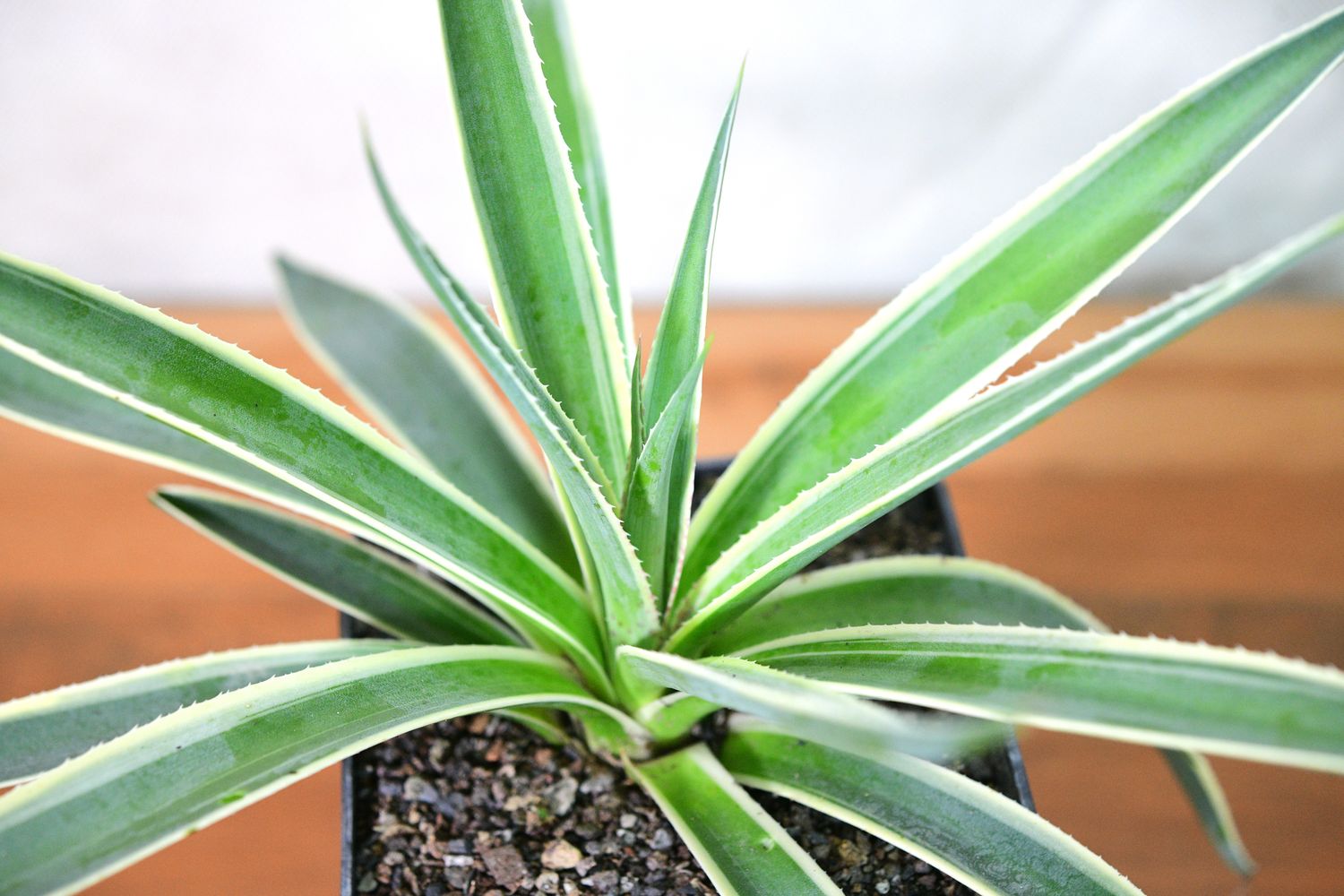
Mangave Navajo Princess
SKU MG033
₹2 450.00
In stock: 1 available
1
Save this product for later
Customer reviews
Reviews only from verified customers
No reviews yet. You can buy this product and be the first to leave a review.
Mangave Navajo Princess
Product Details
× Mangave 'Navajo Princess'
A low, wide rosette of thick, softly arching leaves in deep blue-green, each one wrapped in a wide, creamy white margin that glows brighter with every hour of direct sun — a compact, sculptural hybrid built for a sunny windowsill or a desert-style container garden alike.
Origin of Name
The "×" in × Mangave marks this out as a bigeneric hybrid — botanical shorthand for a cross between two separate genera, here Manfreda and Agave, fused into the portmanteau "Mangave." The nothogenus name was coined in 2005 by nurserymen Tony Avent of Plant Delights Nursery and Carl Schoenfeld and Wade Roitsch of Yucca Do Nursery, after unexpected hybrid seedlings turned up in a batch of wild-collected Manfreda seed from northern Mexico that had been sown next to a flowering Agave mitis at the Texas nursery. Only two seedlings from that entire batch proved to be true hybrids, but they were striking enough to earn the cross its own name.
'Navajo Princess' itself is a patented cultivar, granted US Plant Patent PP31,136 (filed November 20, 2018; granted November 26, 2019), bred by Hans A. Hansen at Walters Gardens in Zeeland, Michigan — the hybridizer behind dozens of releases in the company's Mad About Mangave® program, including 'Center of Attention' and 'Red Wing'. Hansen made the deliberate, hand-pollinated cross on April 1, 2014, using an unnamed, variegated selection of Manfreda maculosa as the seed (female) parent and an unnamed selection of the Mexican high-mountain species Agave montana as the pollen (male) parent. As with most Walters Gardens introductions in this line, no formal etymology for the cultivar name has been published, but the choice fits the collection's habit of pairing evocative, Southwestern-flavored names with plants that show bold, high-contrast banding — here a broad cream border wrapped around a blue-green field, not unlike the graphic geometry of a woven Southwestern textile.
Origin of Plant
Both parents trace to real wild populations on either side of the US–Mexico border. Agave montana, the pollen parent, is a genuinely high-altitude species — it grows at elevations of roughly 2,600 to 3,000 meters (8,500–10,000 ft) in the pine-oak forests of the Sierra Madre Oriental, across the Mexican states of Tamaulipas, Nuevo León, and Querétaro. It was formally described comparatively late for an agave, published only in 1996 by botanist José Ángel Villarreal in the journal Sida; its species name simply means "of the mountains" in Spanish. In the wild it grows as a solitary rosette that never offsets and flowers only once in its lifetime, sending up a dramatic stalk of dark purplish-red buds that open to reveal bright yellow flowers — and its high-elevation origin makes it one of the more cold-hardy agaves in cultivation, tolerant of brief dips well below freezing.
Manfreda maculosa, the seed parent, is a soft-leaved succulent perennial native to the thornscrub and limestone country of deep South Texas and adjacent northeastern Mexico, commonly known as Texas tuberose or spice lily. It was first described in 1856 by the Russian botanist Eduard von Regel; its species name, from the Latin macula ("spot" or "blotch"), describes the dark purple speckling scattered across its fleshy leaves — the same trait it hands down to many of its mangave offspring. In the wild it also happens to be the sole known host plant of the rare Manfreda giant-skipper butterfly (Stallingsia maculosus), whose caterpillars feed exclusively on its leaves.
Hansen's cross brought a rare, frost-tolerant mountain agave from the Sierra Madre together with a spotted South Texas manfreda under cultivation in Michigan — two plants that would never naturally meet, combined deliberately to marry the agave's structure and cold tolerance with the manfreda's fast growth, patterning, and softer texture.
Description
'Navajo Princess' forms a tidy, symmetrical, low-domed rosette of some 40 to 52 semi-fleshy, lance-shaped leaves radiating outward in a rounded mound — stiff at the base but softening toward the tips, which arch gently outward and up rather than standing rigidly erect. Each leaf runs roughly 30 cm (12 in) long and 6.4 cm (2.5 in) wide at the base, with a subtle longitudinal fold down its length. The colour is the plant's signature trait: deep, greyed blue-green centers fade through a frosty, paler green transition zone into a wide, creamy white margin that rims the entire leaf, while faint greyed-purple spotting gathers toward the base of each leaf — spotting, like the cream banding, that intensifies with stronger ultraviolet light and fades somewhat in lower light or indoors. The crown itself stays comparatively clean, with only minimal spotting near the center. Leaf margins carry small, flexible teeth spaced about 6.5 mm apart, tapering to a soft, flexible terminal spine roughly 10 mm long — ornamental rather than dangerous, true to its Manfreda parentage. A mature specimen forms a mound around 20–25 cm (8–10 in) tall and can spread to 45–75 cm (18–30 in) across given time and space. Like other mangaves, an established plant will eventually send up a tall flowering stalk of yellow-gold blooms in summer; the mother rosette is monocarpic, but 'Navajo Princess' offsets readily from the base well before that point, so a healthy clump is rarely lost to a single bloom cycle.
Conservation Status
× Mangave 'Navajo Princess' is a patented nursery cultivar with no wild population of its own — it exists only in cultivation, propagated by division and tissue culture, and places no demand whatsoever on any wild plant population. Its parent species fare differently in the wild: Agave montana has never been formally assessed by the IUCN, but it occupies a naturally narrow band of high-elevation pine-oak forest across just three Mexican states and, like many solitary, non-offsetting agaves, depends entirely on seed for reproduction, making it inherently slow to recover from habitat disturbance. Manfreda maculosa is not considered threatened and remains reasonably common across its South Texas and northeastern Mexico range, though its ecological role runs deeper than its own numbers suggest: it is the only known host plant for the Manfreda giant-skipper butterfly, so healthy wild stands of this unassuming little succulent matter well beyond the plant itself. Growing 'Navajo Princess' in a pot lets a collector enjoy both lineages' genetics and good looks without touching either wild population.
Care
Light: Give it as much bright light as possible — full sun for the boldest cream-and-blue-green contrast and the most intense purple spotting. In lower light the plant stays greener with softer, less defined banding.
Watering: Drought-tolerant once established, and somewhat more forgiving of regular moisture than a pure agave thanks to its Manfreda parentage. Water deeply, then let the soil dry out substantially before watering again, and cut back sharply in winter, when the plant should be kept nearly dry.
Soil: A gritty, fast-draining cactus or succulent mix is essential. Poor drainage and wet roots are by far the most common cause of trouble with mangaves generally.
Temperature: Hardy outdoors in USDA zones 8a–11 thanks to Agave montana's cold-adapted heritage — notably hardier than many mangaves. Where winters run colder, grow it in a container and bring it under cover before hard frost, ideally keeping it above about 15°C (60°F) for the best appearance and color through the darker months.
General tips: Feed lightly with a diluted, balanced fertilizer during the active growing season. It's naturally deer- and rabbit-resistant and largely trouble-free from pests, making it an easy, low-maintenance specimen for a sunny patio, rock garden, or windowsill.
An Interesting Note
'Navajo Princess' quietly carries one of the more improbable pairings in the Mad About Mangave® lineup: one parent is a solitary mountain agave that grows at nearly 10,000 feet in the pine-oak forests of Mexico's Sierra Madre Oriental and was not even formally described by science until 1996, while the other is a modest, spotted little Texas succulent that happens to be the entire world's sole food source for one rare native butterfly. Crossed by hand in a Michigan greenhouse in 2014, the resulting hybrid inherits the mountain parent's cold hardiness and structure and the desert parent's spotting and vigor — a plant that, in its own quiet way, condenses two very different corners of North America's arid country into a single pot.
You May Also Like
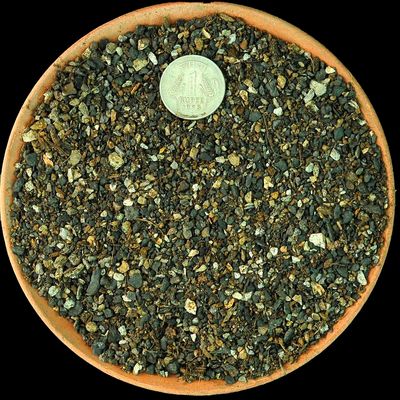
FORTIFIED Cactus & Succulent SOIL (FINE)
FORTIFIED Cactus & Succulent SOIL (FINE)
SKU MNS002
5.0
(4)
₹49.85

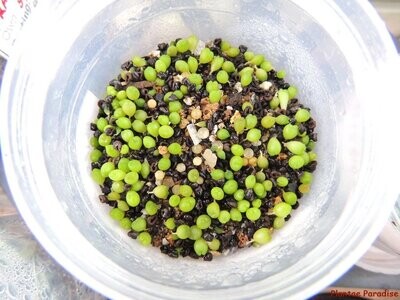
Cactus Seed Planting Mix
Cactus Seed Planting Mix
Sterile, Fine-Grain Media for Cactus & Succulent Seeds
SKU MNS005
₹74.85
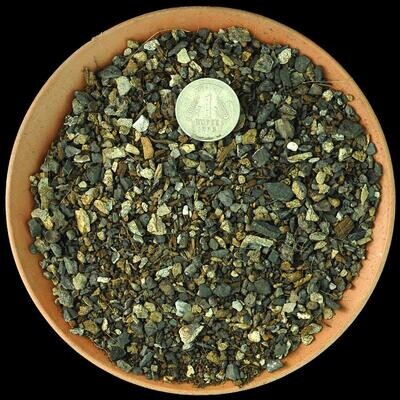
FORTIFIED Cactus & Succulent SOIL (COARSE)
FORTIFIED Cactus & Succulent SOIL (COARSE)
SKU MNS004
5.0
(12)
₹54.85
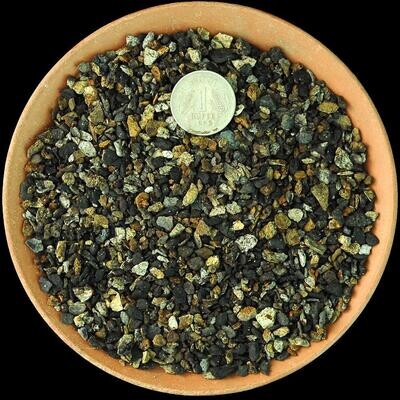
Cactus & Succulent Planting Mix COARSE (aka Cactus Soil Mix or Succulent Soil Mix)
Cactus & Succulent Planting Mix COARSE (aka Cactus Soil Mix or Succulent Soil Mix)
Washed, Free-Draining Mineral Mix for Cactus & Succulents
SKU MNS003
5.0
(1)
₹44.85
Display prices in:INR
