
Categories
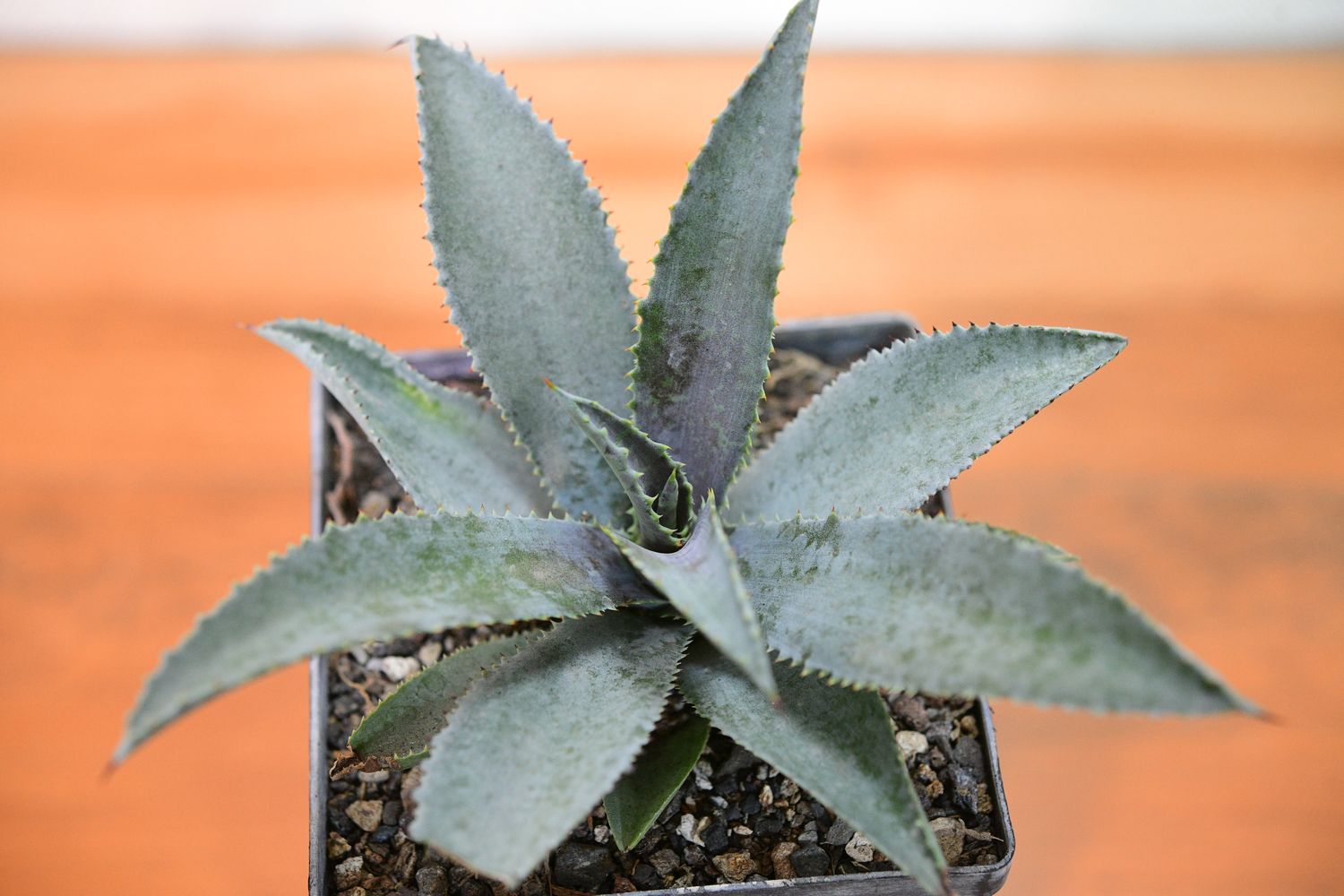
Mangave Silver Fox
SKU MG019
₹1 550.00
In stock: 1 available
1
Save this product for later
Customer reviews
Reviews only from verified customers
No reviews yet. You can buy this product and be the first to leave a review.
Mangave Silver Fox
Product Details
Mangave 'Silver Fox'
Named for the silvered fur of its namesake fox, this hybrid rosette catches the light like frost on sage — a study in cool, luminous colour with a temperament as tough as any true agave.
Origin of Name
The genus name ×Mangave is itself a portmanteau — Manfreda + Agave — coined to describe an intergeneric cross between two closely related genera in the family Asparagaceae. The hybrid group was formally recognised and named by Klein in 2010, though breeders had been experimenting with such crosses informally for some time before that.
The cultivar epithet 'Silver Fox' is purely descriptive, and rather charmingly so. At first glance, the rosette appears to glow a near-white silver — much like the pale, frosted fur of the silver fox (a colour morph of the red fox, Vulpes vulpes). Up close, that "silver" is revealed to be a light green leaf surface overlaid with a thick, waxy glaucous bloom, beneath which faint blue-purple spotting is visible if you look for it.
'Silver Fox' (PP29,642) was hybridised by Hans Hansen at Walters Gardens in Zeeland, Michigan — one of the leading breeders behind the modern Mangave boom. Sources differ slightly on the exact parentage: Walters Gardens and the Ruth Bancroft Garden record it as a cross of ×Mangave 'Bloodspot' with Agave gypsophila ssp. pablocarrilloi, while some retail listings cite a more complex three-way lineage also involving Agave macroacantha. Given that hybridiser's breeding notes for named Mangave cultivars aren't always published in full, we've noted the discrepancy honestly rather than picking one version to simplify the story — either way, the Agave influence dominates, giving 'Silver Fox' roughly three parts Agave character to one part Manfreda.
Origin of Plant
As a cultivated hybrid, 'Silver Fox' has no wild population of its own — its origin is the breeding programme at Walters Gardens rather than any single habitat. But its parentage traces straight back to the limestone and gypsum outcrops of western Mexico. Agave gypsophila ssp. pablocarrilloi (a segregate of the A. gypsophila complex, native to Colima, Jalisco, Michoacán and Guerrero) grows on calcareous rock in seasonally dry tropical forest, and it's this parent that lends 'Silver Fox' its glaucous, agave-like habit. The Manfreda side of the lineage, contributed via ×Mangave 'Bloodspot', descends from species native to the arid and semi-arid grasslands of Mexico and the southwestern United States — genes that give Mangave hybrids generally their faster growth rate and softer, more patterned foliage than pure Agave.
Description
'Silver Fox' forms a tidy, symmetrical rosette of thick, arching leaves that can reach roughly 11 inches tall and up to 22 inches wide at maturity. The foliage is the plant's whole appeal: a cool, silvery blue-grey created by a dense waxy coating over pale green leaf tissue, with a soft purple blush that deepens toward the leaf bases and intensifies under strong UV light. Faint blue-purple spotting sits beneath that waxy bloom — present, but far more subtle here than in heavily spotted Mangave cultivars, since 'Silver Fox' carries only a quarter Manfreda ancestry. Leaf margins are lined with small, rubbery, reddish-brown teeth, and each leaf tapers to a firm terminal spine. It is a comparatively fast grower for a Mangave, and single rosettes eventually offset into small clumps. Like most Mangave and Agave hybrids it is monocarpic — the individual rosette that flowers will die afterward — but the pups it sends out around the base carry the plant on indefinitely. Flowering doesn't follow a fixed schedule and can occur at various points in the growing season.
Conservation Status
'Silver Fox' is a nursery-bred cultivar and, as such, has no IUCN or CITES assessment of its own — plants in trade are entirely artificially propagated, not wild-collected, so no CITES paperwork applies to this hybrid. It's worth noting, though, that one of its wild parent lineages carries real conservation weight: Agave gypsophila in the broad sense (of which pablocarrilloi is a narrow-range segregate) is listed as Critically Endangered on the IUCN Red List, owing to its very restricted distribution across a handful of limestone and gypsum sites in western Mexico. The genus Agave as a whole is only lightly regulated under CITES — just two species (A. arizonica and A. parviflora) sit on Appendix I, with A. victoriae-reginae on Appendix II — and A. gypsophila/pablocarrilloi is not among them, so no export or import restrictions attach to this parentage either.
Care
- Light: Full sun to very bright light — at least 6 hours of direct sun daily. Strong light is what intensifies the silvery colour and any spotting; plants grown too dim will fade toward plain green and may stretch.
- Watering: Drought-tolerant once established. Water deeply, then allow the soil to dry out before watering again. Keep noticeably drier through winter dormancy, but avoid letting it desiccate completely.
- Soil: A gritty, fast-draining cactus/succulent mix is essential — this plant will not tolerate wet feet.
- Pot: Choose an unglazed terracotta pot with generous drainage holes over plastic; terracotta's porosity helps excess moisture evaporate, which matters for a plant this prone to rot in soggy conditions. Size the pot only slightly larger than the rosette.
- Temperature: A tender "temperennial" rather than a fully hardy succulent — protect from frost and hold indoors or under cover through cold winters. Give it some winter light even indoors to prevent stretching.
- Feeding: A light, half-strength balanced fertiliser during active summer growth is plenty; skip feeding entirely over winter.
- Bonus: Naturally resistant to deer and rabbits, making it a reliable choice for open garden beds in warmer climates.
A Story Worth Telling
Mangaves are a genuinely recent arrival in horticulture — the intergeneric cross wasn't even given a formal hybrid name until 2010, which makes 'Silver Fox' part of a category barely a generation old. What's remarkable is how quickly it went from breeding-program curiosity to collector staple. The appeal lies in what the cross actually solves: pure Agave species are famously slow, often taking a decade or more to reach a saleable size, while Manfreda brings a noticeably faster growth rate to the table without sacrificing that sculptural, architectural rosette form collectors want. Walters Gardens has been candid about the ambition behind the programme — company materials describe the breeding team as "excited (shall we say mad?)" about the possibilities once they realised how well the two genera combined. 'Silver Fox' is arguably one of the more Agave-forward results of that madness: with only a quarter Manfreda in its makeup, it reads as a refined, cold-glowing agave first and a spotted Mangave second — proof that sometimes the most striking outcome of a hybrid isn't the blending of traits, but which parent quietly wins out.
You May Also Like
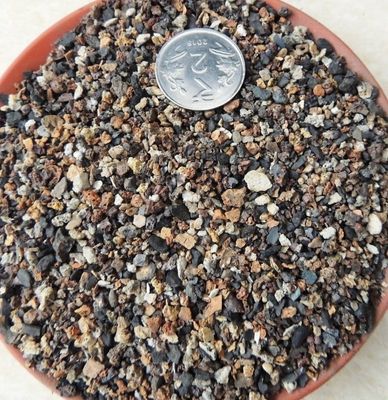
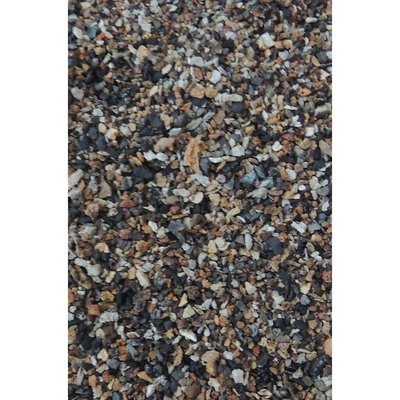
Cactus & Succulent Planting Mix FINE (aka Cactus Soil Mix or Succulent Soil Mix)
Cactus & Succulent Planting Mix FINE (aka Cactus Soil Mix or Succulent Soil Mix)
Fine-Grain Potting Mix for Cactus & Succulent Roots
SKU MNS001
5.0
(3)
₹39.85
New

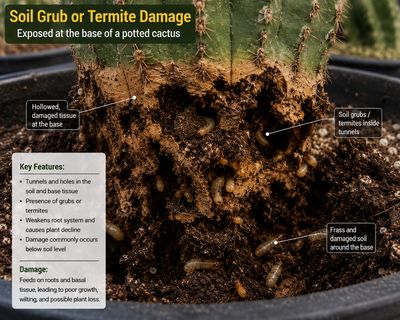
Monsoon Guardian Kit (5 in 1)
Monsoon Guardian Kit (5 in 1)
Complete 5-in-1 biological protection kit for cacti & succulents
SKU MNS024
₹850.00
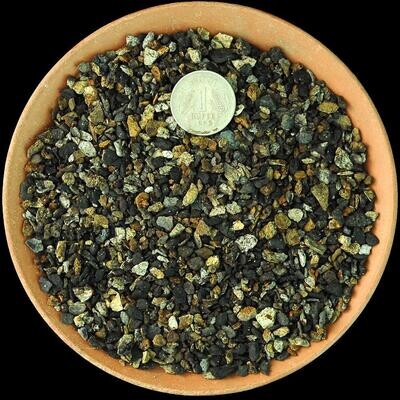
Cactus & Succulent Planting Mix COARSE (aka Cactus Soil Mix or Succulent Soil Mix)
Cactus & Succulent Planting Mix COARSE (aka Cactus Soil Mix or Succulent Soil Mix)
Washed, Free-Draining Mineral Mix for Cactus & Succulents
SKU MNS003
5.0
(1)
₹44.85
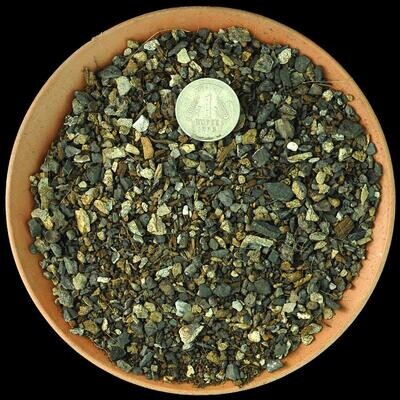
FORTIFIED Cactus & Succulent SOIL (COARSE)
FORTIFIED Cactus & Succulent SOIL (COARSE)
SKU MNS004
5.0
(12)
₹54.85
Display prices in:INR
