
Categories
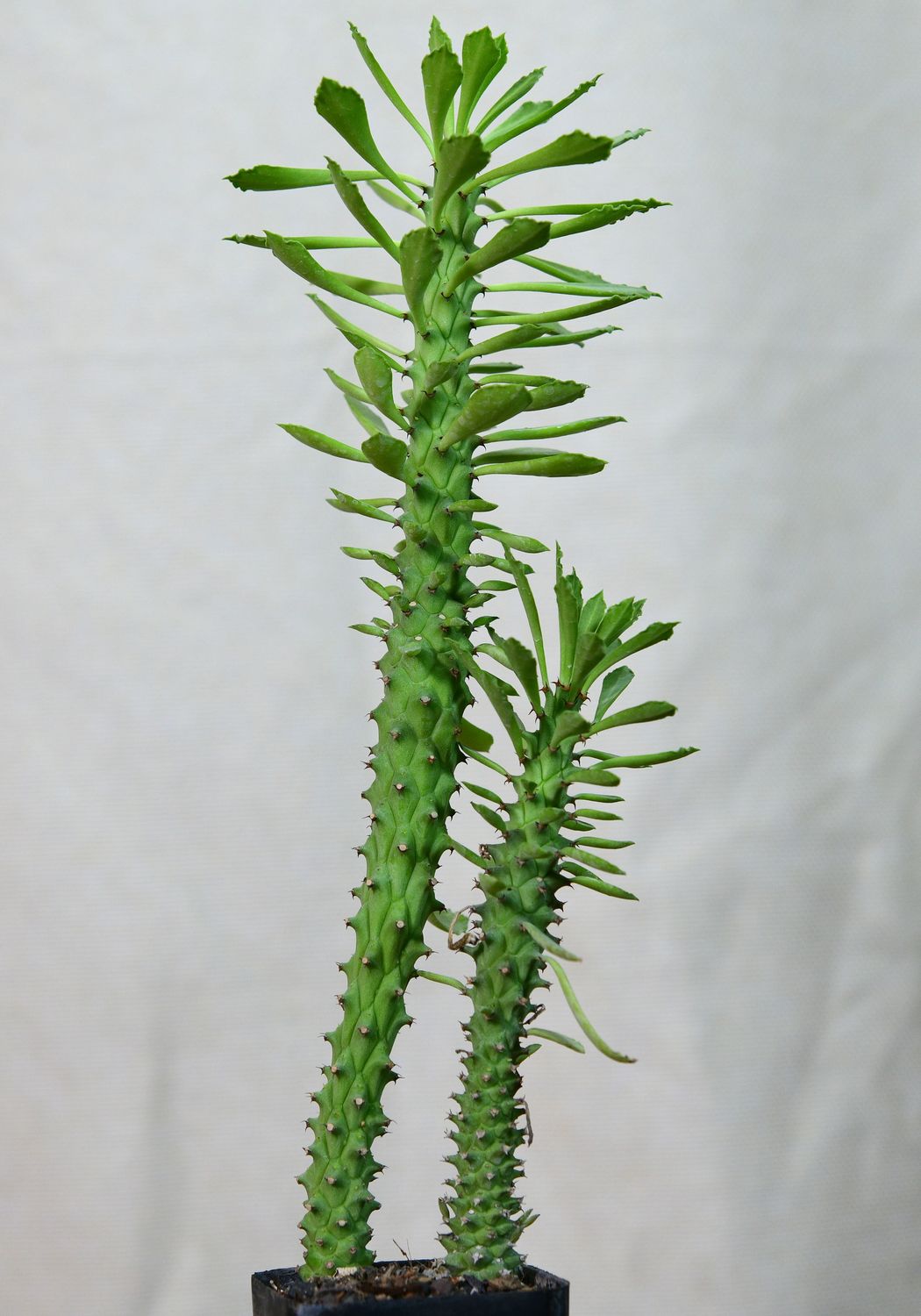
Monadenium guentheri
SKU EU155
₹250.00
In stock: 1 available
1
Save this product for later
Customer reviews
Reviews only from verified customers
No reviews yet. You can buy this product and be the first to leave a review.
Monadenium guentheri
Product Details
A sprawling, spine-studded East African succulent prized for its long, fleshy, sausage-like stems, each one lined with cone-shaped, prickle-tipped tubercles and dressed, in season, with small green leaves and clusters of tiny red-and-cream flowers. Low-growing, architectural, and easy to keep, this Kenyan rarity brings genuine botanical pedigree to a succulent collection.
Origin of Name
The genus name Monadenium comes from the Greek monos ("single") and aden ("gland") — a direct reference to the plant's unusual flower structure. Unlike most of its relatives in the spurge family, which typically carry a ring of several glands around the cyathium, plants in this genus bear just a single, often crescent- or horseshoe-shaped gland at the flower's margin. The genus was established in the early 20th century by British botanist Nicholas Edward Brown, a prolific succulent specialist at Kew.
The species epithet guentheri honors a "Günther" — a Latinized patronymic naming convention botanists used to credit a colleague, correspondent, or supporter behind a plant's discovery. It was formally described in 1909 by German botanist Ferdinand Albin Pax, a leading authority on the Euphorbiaceae. The type specimen was collected in the Teita (Taita) district of southeastern Kenya by German geographer Carl Uhlig, active in German East Africa 1900–1906; the original herbarium sheet was destroyed in WWII bombing of the Berlin-Dahlem herbarium, though isotypes survive at Kew and Kenya's National Museums. The precise identity of the "Günther" being honored isn't part of the widely available literature today — but the name has endured for over a century regardless.
Taxonomically, the plant has shifted genus more than once. Long sold as Monadenium guentheri, molecular studies revealed Monadenium nested within the much larger genus Euphorbia, and botanists — led by succulent specialist Peter Bruyns — folded it in, giving the plant its current accepted name, Euphorbia guentheri. The old name persists widely among growers, as many familiar succulent names do even after the taxonomy shifts underneath them.
Origin of Plant
Native to a single known area of southeastern Kenya — the Teita (Taita) Hills of Taita-Taveta County — where it grows among grasses in open savanna scrubland at roughly 900–1,000 m (2,950–3,280 ft) elevation. It's known only from its original type locality, making it a narrow regional endemic within the biologically rich, isolated Eastern Arc hill ranges of East Africa.
Description
A low, sprawling to semi-erect succulent subshrub sending up multiple cylindrical, fleshy green stems from a woody base — up to about 90 cm (3 ft) long but only ~1 cm thick, growing upright, creeping, or pendent. Each stem is densely set with cone-shaped tubercles tipped with one to three small prickles, giving a texturally rich, faintly armored look. Small, obovate, deciduous leaves emerge from the tubercles and drop during dry, dormant spells, leaving the sculptural stems as the main ornamental feature. Spring flower clusters are tiny (~5 mm), with bright red nectar glands against greenish-white, pink-to-purple-flushed bracts, followed by small three-lobed seed capsules.
Conservation Status
Not formally assessed on the IUCN Red List, but known only from a single restricted locality — worth treating as a plant of conservation interest, given ongoing habitat pressure in the Teita Hills biodiversity hotspot. International trade in wild-collected succulent Euphorbiaceae is regulated under CITES Appendix II; nursery-propagated stock is always the responsible choice.
Care
Light: Plenty of bright light — a sunny spot or the brightest indoor window — keeps growth compact and encourages flowering.
Watering: Doesn't like prolonged drought — water regularly through the growing season (roughly weekly in summer), letting the top few inches dry between waterings; cut back in winter.
Soil: Well-draining succulent/cactus mix; tolerant of soil pH but not waterlogging.
Temperature: Best in warm conditions; can handle brief dips to around -9°C to 4°C (15–40°F) once established, but happiest well above freezing.
General tips: Propagate from stem cuttings, callused a few days before potting — the milky sap can irritate skin and eyes, so handle with gloves. Feed lightly monthly in the growing season if potted. Seed is scarce and slow to germinate, so cuttings are the practical route.
An Interesting Note
The milky latex sap running through this plant is shared across the entire spurge family, and it's not just chemistry for its own sake — in the wild, that sticky, irritant sap likely deters browsing animals from an otherwise soft, moisture-rich stem with little other defense in open savanna scrubland. It's the same chemistry running through the genus's far more famous relatives, from garden poinsettias to the giant candelabra euphorbias of the African plains — a reminder that this modest, sausage-stemmed succulent from one Kenyan hillside belongs to one of the largest, most chemically inventive plant families on Earth.
You May Also Like

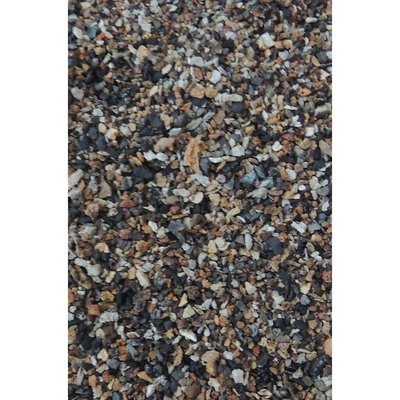
Cactus & Succulent Planting Mix FINE (aka Cactus Soil Mix or Succulent Soil Mix)
Cactus & Succulent Planting Mix FINE (aka Cactus Soil Mix or Succulent Soil Mix)
Fine-Grain Potting Mix for Cactus & Succulent Roots
SKU MNS001
5.0
(3)
₹39.85

FORTIFIED Cactus & Succulent SOIL (COARSE)
FORTIFIED Cactus & Succulent SOIL (COARSE)
SKU MNS004
5.0
(11)
₹54.85
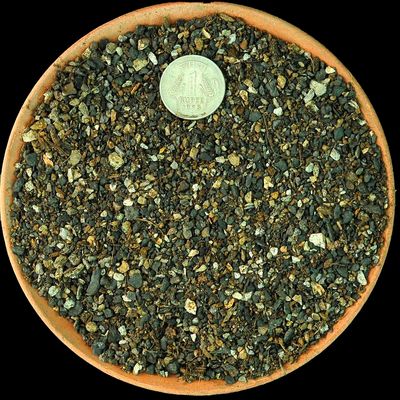
FORTIFIED Cactus & Succulent SOIL (FINE)
FORTIFIED Cactus & Succulent SOIL (FINE)
SKU MNS002
5.0
(4)
₹49.85
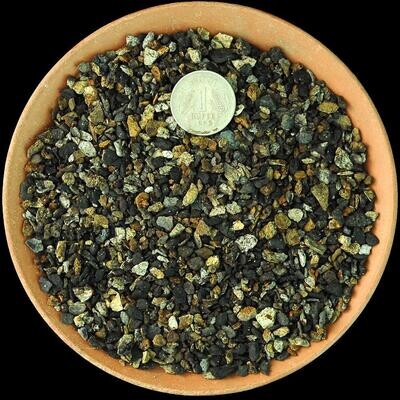
Cactus & Succulent Planting Mix COARSE (aka Cactus Soil Mix or Succulent Soil Mix)
Cactus & Succulent Planting Mix COARSE (aka Cactus Soil Mix or Succulent Soil Mix)
Washed, Free-Draining Mineral Mix for Cactus & Succulents
SKU MNS003
5.0
(1)
₹44.85
Display prices in:INR
