
Categories
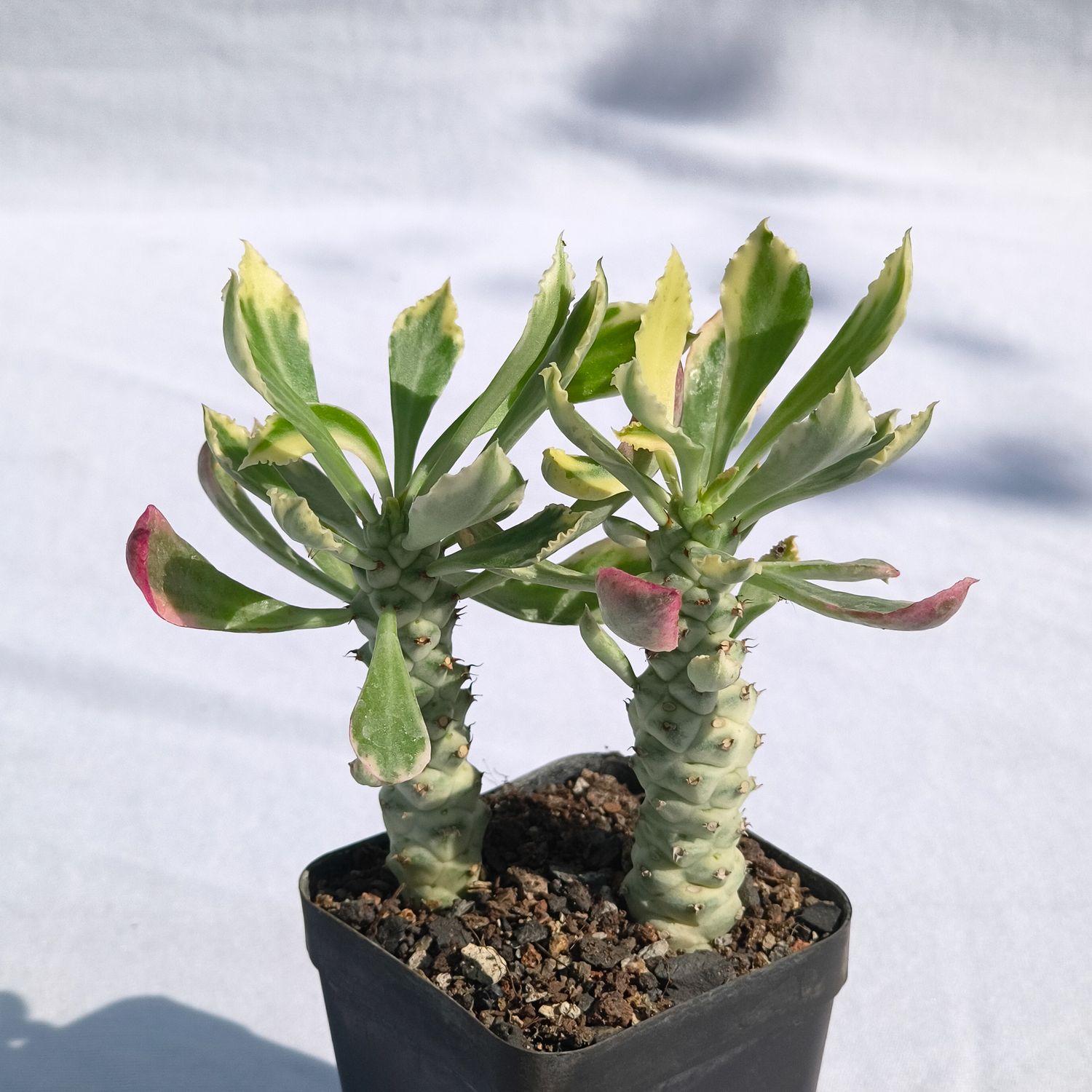
Mondenium stapeliodes variegated
SKU EU154b
₹170.00
Sold out
Sold out
Save this product for later
Customer reviews
Reviews only from verified customers
No reviews yet. You can buy this product and be the first to leave a review.
Mondenium stapeliodes variegated
Product Details
Rare Marble Marvel: Monadenium stapelioides f. variegata
An architectural masterpiece for the connoisseur, featuring striking creamy-white variegation that makes each specimen a unique living sculpture.
- Origin & History of Name: The genus name Monadenium is derived from the Greek monos (single) and aden (gland), referring to the singular involucral gland characteristic of the genus.
The specific epithet stapelioides acknowledges its physical resemblance to the genus Stapelia. While many species have since been reclassified into Euphorbia, the name Monadenium remains widely used in horticulture to distinguish this specific succulent group. - Morphology: This succulent features cylindrical, fleshy stems divided into distinct hexagonal tubercles.
Its epidermis displays a "variegated" mutation, where a lack of chlorophyll creates patches of cream or pale yellow against the deep green. The leaves are small, deciduous, and often tinged with pink under high light. Unlike many succulents, its costae (ribs) are replaced by these geometric tubercles, giving it a tactile, "scaled" appearance. - Habitat & Origin: The base species is a wild succulent native to East Africa, particularly Kenya and Tanzania. However, the variegated form is a cultivar selected and stabilized in cultivation for its ornamental appeal. To ensure sustainability, ensure your specimen is nursery-propagated via cuttings or offsets rather than wild-collected.
- Cultivation Profile:
- Substrate: A strictly mineral-based mix (60% grit/pumice, 40% coarse sand or perlite) to prevent root rot in humid Indian climates.
- Light: Bright, indirect sunlight.
In India, provide morning sun but shield from harsh afternoon peaks (12 PM – 4 PM) to prevent "sunscorch" on the sensitive variegated tissue. - Water/Dormancy: Water deeply when the substrate is bone-dry. During the monsoon and winter dormancy, reduce watering to once a month or less to accommodate the plant's slower metabolic rate.
- Scientific/Historical Anecdote: The genus was first described by German botanist Pax in 1894. A fascinating biological trait of this plant is its "monoclinous" cyathium—a specialized pseudanthium (false flower) where the nectar-producing gland forms a nearly closed cup, an evolutionary adaptation to specific pollinators in the dry African rift valleys.
You May Also Like
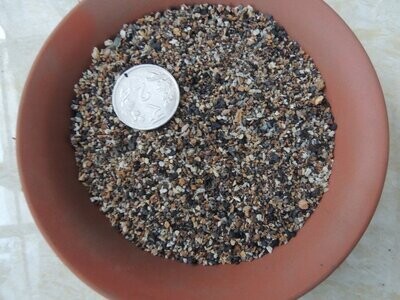
Cactus Seed Planting Mix
Cactus Seed Planting Mix
Sterile, Fine-Grain Media for Cactus & Succulent Seeds
SKU MNS005
₹74.85

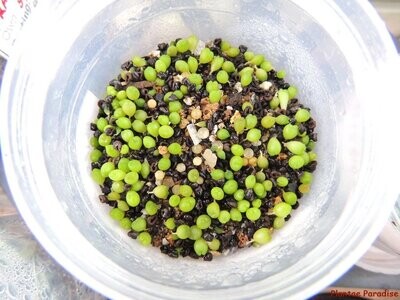
FORTIFIED Cactus & Succulent SOIL (COARSE)
FORTIFIED Cactus & Succulent SOIL (COARSE)
SKU MNS004
5.0
(12)
₹54.85
New


Monsoon Guardian Kit (5 in 1)
Monsoon Guardian Kit (5 in 1)
Complete 5-in-1 biological protection kit for cacti & succulents
SKU MNS024
₹850.00

FORTIFIED Cactus & Succulent SOIL (FINE)
FORTIFIED Cactus & Succulent SOIL (FINE)
SKU MNS002
5.0
(4)
₹49.85
Display prices in:INR
