
Categories
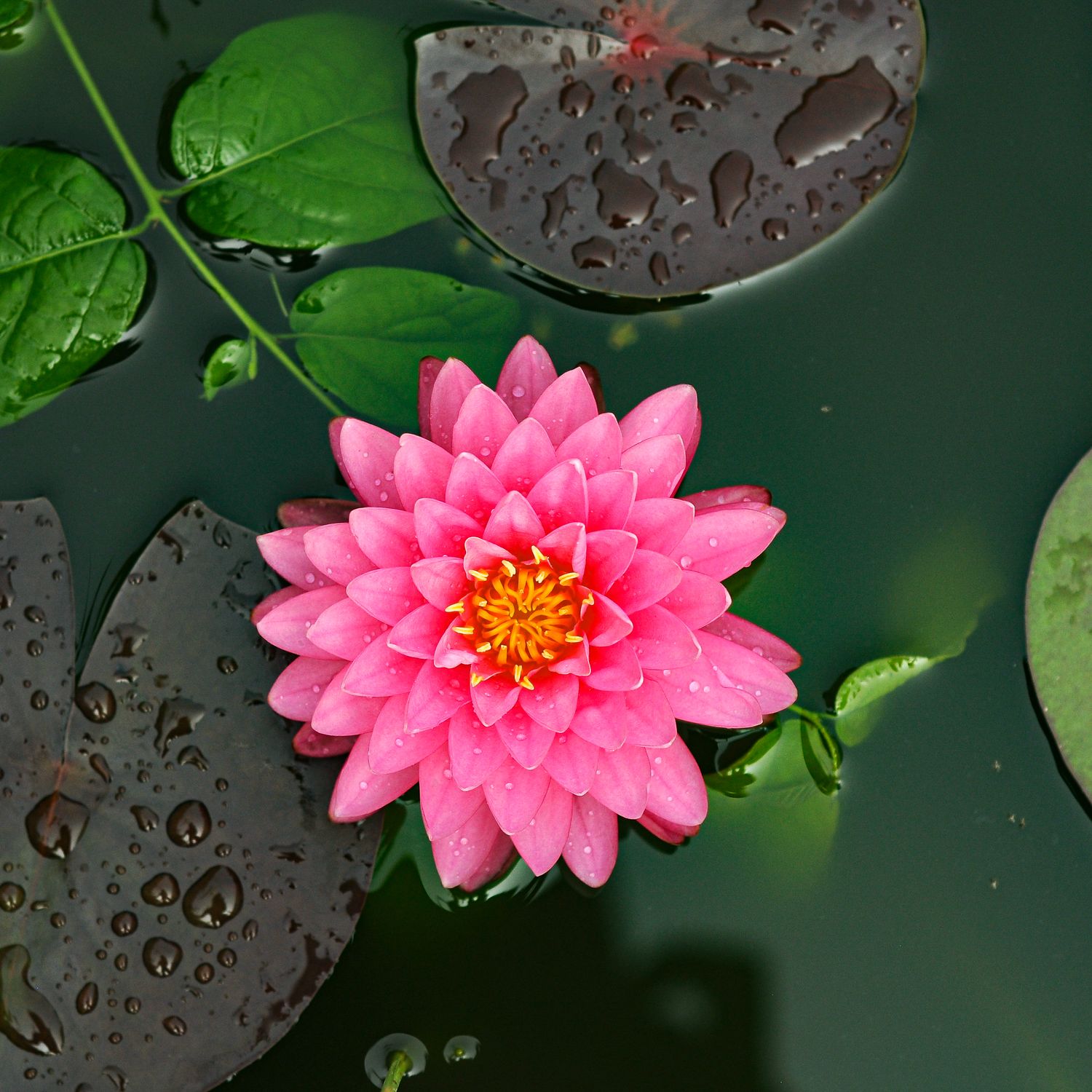
Nymphaea (Water Lily) Mallikan
5.0
1 review
Reviews from verified customers who have purchased products at this store.
SKU WL052
₹800.00
In stock: 4 available
1
Save this product for later
Customer reviews
Reviews only from verified customers
Reviews are only accepted from verified customers who have signed in and purchased the products. This ensures that each review is based on genuine customer experiences. All reviews are checked before publication to prevent spam.
Sandeep P.
Uppinangady,
India
Wed, February 18, 2026
This customer didn’t leave a review but rated the product.
Nymphaea (Water Lily) Mallikan
Product Details
Plant supplied as - 2 inch or larger Rhizome with a growing point. Roots and leaves will be cut down to avoid rot in shipping.
Nymphaea 'Mallika' (Water Lily)
A hardy water lily built for showing off — dozens of narrow, pointed petals spiral tightly into a full, rose-like rosette of deep pink fading to a soft blush at the centre, cupped around a boss of golden-orange stamens. Each bloom rides just above the water on a thick, stiff stem, framed by rounded, leathery pads that emerge a glossy maroon-purple before greening with age, beading rainwater like tiny jewels. A classic pond centrepiece that flowers through the warm months with very little fuss.
Origin of Name
The genus name Nymphaea traces back to the Greek nymphaia and, further still, to nymphē — "nymph" or "bride" — the water-dwelling maiden spirits of Greek mythology. Ancient writers such as Theophrastus used the word for these floating river and pond flowers long before botany was a formal science, and the association stuck: a flower graceful and pale enough to be mistaken for a nymph rising from the water. Carl Linnaeus formalised Nymphaea as a genus in his foundational 1753 work Species Plantarum, cementing the mythological name into modern botanical Latin.
The cultivar name 'Mallika' comes from Sanskrit mallikā, meaning "jasmine" (specifically Jasminum sambac), and by extension a name long given to South Asian girls for its associations with fragrance, grace, and purity. It's also, fittingly, a name with its own flower legend: in Buddhist scripture, a garland-maker's daughter in the ancient city of Savatthi was named Mallika by her father for her jasmine-like loveliness — she would go on to become the chief queen of King Pasenadi of Kosala (more on her below). Water lily breeders and nurseries across South and Southeast Asia have long borrowed such evocative floral and mythological names for their showiest hybrids, and 'Mallika' has become one of the more widely used trade names for a full, free-flowering hardy water lily — sold in white-flowered forms as well as the deep rose-pink form pictured here, since it functions more as a popular trade name than a single fixed, internationally registered clone.
Origin of Plant
Nymphaea is a genuinely global genus, with roughly 65 recognised species growing wild in still and slow-moving fresh water across the tropics and temperate zones of Asia, Africa, the Americas, and Europe — from Egyptian canals to English ponds to Amazonian oxbow lakes. Garden hybrids like 'Mallika,' however, are not wild collections but products of over a century of deliberate breeding. The trade got its real start in the 1870s–1900s with French hybridiser Joseph Bory Latour-Marliac, who secretly crossed hardy American and European species to produce the first colourful, cold-tolerant hybrid water lilies — the same lilies that would later captivate Claude Monet at Giverny. That hybridising tradition was carried forward through the twentieth century by breeders in the United States, and more recently by commercial aquatic nurseries across Thailand and India, where many of today's compact, heavy-blooming, tropically-adapted hardy hybrids — 'Mallika' among them — have been developed and popularised for the regional pond and water-garden trade.
Description
This is a fully double, rosette-form bloom, packed with dozens of narrow, slightly pointed petals that deepen to rich rose-pink at the outer edges and soften to a pale pink-white blush toward the centre, where a dense cluster of golden-orange stamens sits like a small sunburst. Flowers open by day, floating on or just above the water's surface, and close again toward evening, with each individual bloom typically lasting several days across a long summer flowering season. The rounded, notched lily pads are equally handsome in their own right — new pads emerge a deep maroon-purple with a slightly puckered, almost leathery texture, ageing to glossy mid-green, and their waxy surface famously beads water into perfect droplets. As a hardy (rather than tropical) water lily, it dies back to a thick underwater rhizome in winter and resprouts vigorously each growing season, spreading steadily to cover a pond surface when happy.
Conservation Status
As a cultivated garden hybrid, 'Mallika' has no individual conservation listing — it exists only in cultivation and is, if anything, an extremely common and secure plant in the ornamental trade. The wider genus tells a more mixed story, though: most of the roughly 65 wild Nymphaea species are widespread and of no immediate concern, but a handful of geographically restricted species are genuinely imperilled. The most dramatic case is Nymphaea thermarum, a pygmy Rwandan water lily first described in 1988 from a single hot-spring seep barely a few metres across — its only wild habitat dried up around 2008 when local farmers diverted the spring, making it extinct in the wild almost overnight. It survives today only through seed saved and painstakingly propagated by Kew Gardens horticulturist Carlos Magdalena (a rescued plant was even stolen from Kew's collection in 2014), with a small wild population rediscovered only in 2023. It's a useful reminder that even in a genus as globally successful as water lilies, individual species can be one drained pond away from disappearing entirely.
Care
Light: Full sun is essential — aim for at least 6 hours of direct sunlight a day for the fullest flowering; too much shade will produce lots of leaves but few blooms.
Water & Planting Depth: A true aquatic plant — grow it in a planting basket set on the bottom of a pond or large water container, with the crown of the rhizome positioned so the growing point sits roughly 30–60 cm (12–24 in) below the water surface. Still or gently moving water suits it best; avoid strong fountains or filter currents directly over the plant.
Soil: Use heavy aquatic planting soil or garden loam (never a light potting mix, which will simply float away) in a mesh planting basket, topped with a layer of pea gravel to keep soil in place and deter fish from disturbing it.
Temperature: Thrives in warm water and full sun through the growing season; as a hardy type, the rhizome can survive cold winters as long as it stays below the ice line in a pond deep enough not to freeze solid, and in mild, frost-free climates it can be left in place and grown year-round.
Feeding & Maintenance: Feed monthly through the growing season with slow-release aquatic fertiliser tablets pushed into the soil near the roots. Deadhead spent blooms and trim yellowing leaves regularly to keep the plant tidy and encourage continuous new flowers. Divide congested rhizomes every few years to maintain vigorous flowering.
An Interesting Note
The name 'Mallika' carries its own small legend. In Buddhist scripture, a poor garland-maker's daughter in the city of Savatthi was named Mallika — "the Jasmine" — for her fair, gentle beauty. One day, as a teenager, she was in a public garden when she encountered a wandering monk with a strikingly serene presence and offered him a portion of her lunch of puffed rice; the monk, unknown to her at the time, was the Buddha himself. That same afternoon, a battle-weary king passing through the garden was struck by her kindness and joyful spirit and, after later tracking her down, made her his chief queen. Ever after, the people of Kosala would point her out with the words, "That is Queen Mallika, who gave alms to the Buddha" — turning a garland-maker's daughter, and her flower-derived name, into one of early Buddhism's most enduring stories of humble kindness rewarded.
You May Also Like


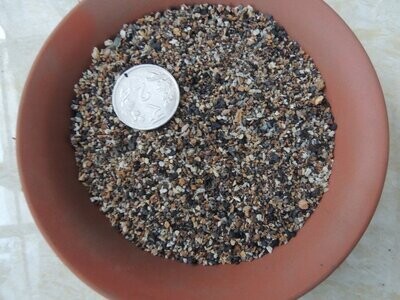
Cactus & Succulent Planting Mix FINE (aka Cactus Soil Mix or Succulent Soil Mix)
Cactus & Succulent Planting Mix FINE (aka Cactus Soil Mix or Succulent Soil Mix)
Fine-Grain Potting Mix for Cactus & Succulent Roots
SKU MNS001
5.0
(3)
₹39.85
Cactus Seed Planting Mix
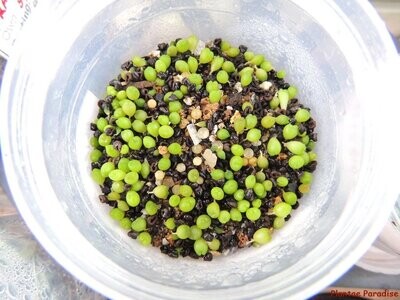
Cactus Seed Planting Mix
Sterile, Fine-Grain Media for Cactus & Succulent Seeds
SKU MNS005
₹74.85

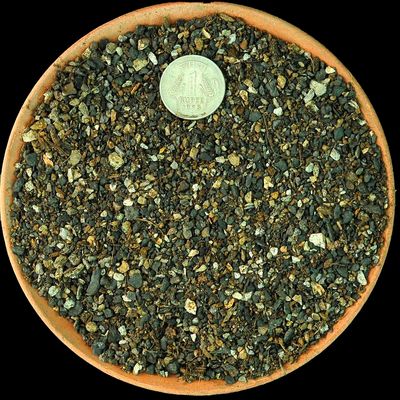
Cactus & Succulent Planting Mix COARSE (aka Cactus Soil Mix or Succulent Soil Mix)
Cactus & Succulent Planting Mix COARSE (aka Cactus Soil Mix or Succulent Soil Mix)
Washed, Free-Draining Mineral Mix for Cactus & Succulents
SKU MNS003
5.0
(1)
₹44.85
FORTIFIED Cactus & Succulent SOIL (FINE)
FORTIFIED Cactus & Succulent SOIL (FINE)
SKU MNS002
5.0
(4)
₹49.85
Display prices in:INR
