
Categories
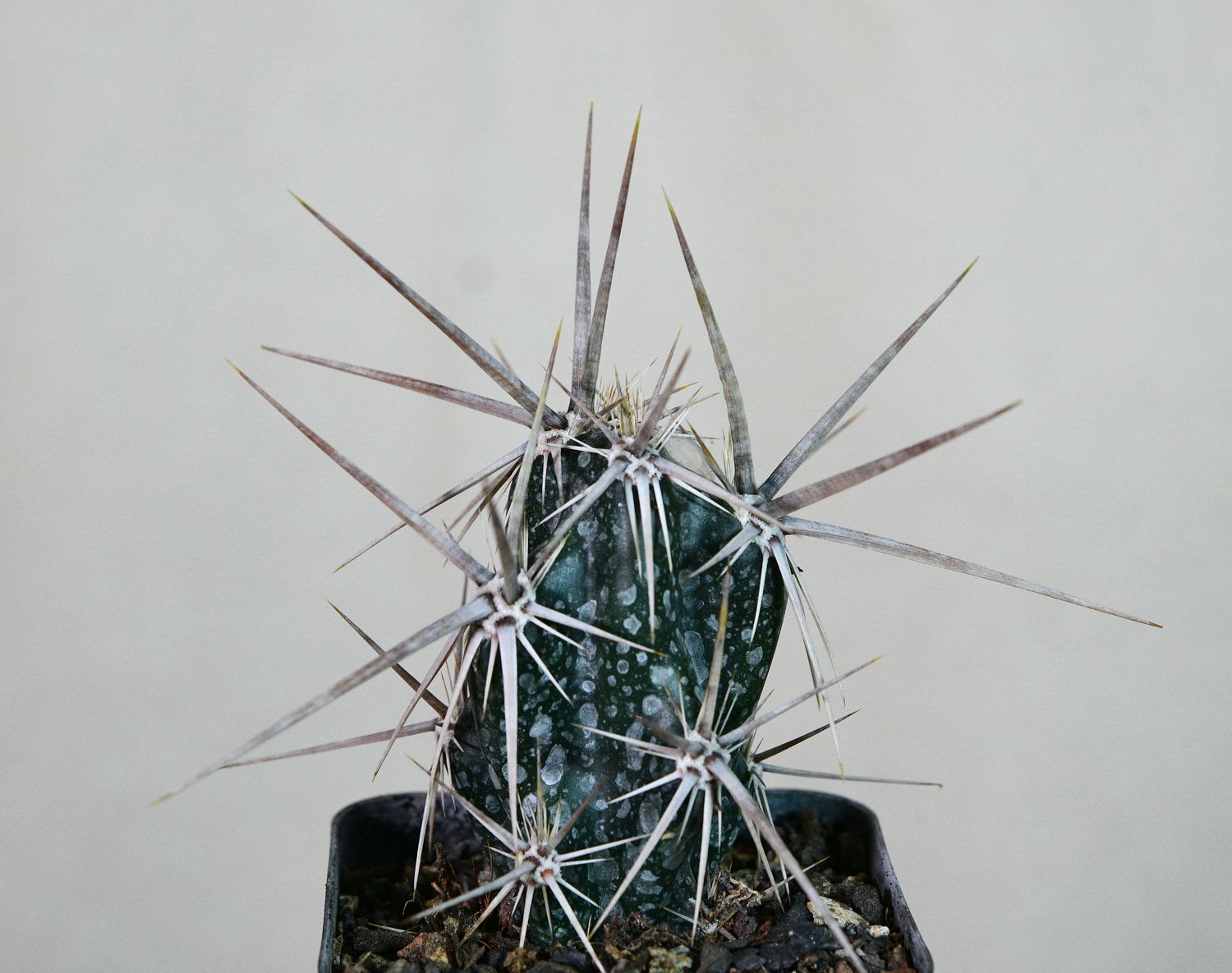
Opuntia invicta (Grusonia invicta)
SKU OP004
₹450.00
In stock: 1 available
1
Save this product for later
Customer reviews
Reviews only from verified customers
No reviews yet. You can buy this product and be the first to leave a review.
Opuntia invicta (Grusonia invicta)
Product Details
Origin of Name
Opuntia invicta, also known as Grusonia invicta, and colloquially termed Club Cholla or Devil Cholla, derives its names from distinct characteristics. The genus 'Opuntia' is a reference to the ancient Greek city of Opus, where a similar plant was believed to grow. 'Grusonia' is named after the Gruson family, known for their contributions to horticulture. 'Invicta', meaning unconquered or invincible in Latin, reflects the plant's hardy nature. The common names 'Club Cholla' and 'Devil Cholla' describe its formidable appearance and challenging handling due to its spines.
Technical Description of Plant
Club Cholla is a distinctive cactus with a compact, branching growth habit. It typically reaches 1-2 feet in height. The stems are segmented, cylindrical to slightly club-shaped, and densely covered with spines. These spines are usually white or light yellow, providing a stark contrast against the dark green stems. The plant blooms with small, yellow flowers, followed by dry, spiny fruits. The overall appearance is robust and striking, with a formidable array of spines.
Origin of Plant
Native to the southwestern United States and northern Mexico, Club Cholla is adapted to arid desert environments. It thrives in sandy or gravelly soils, often found in open areas or desert grasslands. Its natural habitat is characterized by extreme temperatures and low rainfall, influencing its growth patterns and physical adaptations.
Conservation Status
Opuntia invicta is not currently listed as an endangered species. However, like many desert plants, it faces threats from habitat loss and climate change. Sustainable cultivation and conservation efforts are essential to protect this species and its natural habitat.
Care Instructions
Club Cholla is a hardy plant, suitable for cactus enthusiasts of all levels. It prefers full sun and well-draining soil. Water moderately during the growing season, allowing the soil to dry completely between watering. Reduce watering in winter to mimic its natural dormant period. The plant is cold-resistant but should be protected from frost. Fertilize lightly with a cactus-specific fertilizer during the growing season to support growth and flowering.
You May Also Like
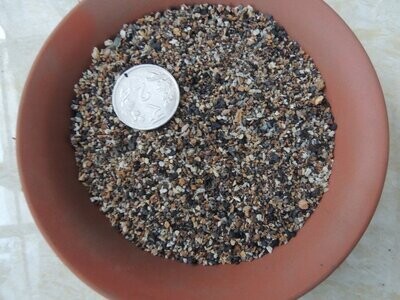
Cactus Seed Planting Mix
Cactus Seed Planting Mix
Sterile, Fine-Grain Media for Cactus & Succulent Seeds
SKU MNS005
₹74.85
New


Monsoon Guardian Kit (5 in 1)
Monsoon Guardian Kit (5 in 1)
Complete 5-in-1 biological protection kit for cacti & succulents
SKU MNS024
₹850.00

Cactus & Succulent Planting Mix COARSE (aka Cactus Soil Mix or Succulent Soil Mix)
Cactus & Succulent Planting Mix COARSE (aka Cactus Soil Mix or Succulent Soil Mix)
Washed, Free-Draining Mineral Mix for Cactus & Succulents
SKU MNS003
5.0
(1)
₹44.85

FORTIFIED Cactus & Succulent SOIL (FINE)
FORTIFIED Cactus & Succulent SOIL (FINE)
SKU MNS002
5.0
(4)
₹49.85
Display prices in:INR
