
Categories
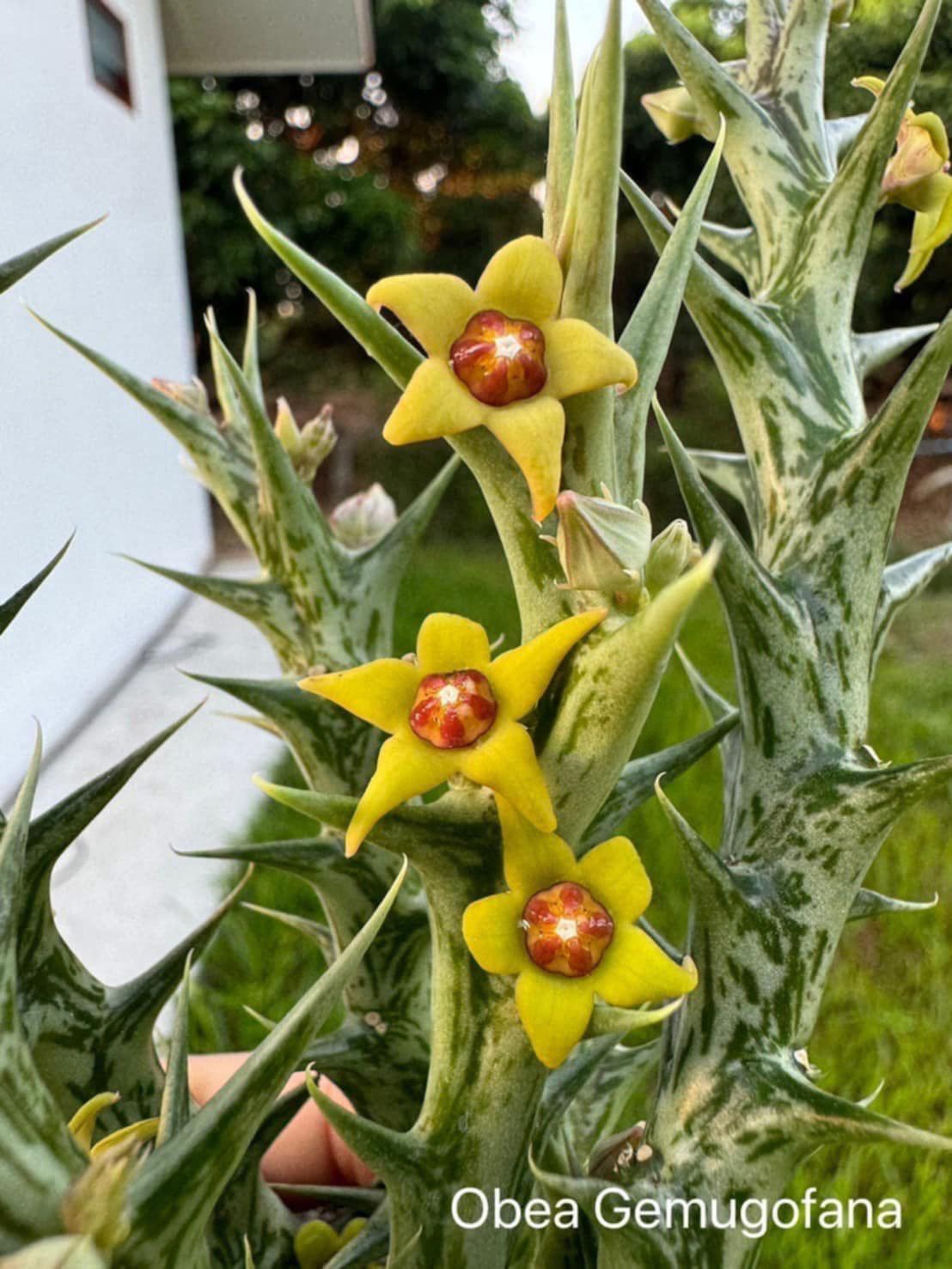
Orbea gemugofana
SKU ASC088
₹200.00
Sold out
Sold out
Save this product for later
Customer reviews
Reviews only from verified customers
No reviews yet. You can buy this product and be the first to leave a review.
Orbea gemugofana
Product Details
Geometric Geometry: Orbea gemugofana
A rare Ethiopian treasure, this stapeliad is prized for its intricate, star-shaped blooms and rugged, architectural stems.
- Origin & History of Name: The genus name Orbea is derived from the Latin orbis, referring to the prominent raised central ring—or annulus—found in the flowers of many species.
The specific epithet gemugofana honors the Gamo Gofa province (now part of the Southern Nations, Nationalities, and Peoples' Region) in Ethiopia, where the type specimen was first documented by botanists such as Michael Gilbert in the late 20th century. - Morphology: This succulent features decumbent, four-angled stems with a matte green epidermis that often flushes purple under high light. The costae (ribs) are lined with prominent, spreading tubercles ending in soft teeth. Its defining feature is the inflorescence: a star-shaped corolla characterized by a rugose (wrinkled) texture and a distinct annulus at the center, which serves to guide pollinators toward the reproductive organs.
- Habitat & Origin: Orbea gemugofana is a wild species endemic to the rocky outcrops and acacia scrublands of southern Ethiopia. It grows in well-drained volcanic soils at moderate elevations. All commercially available specimens are nursery-propagated from established mother plants, ensuring the protection of vulnerable wild populations in the Horn of Africa.
- Cultivation Profile:
- Substrate: Requires a highly porous, mineral-based mix (coarse sand, grit, and lava rock). Avoid peat-heavy soils which retain excess moisture in the Indian monsoon.
- Light: Thrives in bright, indirect light or morning sun. In the Indian subcontinent, protection from harsh 12:00 PM – 4:00 PM sunlight is vital to prevent epidermal scorching.
- Water/Dormancy: Follow an active watering schedule during the summer and monsoon, ensuring the medium dries completely between cycles. Reduce water significantly during the winter cool-dry phase to prevent fungal pathogens at the root neck.
- Scientific/Historical Anecdote: Like many members of the Stapeliad group, Orbea gemugofana utilizes "myiophily"—pollination by flies. To achieve this, the flowers emit a faint scent of decaying organic matter and often feature dark, mottled colorations that mimic protein sources, tricking carrion flies into transferring pollen as they search for a place to lay eggs.
You May Also Like

Cactus & Succulent Planting Mix COARSE (aka Cactus Soil Mix or Succulent Soil Mix)
Cactus & Succulent Planting Mix COARSE (aka Cactus Soil Mix or Succulent Soil Mix)
Washed, Free-Draining Mineral Mix for Cactus & Succulents
SKU MNS003
5.0
(1)
₹44.85

FORTIFIED Cactus & Succulent SOIL (COARSE)
FORTIFIED Cactus & Succulent SOIL (COARSE)
SKU MNS004
5.0
(12)
₹54.85

FORTIFIED Cactus & Succulent SOIL (FINE)
FORTIFIED Cactus & Succulent SOIL (FINE)
SKU MNS002
5.0
(4)
₹49.85
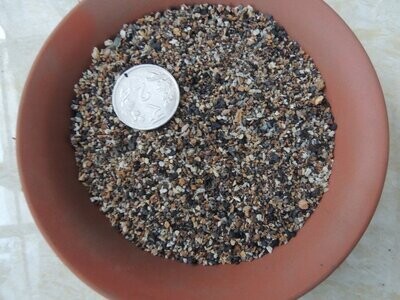
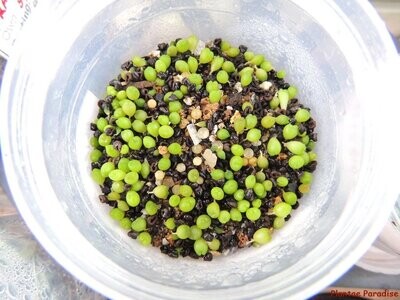
Cactus Seed Planting Mix
Cactus Seed Planting Mix
Sterile, Fine-Grain Media for Cactus & Succulent Seeds
SKU MNS005
₹74.85
Display prices in:INR
