
Categories
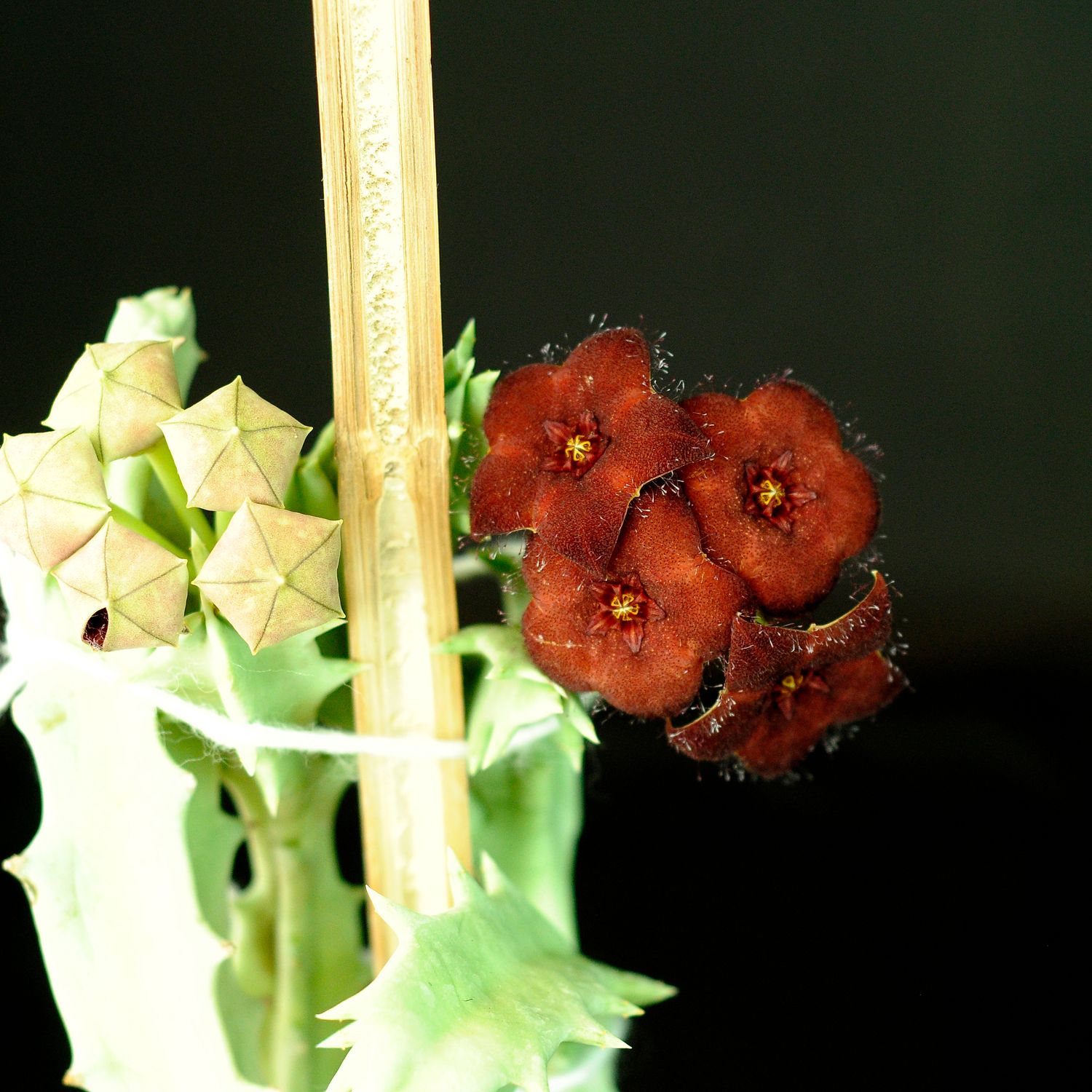
Orbea melanantha
SKU ASC026
₹350.00
Sold out
Sold out
Save this product for later
Customer reviews
Reviews only from verified customers
No reviews yet. You can buy this product and be the first to leave a review.
Orbea melanantha
Product Details
Obsidian Blooms: Orbea melanantha
Distinguished by some of the darkest, most velvety flowers in the succulent world, this species is a premier choice for collectors of carrion flowers.
- Origin & History of Name: The genus name Orbea is derived from the Latin orbis, referring to the prominent raised central ring, or annulus, found in the flowers of many species.
The specific epithet melanantha is a botanical compound of the Greek melas (black) and anthos (flower), directly describing the deep purple-to-near-black hue of its corolla. The species was formally moved into the Orbea genus as taxonomic understanding of the Stapeliads evolved in the late 20th century. - Morphology: Orbea melanantha features robust, four-angled stems with a matte green epidermis that often develops purple mottling under high light.
The stems are prominently toothed with soft, tapering tubercles. Its most striking feature is the inflorescence: a large, five-lobed star-shaped flower with a rugose (wrinkled) texture and a distinct, thickened annulus at the center. Unlike many succulents, it lacks true leaves, utilizing its succulent stems for photosynthesis. - Habitat & Origin: This is a wild species native to the northern provinces of South Africa, as well as parts of Botswana and Zimbabwe. It typically grows in well-drained stony ground or tucked under the shade of scrub bushes.
Commercial specimens are produced through greenhouse-cultivated seeds or cuttings, ensuring the protection of wild populations and adhering to sustainable trade practices. - Cultivation Profile:
- Substrate: Requires a highly porous, mineral-heavy mix.
Use a blend of 60% grit (coarse sand, perlite, or cinder) and 40% organic compost. Avoid heavy clay soils common in parts of India, as they retain lethal levels of moisture. - Light: Thrives in bright, indirect light. In the Indian subcontinent, protect from harsh midday sun to prevent epidermal scorching; a 50% shade net is ideal during peak summer months.
- Water/Dormancy: Follow a strict seasonal watering schedule. Water deeply when stems appear slightly shrunken during the growing season (summer/monsoon). During the winter cool-down, the plant enters a semi-dormant state; reduce watering to once a month to prevent fungal pathogens and root rot.
- Substrate: Requires a highly porous, mineral-heavy mix.
- Scientific/Historical Anecdote: Orbea melanantha belongs to the "carrion flower" group, which has evolved a sophisticated pollination strategy called sapromyophily. The dark color and pungent aroma of the flower mimic decaying organic matter to attract blowflies.
Remarkably, the flies are so thoroughly deceived that they often lay eggs on the flower's surface, inadvertently acting as pollinators while searching for a nonexistent food source for their larvae.
You May Also Like
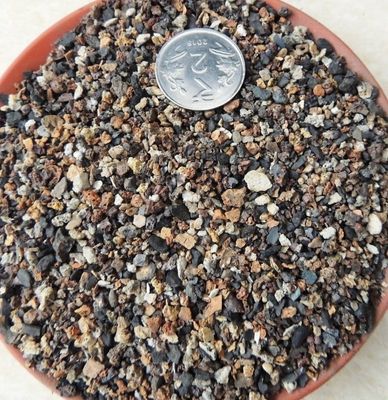
Cactus & Succulent Planting Mix FINE (aka Cactus Soil Mix or Succulent Soil Mix)
Cactus & Succulent Planting Mix FINE (aka Cactus Soil Mix or Succulent Soil Mix)
Fine-Grain Potting Mix for Cactus & Succulent Roots
SKU MNS001
5.0
(3)
₹39.85

Cactus & Succulent Planting Mix COARSE (aka Cactus Soil Mix or Succulent Soil Mix)
Cactus & Succulent Planting Mix COARSE (aka Cactus Soil Mix or Succulent Soil Mix)
Washed, Free-Draining Mineral Mix for Cactus & Succulents
SKU MNS003
5.0
(1)
₹44.85
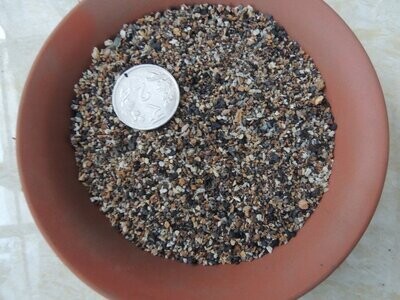
Cactus Seed Planting Mix
Cactus Seed Planting Mix
Sterile, Fine-Grain Media for Cactus & Succulent Seeds
SKU MNS005
₹74.85

FORTIFIED Cactus & Succulent SOIL (FINE)
FORTIFIED Cactus & Succulent SOIL (FINE)
SKU MNS002
5.0
(4)
₹49.85
Display prices in:INR
