
Categories

Orbea semota orientalis
SKU ASC054
₹250.00
Price Drop
List Price ₹350.00 Save 29%
In stock: 1 available
1
Save this product for later
Customer reviews
Reviews only from verified customers
No reviews yet. You can buy this product and be the first to leave a review.
Orbea semota orientalis
Product Details
A compact, sharply toothed stapeliad from the drylands east of Kilimanjaro — smaller and slightly more restrained in every dimension than the typical form of the species, but built on the same formula: mottled, four-angled stems giving rise to dark maroon-brown, faintly carrion-scented star flowers with a pale central ring.
Origin of Name
The genus name Orbea comes from the Latin orbis, "ring" or "disc," referring to the raised annulus at the centre of every flower in the genus. English botanist Adrian Hardy Haworth coined the name in 1812, though for over a century afterward the plant was folded into the far larger genus Stapelia; it wasn't until 1975 that Rhodesian botanist Leslie Charles Leach formally reinstated Orbea, moving Stapelia semota — as this species had been known since its original description by English botanist Nicholas Edward Brown — into its current combination, Orbea semota.
The subspecies name orientalis is straightforward Latin for "eastern," describing this population's position relative to the rest of the species' range. It was formally described in 2002 by South African botanist Peter Bruyns in his Systematic Botany Monographs revision of the stapeliads, from material collected near Bura in Kenya's Taita district. Some authors have since argued it deserves full species rank as Orbea orientalis, but it remains most widely treated as a subspecies of O. semota.
Origin of Plant
Orbea semota subsp. orientalis is native to Kenya and Tanzania, including Tanzania's Kilimanjaro Province, growing in dry, rocky habitat — the type specimen was collected near Bura at around 1,200 metres elevation. Like the species generally, it favours rocky outcrops, its stems interlocking with the base of sparse shrubs for support and partial shade, while the broader species O. semota also extends west into Rwanda, a range this eastern subspecies doesn't reach.
Description
A small, clump-forming succulent with four-angled, grey-green stems to about 10 cm long, lined with conical tubercles along the ridges — slightly less boldly toothed than the typical form of the species. The star-shaped flowers are notably smaller than those of subsp. semota: at most 2.5 cm across compared to at least 3.5 cm in the type, with shorter corolla lobes (7–8 mm versus 12 mm or more) and a smaller annulus, no more than 8 mm across. In colour they run dark maroon to solid brown, generally without the yellow patterning sometimes seen in the type form, centred on that same small, pale annulus. The flowers carry a faint carrion-like scent, milder than in subsp. semota but built from the same chemistry, meant to draw in flies rather than more conventional pollinators.
Conservation Status
No dedicated global IUCN assessment appears to exist for this subspecies specifically. The broader species Orbea semota is a widespread, frequently encountered plant across its East African range rather than one under known acute pressure, and most Orbea species assessed on regional Red Data lists fall into the Least Concern category. It's a well-established, easily propagated plant in cultivation, which takes pressure off any need for wild collection.
Care
- Light: Bright light with some protection from the harshest midday sun — morning or filtered afternoon sun suits it well; too much shade produces soft, stretched, poorly flowering growth.
- Watering: Water moderately through the growing season, letting the compost dry out between waterings; stapeliads are far more likely to be lost to overwatering and rot than to underwatering.
- Soil: A very free-draining, gritty succulent mix — standard potting soil cut generously with pumice, perlite, or coarse sand, echoing the rocky ground it grows in naturally.
- Pot: Terracotta suits it better than plastic, since it dries faster and better matches this genus's shallow, rot-prone root system.
- Temperature: A warm grower; protect from cold, damp conditions, which are more dangerous to it than cool temperatures alone. Keep drier and cooler in winter while the plant rests.
- Propagation tip: Roots easily from stem cuttings taken during the growing season and laid — not buried — on gritty compost, a simple way to build up a fuller clump or share plants with fellow collectors.
A Story Worth Telling
The difference between this subspecies and the typical form of Orbea semota is really a story about scale rather than substance — smaller flowers, shorter lobes, a tighter annulus, even smaller pollen packets — as if the entire flower had simply been redrawn at reduced size for its drier, more easterly range near Kilimanjaro. It's a good reminder that in the stapeliads, some of the most botanically meaningful distinctions between close relatives come down to millimetres: a corolla lobe a few millimetres shorter, or an annulus a couple of millimetres narrower, is sometimes the entire difference between one named population and the next.
You May Also Like
New
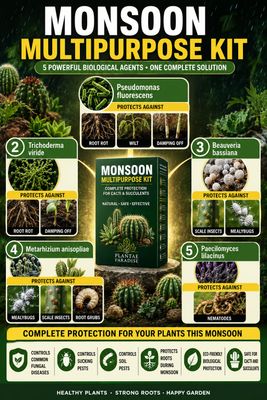
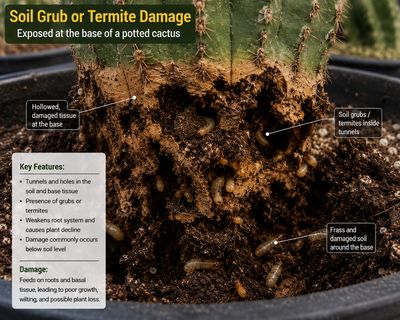
Monsoon Guardian Kit (5 in 1)
Monsoon Guardian Kit (5 in 1)
Complete 5-in-1 biological protection kit for cacti & succulents
SKU MNS024
₹850.00
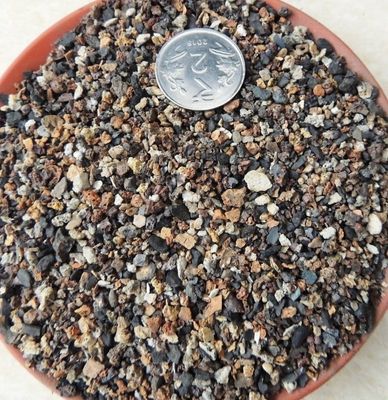
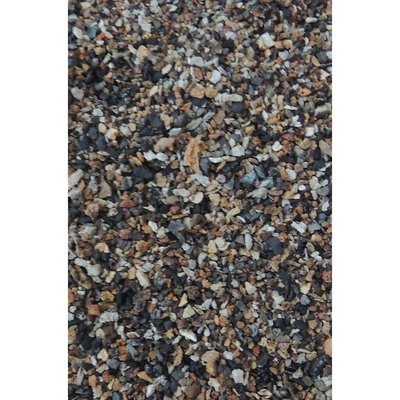
Cactus & Succulent Planting Mix FINE (aka Cactus Soil Mix or Succulent Soil Mix)
Cactus & Succulent Planting Mix FINE (aka Cactus Soil Mix or Succulent Soil Mix)
Fine-Grain Potting Mix for Cactus & Succulent Roots
SKU MNS001
5.0
(3)
₹39.85

Cactus Seed Planting Mix
Cactus Seed Planting Mix
Sterile, Fine-Grain Media for Cactus & Succulent Seeds
SKU MNS005
₹74.85

FORTIFIED Cactus & Succulent SOIL (FINE)
FORTIFIED Cactus & Succulent SOIL (FINE)
SKU MNS002
5.0
(4)
₹49.85
Display prices in:INR
