
Categories
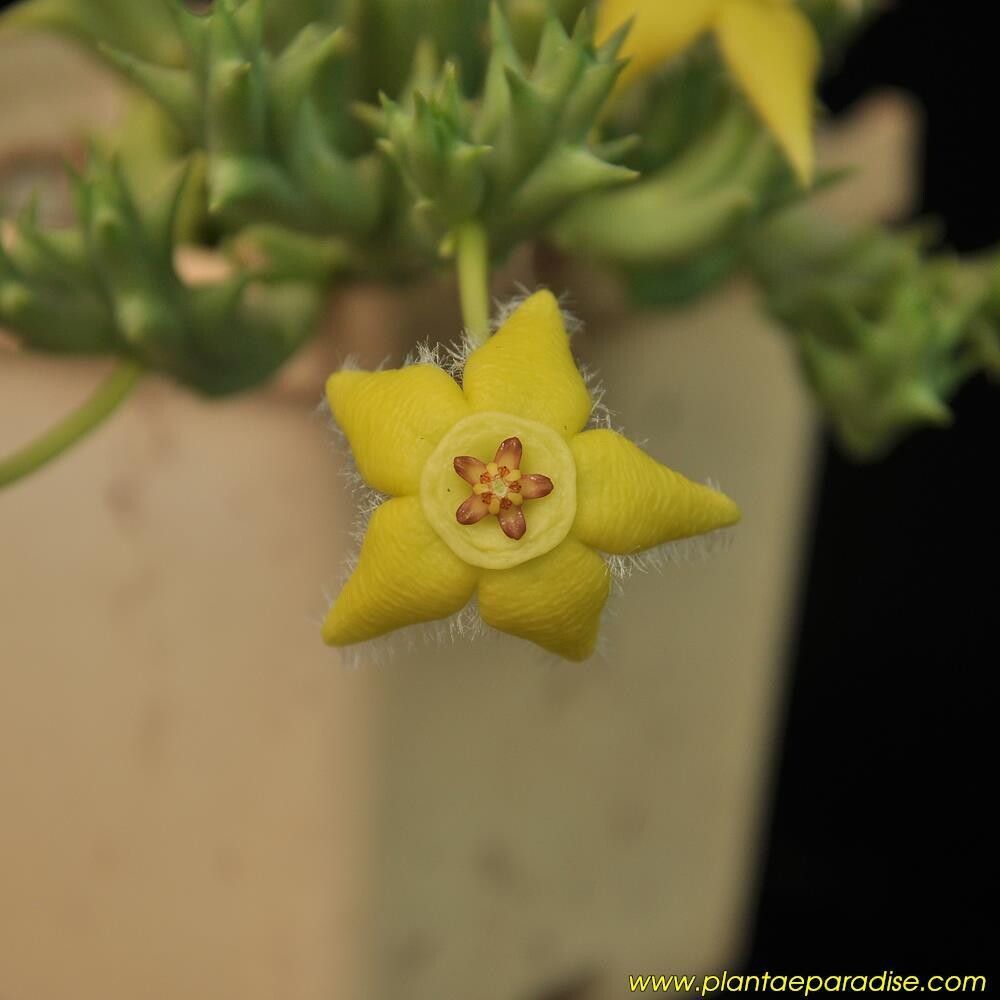
Orbea semota
5.0
1 review
Reviews from verified customers who have purchased products at this store.
SKU ASC009
₹350.00
In stock: 1 available
1
Save this product for later
Customer reviews
Reviews only from verified customers
Reviews are only accepted from verified customers who have signed in and purchased the products. This ensures that each review is based on genuine customer experiences. All reviews are checked before publication to prevent spam.
G Swachhal
Hazaribagh,
India
Sun, September 6, 2026
I got this plant around 3 weeks back. The packaging of the plant was excellent, i guess best among all the online shops available in India. The plants arrived in a very healthy condition with excellent roots. They started to grow within a week of planting. Waiting for it to bloom.
Orbea semota
Product Details
The African Starfish: Orbea semota
This rare East African collector’s piece features architectural, reptilian-patterned stems and mesmerizing, alien-like blooms that vibrate in the slightest breeze.
- Origin & History of Name The genus name Orbea is derived from the Latin orbis ("circle" or "disk"), referring to the prominent raised central ring (annulus) found in the flower's center.
The specific epithet semota translates to "remote," "distant," or "isolated" in Latin. This likely alludes to the species' geographically separated populations or its discovery in isolated rocky outcrops of East Africa. It was originally classified under Stapelia by botanist N.E. Brown before being moved to Orbea by L.C. Leach in 1975 during a major taxonomic revision of the tribe Stapeliae. - Morphology Orbea semota forms compact, mat-forming clumps of decumbent to erect stems.
The stems are four-angled (quadrangular) and armed with stout, conical teeth (tubercles) along the margins, giving them a jagged, prehistoric appearance. The epidermis is typically grey-green, often beautifully mottled with purple or maroon blotches when exposed to high light. The star-shaped flowers are the showstopper: deep maroon to chocolate-brown (or bright yellow in var. lutea) with a distinct central annulus. The corolla lobes are edged with vibratile clavate cilia—tiny, club-shaped hairs that tremble with air movement to attract pollinators. - Habitat & Origin This is a wild species native to the rocky, semi-arid regions of East Africa, specifically Kenya, Tanzania, and Rwanda.
It naturally thrives in the crevices of rocky outcrops (lithophytic growth), utilizing shallow debris for rooting. While wild-collected specimens exist, the plants available in the trade are almost exclusively sustainably propagated cultivars or seed-grown specimens, reducing pressure on native populations. - Cultivation Profile
- Substrate: strictly mineral-heavy, porous mix. Use 70% inorganic material (pumice, perlite, lava grit, or coarse river sand) mixed with 30% sterile cocopeat or leaf mould. Avoid dense garden soil (lal mitti) to prevent root rot.
- Light: Bright, filtered sunlight is ideal.
In the Indian subcontinent, protect from the harsh midday sun during peak summer (May-June) to prevent scorching, but ensure significant exposure to maintain the purple stem mottling and induce flowering. - Water/Dormancy: Follow a strict "soak and dry" cycle. Water thoroughly only when the substrate is bone dry.
During the Indian monsoon, shelter the plant from continuous rain to avoid fungal rot. In winter (November-February), induce a semi-dormancy by reducing watering to once a month or stopping entirely if temperatures drop below 10°C.
- Scientific/Historical Anecdote Orbea semota utilizes a fascinating evolutionary deception called "brood-site mimicry." The flowers emit a faint scent resembling decaying organic matter, and the vibratile hairs (cilia) along the petal edges frantically twitch in the wind to mimic the movement of maggots or small insects.
This elaborate performance tricks carrion flies into landing and pollinating the flower, expecting a meal or a place to lay eggs, only to leave with pollinia attached to their legs to fertilize the next bloom.
You May Also Like

FORTIFIED Cactus & Succulent SOIL (FINE)
FORTIFIED Cactus & Succulent SOIL (FINE)
SKU MNS002
5.0
(4)
₹49.85
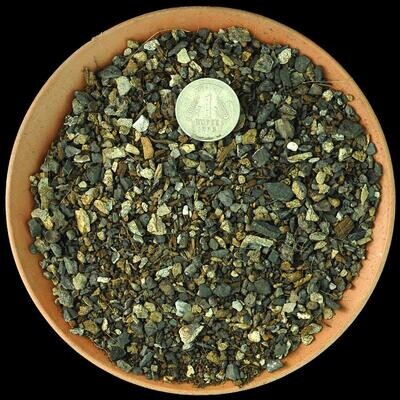
FORTIFIED Cactus & Succulent SOIL (COARSE)
FORTIFIED Cactus & Succulent SOIL (COARSE)
SKU MNS004
5.0
(12)
₹54.85

Cactus & Succulent Planting Mix COARSE (aka Cactus Soil Mix or Succulent Soil Mix)
Cactus & Succulent Planting Mix COARSE (aka Cactus Soil Mix or Succulent Soil Mix)
Washed, Free-Draining Mineral Mix for Cactus & Succulents
SKU MNS003
5.0
(1)
₹44.85

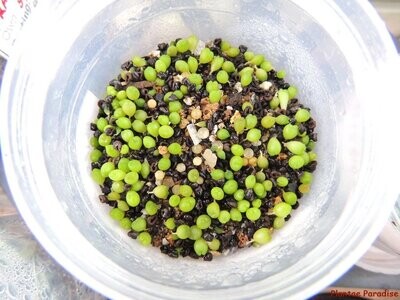
Cactus Seed Planting Mix
Cactus Seed Planting Mix
Sterile, Fine-Grain Media for Cactus & Succulent Seeds
SKU MNS005
₹74.85
Display prices in:INR
