
Categories
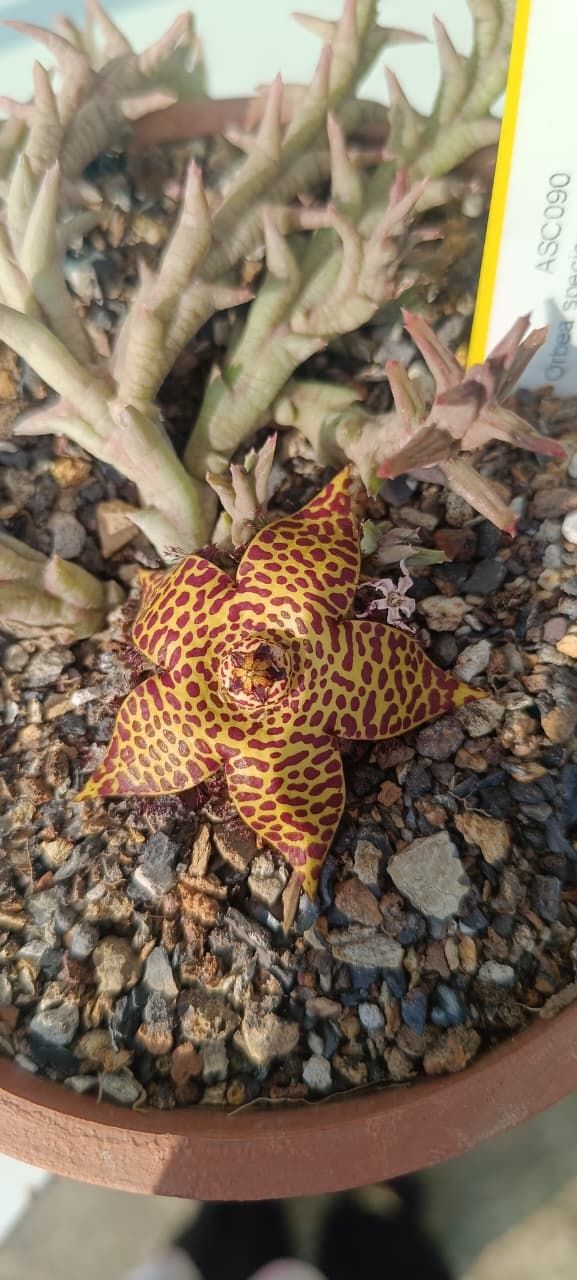
Orbea speciosa 'Golden Clone'
SKU ASC090
₹200.00
Sold out
Sold out
Save this product for later
Customer reviews
Reviews only from verified customers
No reviews yet. You can buy this product and be the first to leave a review.
Orbea speciosa 'Golden Clone'
Product Details
Radiant Geometric Rarety: Orbea speciosa 'Golden Clone'
A high-contrast botanical marvel featuring luminous yellow star-shaped blooms that represent the pinnacle of stapeliad collecting.
- Origin & History of Name: The genus name Orbea is derived from the Latin orbis, meaning "circle" or "disc," referring to the prominent raised central ring (annulus) found in the flowers of many species.
The specific epithet speciosa translates to "showy" or "splendid." The "Golden Clone" designation identifies a specific cultivated lineage selected for its consistent, vivid xanthic (yellow) floral pigmentation, distinguishing it from the typically mottled or darker wild forms. - Morphology: This succulent features four-angled, decussate stems with a smooth, matte epidermis ranging from olive green to reddish-purple under high light. Unlike many succulents, it lacks true leaves, utilizing its stems for photosynthesis. The unique corolla is deeply lobed into five symmetrical points, featuring a prominent, thickened annulus at the center. The "Golden Clone" is prized for its lack of dark maculations (spotting), presenting a clean, saturated yellow hue.
- Habitat & Origin: The base species Orbea speciosa is native to the arid regions of the Northern Cape and Free State in South Africa. However, the 'Golden Clone' is a cultivar stabilized through vegetative propagation to ensure genetic clones of the color mutation. These plants are nursery-grown, ensuring that no wild populations are disturbed for the commercial market.
- Cultivation Profile:
- Substrate: Requires a highly porous, mineral-heavy substrate. A mix of 60% grit (coarse sand, lava rock, or burnt clay) and 40% organic compost is ideal for preventing basal rot in the Indian subcontinent's high-humidity zones.
- Light: Thrives in bright, indirect light or filtered morning sun. In the Indian summer, direct midday sun can scorch the stems; 50% shade cloth is recommended to maintain the stem's health.
- Water/Dormancy: Follow a strict seasonal cycle. Water deeply when the substrate is dry during the growing season (March–October). Reduce water significantly during the winter and the peak of the Indian monsoon to prevent fungal pathogens common in stagnant air.
- Scientific/Historical Anecdote: Orbea belongs to the Stapeliinae subtribe, famously known as "Carrion Flowers."
These plants have evolved a complex pollination strategy called sapromyiophily, where they emit odors mimicking decaying organic matter to attract blowflies. While the 'Golden Clone' is visually stunning, its biology remains a testament to the diverse and often bizarre evolutionary paths of African desert flora.
You May Also Like
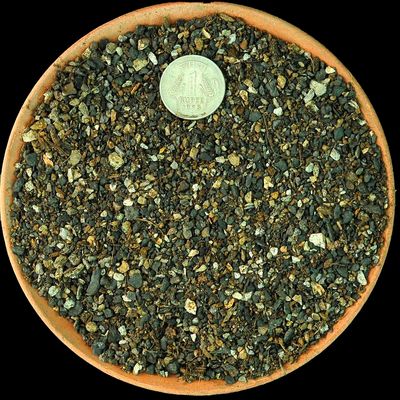
FORTIFIED Cactus & Succulent SOIL (FINE)
FORTIFIED Cactus & Succulent SOIL (FINE)
SKU MNS002
5.0
(4)
₹49.85
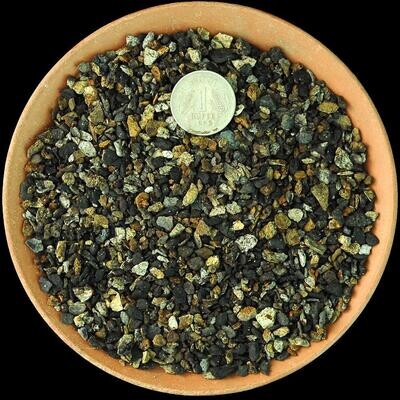
Cactus & Succulent Planting Mix COARSE (aka Cactus Soil Mix or Succulent Soil Mix)
Cactus & Succulent Planting Mix COARSE (aka Cactus Soil Mix or Succulent Soil Mix)
Washed, Free-Draining Mineral Mix for Cactus & Succulents
SKU MNS003
5.0
(1)
₹44.85
New
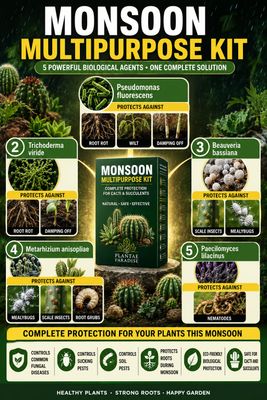
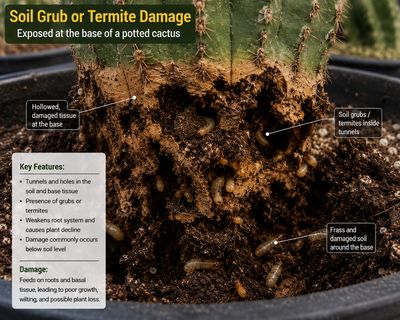
Monsoon Guardian Kit (5 in 1)
Monsoon Guardian Kit (5 in 1)
Complete 5-in-1 biological protection kit for cacti & succulents
SKU MNS024
₹850.00
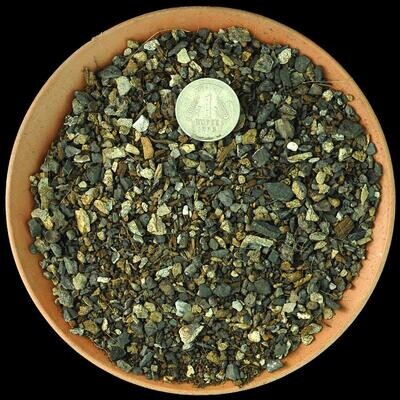
FORTIFIED Cactus & Succulent SOIL (COARSE)
FORTIFIED Cactus & Succulent SOIL (COARSE)
SKU MNS004
5.0
(11)
₹54.85
Display prices in:INR
